Extraordinary heat is the news from Molino Creek Farm…and everywhere around the Central Coast of California. It has been in the 80s during the day for a few days running and going down into the 60s at night – enough to cool the house, thankfully. The sun beat down so wiltingly, burning right through the shirt. Panting finches, beats propped open. The biggest yellow-bellied racer I ever saw, living up to its fast name, slither-whipped across a trail. Snake weather! Clear blue sky days and most sparkling star depth nights. What interrupts the sky are occasional clouds of road dust and legions upon legions of zooplankton. Clouds of tiny metallic green Ceanothus beetles and many others, whirring and spinning above the shimmering hot fields, mopped up by swallows, pounced on by bluebirds.
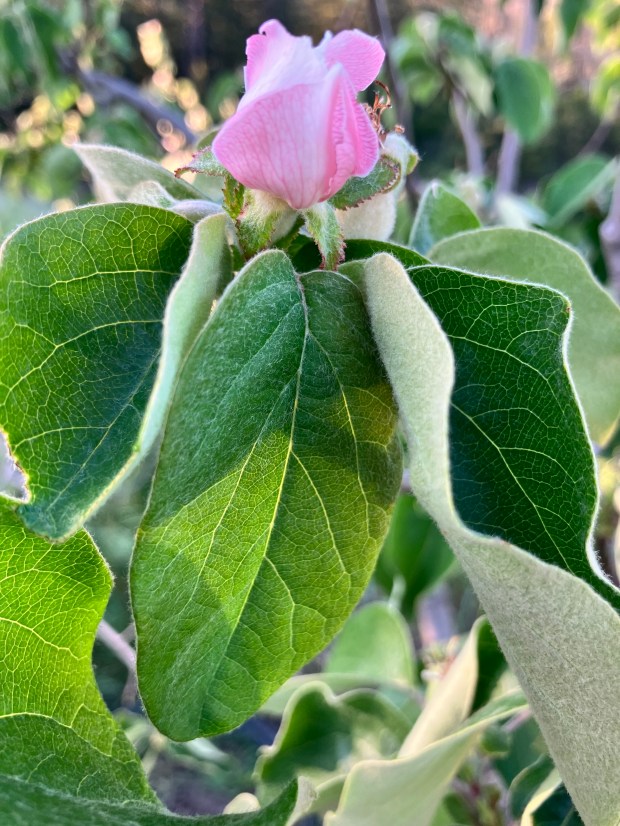
Quince flowers are always the first to really create some art in the Orchard
Herbivory
The panicky quick growth of Spring is riddled with insect holes, shot through with orange rust fungus. Blue or yellow butterflies energetically flit from leaf to leaf, setting down eggs, flick over to a flower for a sip, and then more frenetic egg laying. Smooth green, fleshy caterpillars or ones covered thickly with prickly black hairs…munch leaves, everywhere, bodies swaying, mouths hungrily arching back into fresh foliage.
Walking with sandals through the hard-to-see overgrown trails makes for orange footwear, orange feet. Wild oat leaves, especially, but also our garlic crop, blackberry and many other plants have been besieged by rust fungi. Leaves turn orange, giving off dusty orange puffs of fungal spores; a closer look reveals thousands of odd evenly spaced orange dots. The fungi are feasting where the insects have failed to feed.
Orchard cover crop almost shoulder high
The Deer
The saga of ‘deer in the fence’ continues. We have two large fences. Maybe too large fences. Seems we can’t keep up with the fences. Do fences shrink or are the deer bounding better? Gradually, we add a few more feet on top of the old fence, which was only 4’ of ‘field fencing’ with another set of spaced wires to get the thing to perhaps 7 feet. The wire spacing technique burned up in the last fire, so the top wires hang willy nilly in many places and The Deer find their way over or through that weak link. Gradually, we discover the favored fence jumping spots and add new sections of fencing to close those gaps. Above Vandenberg Field, the (once) new fence extension ends and right where the old, shorter, less effective fence begins…is the Trail of Deer. A team of four (mighty healthy looking) deer come and go as they please through that weak point. This evening, all 4 deer were lined up at the Most Delicious Salad Bar, enjoying a Greek Feast of freshly sprouted grape leaves right at mouth height, held up on vineyard trellis.
California Poppy flowers are really going mad right now at Molino Creek Farm
Flowers!!!!!
The quick Spring creates a riot of flowers, all blooming at once. The woodlands surrounding the Farm are dense with post-fire California lilac, shiny leaves and hundreds of acres of blue, sweet bouquet. Where the shrubs don’t crowd, native understory flowers bloom: fat false Solomon’s seal and milk maids, redwood sorrel and native blackberry. Out around our fields, in the native prairie, there are rafts of California poppy and the beginnings of the first sky lupine, buttercup, and blue eyed grass. Native grasses are blossoming, too: purple needlegrass and brome, mainly.
The orchards are blooming, too. The earliest pome fruits, quince, are in full joy as are the navel oranges and avocadoes. The scent of citrus wafts far from the orange trees across the farm, a sweet perfume. Cherry blossoms have just burst out in the last couple of days. It won’t be long before the entire apple orchard is pink….so early!
Cover crops bloom in masses. Row after row of bell beans are blossoming in the interstitial areas of the orchard; their fleshy thick leaves barely hiding whorls of big pea flowers. In the row crop fields, daikon radish is head high presenting blinding pure white sheets, abuzz with bees.
This is the way that Spring rushes towards, and soon past, our open-mouthed surprised selves: WOW! Time is moving quickly.
Humans keep calendars and clocks, rarely aligned with Nature’s metronome. Religion nudges ceremony further, further from the harmonic pulse of seasons, from the spin of Earth, Moon, and Sun. The peeling of millions of people-machines drown timekeeping (dawn and dusk!) birdsong, belching chemical steam, blotching sky, trapping heat, swaying ancient melodies into continuous disharmonious cacophony.
Disoriented humans growing old too fast, days’ flight, years’ fast wrinkle.
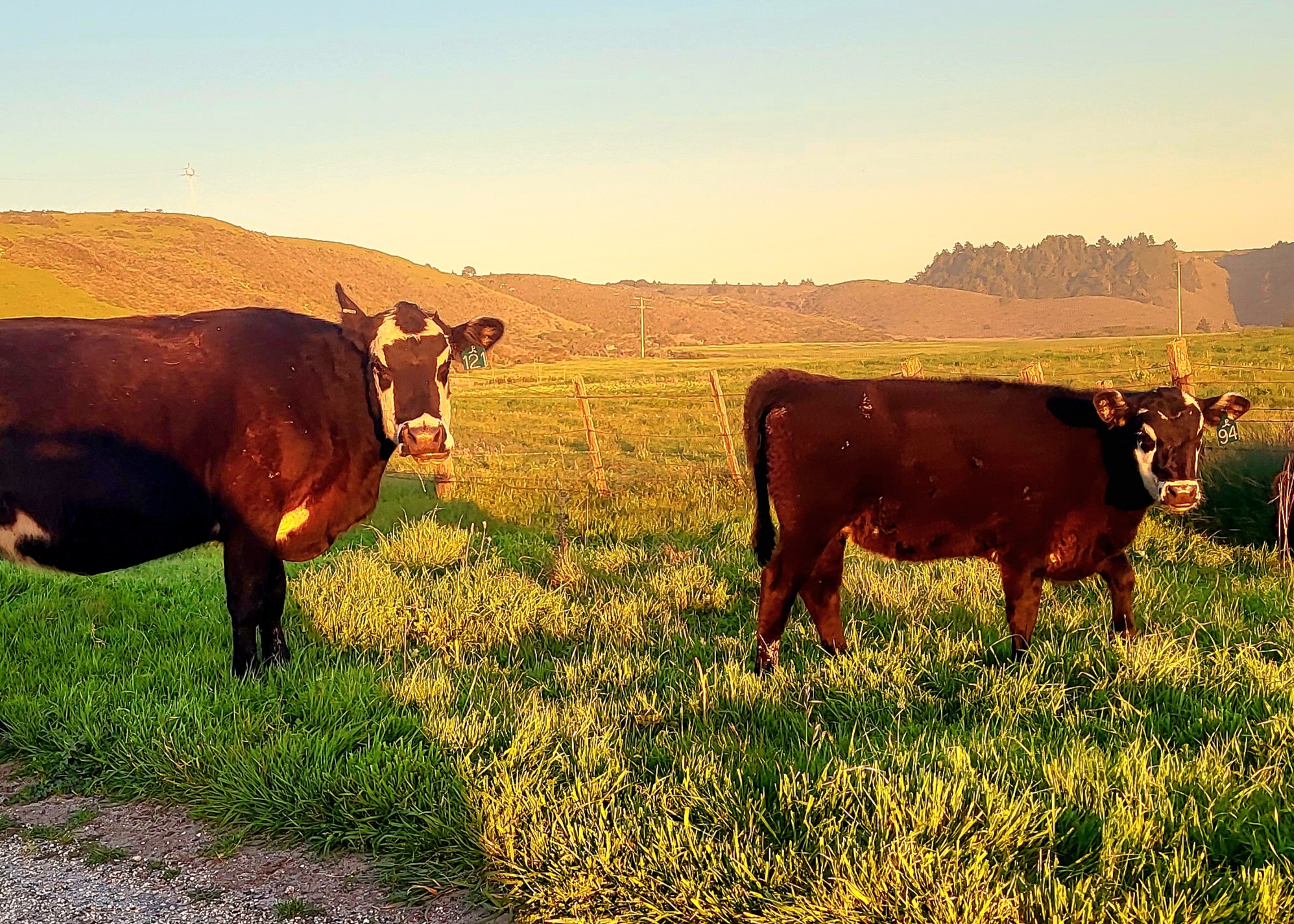
Cows on the road into Molino Creek Farm, photo courtesy of M. Lipson
Jumping Ahead
Daylight Savings Time came and March lept into the place where April used to be. Apples are blossoming a month too soon. The blinding greens from the shining fields are already upon us, grass bolting, wildflower riot. Heat waves follow draughts of rain (again!). No more rain foretold and yet too early to believe it is the end of this ‘rainy’ season.
Prescience
Presently taking the time to gaze and smile at verdant hillsides, lush grass and dark green, leafy oaks. Endless ranks of pointy grass strain skyward portending future pokey seeds and ankle-torturing socks. For now, it is grassland Peak Green.
Big, bushy coast live oaks unveil soft new leaves, some trees more yellow, some more red, all gradually turning more uniform dark, prickly, waxy green. Pale dusty pollen filled oak flower tassles dangle from every branch tip; tinier, unseen…stem-hugging female flowers promise acorn births. Farm fields glow at sundown – rafts of white radish, yellow mustard splashes, sprays of bright calendula orange. These will hurry seed-making against all odds, facing the pace of people-priorities under tractor-wheel, mower and plow onto worm-work, rot, and crop-root (joy!).
The varying green of grass and coast live oaks – Photo by M. Lipson
Creature Gathering
Toms and hens, spiders to the wind, and the dawn reveals the arrival of swallows.
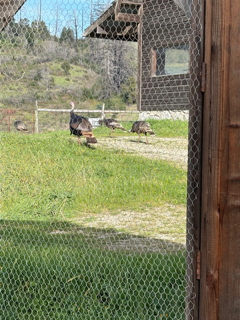
The harem found Tom, amused at flashes of facial color (the blues! the reds!), gobbling and strut – cooing encouragement then giggling. Too soon for (echoes of Mardi Gra chiefs) tail displays. The Molino Creek Farm turkey flock saunters along the roads, pecking at field margins. Wondering if this is the same flock that disappeared last early November, all except the Tom: where did they go?
Marty reports spiders taking to the sky. Arachnid astronauts spin and then drop from web ends. Abandoned threads continue downwind, tangling together, creating scattered ropes, white crazy string biotic ‘litter.’ Parachuting predators terrorize fast-reproducing feasts – herbivorous bugs or themselves become wren or robin snacks.
Mysterious moonlit sky trails recently led the barn swallows back to their Molino summer home. They peer into last year’s neglected mud nests, taking stock. Last year’s brood must find new nest locations, not too far from family… collective actions guarantee the coming year’s sibling success. Each whirring swallow eventually lands puddle-side, testing the qualities of mud with both claw and beak.
So goes the rhythm and so goes the song of the consistently changing world at Molino Creek Farm.
Frog song, forest tending, restoration reflections, and burn piles – just a few of the things happening at Molino Creek Farm this past week.
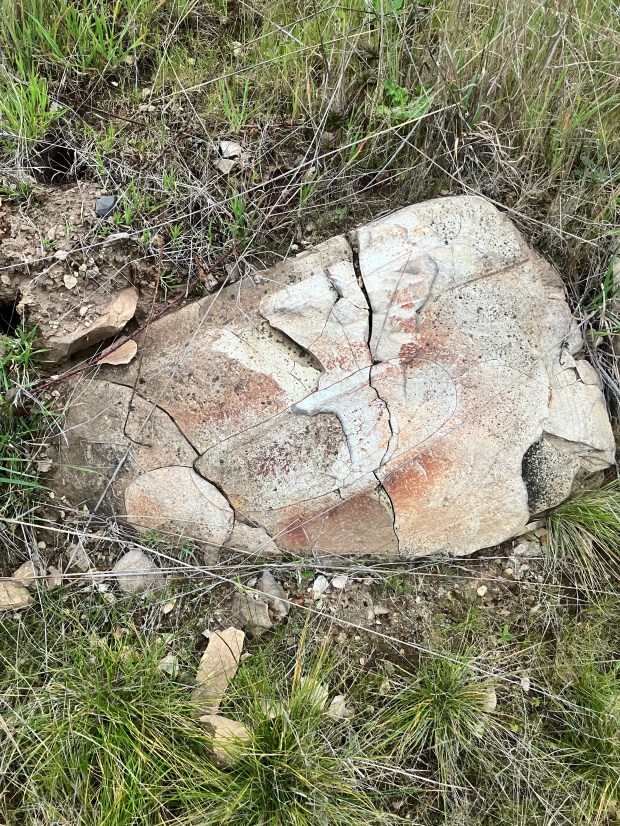
The geological substrate of the Farm: Santa Cruz Mudstone. (this one looks grumpy). This is on an old railroad grade bank- lower restoration site in an area planted with purple needle grass in 2010
Frog Song
The cement pond has lots of algae and lots of frogs, singing. This is the second season with a new regimen of pond management. In summer, we try to keep the pond swimmable with chlorine and such. As winter approaches, we stop with the chemicals and allow the pond to go feral. The algae starts growing and frogs quickly move in, and also the newts. The frogs are Pacific chorus frogs, which are relatively small but loud. They can change color in just a few hours to blend in better to their surroundings. For unknown reasons, they start singing louder and louder and then stop, then build up steam again and stop again…right through the night and sometimes in the day. Guests staying the Barn are quite close to the cacophony, which takes some getting used to if one wants to sleep. They are laying eggs which become thousands of tadpoles that gradually grow legs and hop away into the adjoining orchards where they help control pests. Well, I suppose no few of those tadpoles get eaten by newts, which also make eggs and newtlets in the pond.
Post 2020 fire redwoods- resprouting!
Forest Tending
We are still cleaning up after the 2020 wildfire, and that cleaning up is helping to prepare for the next one. Bob Brunie has been hard at work getting a patch of Douglas fir in order. That stand adjoins our entrance road and presented quite a hazard during the recent wildfire: it was burning so intensely as to thwart any attempt to use the road, so it was briefly impossible to quickly respond to threats to uphill structures, which may have resulted in some wildfire damage. The fire left lots of dead trees and parts of trees – fuel for future wildfire and a repeat of the last one in blocking the road. So, Bob’s been chopping down dead trees, trimming up branches, and hauling out understory fuels to be burned in piles. We were concerned about Douglas fir invasion before the last fire, but now stands have become quite rare, so this project has become a kind of important forest restoration project. Plus, a shady grove is welcome on hot summer days and some wildlife species probably are glad for it.
Meanwhile, I spent a bit of time cleaning up burned willows and fallen conifers on another patch of farm ground- alongside our ephemeral stream where one day there might be some good camping spots.
Let’s reflect a little deeper on some other longer-term restoration work the Farm has been up to…
Bracken fern is plentiful in the upper restoration site
Scrub Transformation
Molino Creek Farm landmates and a network of generous community members have been working with nature to steward this land since 1982 and recently have been embarking on coastal prairie restoration. Photos from the 1980’s show much of this land as meadows. The legacy of indigenous land tending presented lush prairies to the first colonists who took advantage of the abundant forage to feed livestock. Barbara McCrary reported that her husband Lud’s grandfather’s journals noted landscape-level neighborliness with gatherings on this parcel to tend the hay crop in the late 1800’s. Only recently, because of changed stewardship, have the meadows been transforming into scrubland, but two wildfires helped reverse that and we’ve been taking advantage of those to nudge the ecosystem back to the very-endangered coastal prairie ecosystem.
Small flowered needle grass in the upper restoration site: rare situation- most of the area doesn’t have native grassland species, yet.
Recent Prairie History
Two wildfires, a prescribed fire, and large-scale mowing have been tilting two large sections of south-facing slopes towards the grassland direction. In 2009, the Lockheed Fire engulfed 270 degrees of the Farm and firefighters set back burns to one of what is becoming a south-facing restoration site. Firefighters fanned across the slope and, just in time, set the scrubland above Vandenberg Field on fire, pulling advancing wildfire away from one of our homes. The slope subsequently erupted in thistles and then reverted to scrubland by the time the 2020 CZU Lightning Complex Fire once again burned it. With it went an area downhill in what has become the second restoration site (below Vandenberg Field). In 2024, the Central Coast Prescribed Burn Association burned that second site. After each of those burns on the second site, Moliñeros scattered locally collected grass and wildflower seeds, including across an acre that had been planted in 2010 in native grasses and coastal scrub species. Matthew Todd helped us last year to mow the uphill site, which had burned in 2009 and 2020 but was around 5 feet tall in poison oak, coyotebrush, and French broom.
The lower restoration site, which we have seeded, has lupines and poppies- here just beginning to flower
Restoration Now
Interestingly, the two restoration sites are evolving quite differently. For both sites, ecological reactions to the first fires were similar: very poor-looking soil, lots of bare ground, then broadleaf weeds (thistles), and then resprouting coastal scrub species. After 2 quick-succession fires and seeding, the lower site is transforming into very lush grassland. After 2 widely spaced fires and then mowing last year, the upper site has only rare patches of grassland and lots of broadleaf weeds/resprouting coastal scrub species. If the lessons from the lower site apply, that upper site needs another fire, and/or mowing…soon – and seeding!
It is most curious that the soil seems so poor during early stages of restoration and then gradually produces more and more lush grassland. Is it because so much of the nutrients are caught up in scrub biomass, and that has to decompose and become available for the grassland…or, is there some soil biome shifts occurring? Maybe one day we’ll know!
Burn Piles
A key component of this land tending is biomass disposal. If we don’t do it, Nature will! We were pleased that the 2020 CZU Fire burned up many brush piles, but we might have placed them better and surely lots of critters, thinking they were safe below all that biomass, were cooked alive. To avoid burning up critters, we move piled up brush to an adjoining spot to burn. Wherever brush is piled and rests for more than a few days, there are lizards, snakes, rodents, and sometimes even foxes hiding in the mess.
This land creates an amazing abundance of biomass, which presents a threat when wildfire comes. This productivity is evident in our row and orchard crops and equally easy to see in the growth of scrub, grassland, and forest. The post-fire cleanup has generated a lot more biomass to be moved around (MOOP!), mostly burned but maybe we’ll figure out gully stuffing and chipping at some point. We should probably aim for 70 burn piles a year to keep making progress; we are at 15ish now with more stuff piling up by the day and we have until April to burn it up (or wait until next December). Bonfire Fun!
Rain runs off of bark, soaks into soil, and hisses as it soaks rapidly into mudstone pores. Drops percolate through the earth, moistening roots and wetting bugs, coalescing into aquifers, seeping out in springs, flowing down as streams. Rainwater mixes with rain whipped ocean salt droplets but remains rather pure. As downpours, showers, or drizzle, rainwater washes nutrients out of the soil past slurping, hungry roots, bathing micro-organisms in nourishing soup. More pristine, richer soils more effectively capture free nutrients. More disturbed/tilled poorer ground loses nutrients. Nitrogen in particular leaches from disturbed soils and finds its way into groundwater or rivers, sometimes in such quantities as to be classified as pollutants.
Rain water collects in tractor rut in our perched-high Vandenberg Field, farmed by Two Dog Farm
Watershed
The Molino Creek watershed begins in vast swaths of maritime chaparral growing in fractured mudstone with very little discernable soil. Manzanitas, ceanothus, bush poppy, and such are the dominant chaparral shrubs, growing symbiotically with fungi. When the winter storms drench this chaparral, rocks soak up the first good bit before water soaks into the millions of cracks through this highly fractured rock. Down it soaks, a few feet for every inch of rainfall. There’s not much in that water, the nutrient poor ground rife with fungal threads gives up little to the flow. Under the mudstone is a dense sandstone. The interface is a line of springs. The seeping water converges, forming Molino Creek.
Tributary
There’s a tributary on our farm and it remains unnamed. Most know this stream for its 25-foot waterfall, which splashes noisily through the winter. There’s a productive spring in this stream and below it the stream flows year-round, although just a trickle in the drier summers. When the waterfall really roars, we know that the karst below us is full and to expect the lowest sinkhole to become a lake shortly. Water piles out of foot-diameter holes, pillows of powerful flow billow up into the rising lake.
One of the handful of holes connecting to karst from whence issues water during high rainfall events
Looking down the karstic hole…how far does it go?
Sink Holes
There are 5 larger sink holes on Molino Creek Farm and there are more on adjoining open space lands. The largest pock of collapsed limestone is 50 feet deep just off a trail downhill a bit on Cotoni Coast Dairies parkland. We also haven’t named the lowest, largest sinkhole but we see it most years, sometimes even with a flock of ducks. There is no known limestone on the other side of Molino Creek for a hundred miles north along the coast, but the limestone continues south to Santa Cruz and then appears again in Big Sur. Our farm’s sinkholes have nice deep soil to allow tomatoes lots of foraging space for nutrients and water. Somewhere way down below there are caves – tiny honeycomb caves or grand ballrooms decorated with flowstone and stalactites. Sometimes, they collapse, creating a dent in the ground above.
Rain-kissed Persian limes hang thickly awaiting harvest
Citrus
Citrus Hill grows and produces – more each year. We planted many orange, lemon, lime, and mandarin trees in 2019 (-ish), and those are starting to produce. These trees are 4 – 8 feet tall, they are deep green and laden with fruit. We have harvested and distributed over 150 pounds of Persian limes with another 70 that are ready ‘to go’ (right now). Browsing harvesters are snacking on the first ripening mandarins. Four hundred pounds of oranges will gradually ripen between now and 3 more months. Meyer lemons are also slowly ripening.
Ditch meets road drain rolling dip on the main road into Molino Creek Farm
Roads
Our farm is 3.5 miles from the highway and we maintain another 3+ miles of roads on the farm. This land use changes Nature, requires work, and has many great advantages. The most evident road effect is hydrological: roads become waterways, sluicing rain and runoff into ditches and drains, carrying mud and road gravel. Human and non-human animals use the road routes – easier than the alternative. Long ago, the road from the highway was so poor that it required four-wheel drive and chains. Before that, it was on the back of horses or mules, ox carts, etc. and up a now-obliterated road parallel with Molino Creek.
Shovel and tractor, sweat and sore muscles, are called upon to keep the road drains clear, to spread new material, to fill holes.
Newts and Frogs
With the soaking drizzle, raining right through the night, amphibians are on the move. Driving home up the Coast Highway at 9pm, red-legged frogs were making brave attempts to cross the road in the pouring rain. Rough skinned newts were flashing their tummies, heads held high, trying to be seen. It was slow going slalom to avoid the critters. The small chorus frogs are singing loudly all night long in the cement pond next to the barn where they are laying eggs and cavorting. As a friend pointed out…when it is raining, the whole world is amphibian habitat!
Here it is…suddenly the season where we reflect on what it means to be thankful and what to be thankful about. All around us, beings are ecstatically grateful every moment. But, us humans seem to segregate our thankful moments, relegating them to holidays or ceremonies. Well, we should be happy for the ability to reflect in such a way, however it occurs.
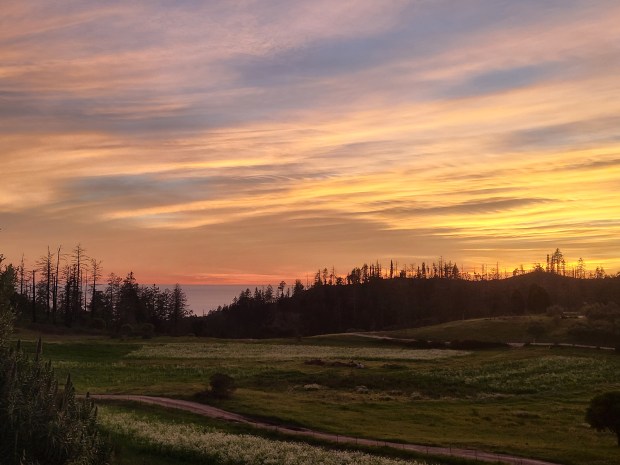
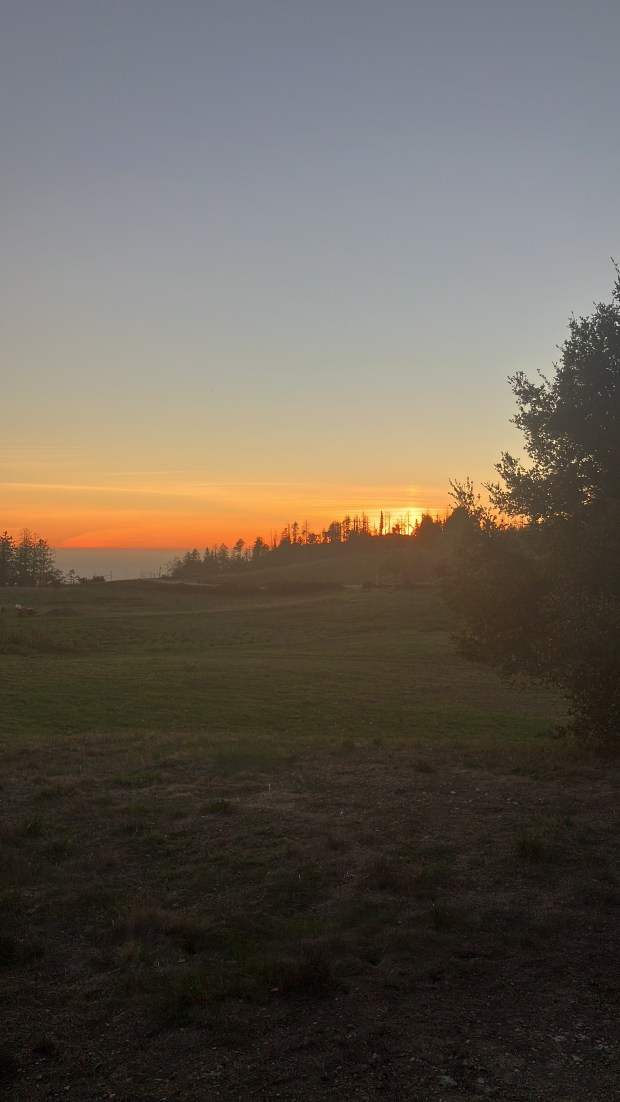
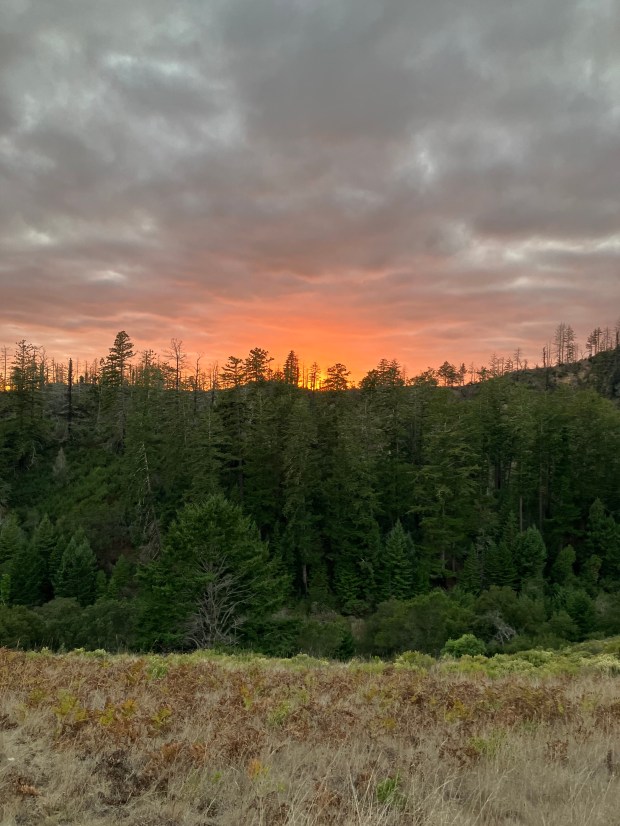
A recent sunset from Molino Creek Farm
Deep Time Thanks
Molino Creek Farm lies within the unceded territory of the Awasawas, or Santa Cruz People, in the Cotoni tribe. They lived on and cared for our land. They left lots of artifacts. There are places where seashells are still coming out of the soil. There are lots and lots of chert and some obsidian flakes. We have found bowls, mortars, and cooking stones. They were the first human inhabitants of this land and they took care of the old growth redwoods and ancient oaks that we still enjoy. Their land management made our soil rich for the crops we still grow.
The Greek Ranch and Transition
Much more recently, us Molino Creek Farm folks have The Greek Ranch and then Kay Thornley, Harlow Dougherty, Jim Pepper, Steve Gliessman, and others to thank for being here. There were years of hippies living here, wild years as we understand back in the Greek Ranch days. As the Greek Ranch transitioned to Molino Creek Farm, this contingent from UC Santa Cruz managed to purchase the land and created the organization that we have now. Many thanks to the folks who had the patience and fortitude to wade through all sorts of issues in establishing this cooperative.
A few Lisbon lemons still left on the trees
Farming
Joe Curry, Judy Low, Mark and Nibby Bartle, and many others worked very hard to establish Molino Creek Farm, which became a legend for dry farmed tomato production. The early farmers made enough money and worked hard with piles of purchased materials to put up miles of deer fence, long stretches of irrigation, and a very good agricultural well. They bought equipment – tractors, fuel tanks, implements, generators…much of which we still rely on. These intrepid farmers taught many people how to grow dry farmed tomatoes and those people started their own businesses. The Farm was the 13th certified organic farm in California…there are hundreds now. We must thank these organic farming pioneers for showing how it’s done and inspiring others to give it a go.
Intentional Community
Other work deserving thanks is from the communal spirit and willingness of those who co-own this land. Living together in such a rural place takes work. The Farm is off grid and so produces its own power and water. We live 3.5 miles up a private road, which takes a lot of maintenance. They say people used to have to drive with chains to get up a muddy hill on the way in, and even then it wasn’t certain.
We have people who manage the finances, ‘the books,’ taxes, meeting facilitation, meeting notes, work party conveners, and so much more. Some of the group maintain the farmland, others maintain the wildlands, and others the water infrastructure. There is a legal committee, a road committee, and a neighbor committee – all very necessary. It takes great generosity to make these things work and we remain grateful to one another for the things we fit into our otherwise busy lives to help keep things together.
2020 Fire
The CZU Lightning Complex Fire devastated our farm. We lost two homes and a community garage workspace, fences, parts of our water system, many orchard trees, and much more. We put out word about what happened and an accompanying call for assistance. Within a short while, we raised $80,000 to help generally and a big portion of that to revitalize what was lost in the orchard. Such Huge Generosity!! We are still awed by that support. The financial support we received is just one indication of the strength and support of the social networks that the partners in this endeavor hold and tend.
We lost quite a few of our avocados in the 2020 fire, but they are just starting to fruit again
Land Stewardship
Since the fire, we have had amazing support for tending our land. The Prescribed Burn Association has poured support into teaching our cooperative about good fire and then leading a prescribed burn last year, reducing fuels over many acres, restoring coastal prairie. They brought people here to help and keep in touch, watching with us the effects of their management. Now CalFire is offering that same kind of help!
Neighbors
Our neighbors have always been helpful. For years, the folks at the cement plant helped keep our road in good shape, the gate secure, and even supplied us with road material, rocks, and spare cement. PG&E has chipped in lots of funding and work to keep the road repaired.
The partners with the San Vicente Redwoods have also been unendingly great to us. Roadwork and weed work, fire and fuel management, security, and so much more have all been graciously a part of their contributions. We are learning together how to take better care of our lands, the non-human beings, and each other.
Community Orchardists
For 15 years, we have enjoyed the growth of our Community Orchard. We keep in touch with 225 people on email. 5 – 20 people show up to tend the orchard on many Saturday afternoons. Even though the fire took us backward a step, 5 years later we discover the orchard has surpassed that damage and is creating more and more amazing fruit, feeding more people.
This year, we needed a tractor and the community orchard network donated funds that allowed us to buy one this past week. It is amazing how the generosity continues, born out of the relationships we build by tending a beautiful orchard, creating “Fruit for the People!”
In sum, we are very thankful. We have so much to be grateful for. Thank you, each and every one of you, for the various kinds of love and support you offer this amazing place, this greater community, which we steward together.
Soon, (the fairly dumb) Daylight Savings Time ends and the days will seem even shorter, by a quick, artificial burst. Wildlife adjusts to Fall, changing their behavioral patterns. Fruits galore – ripening of successive apples, limes hanging thick. A new solar power array materializes. The end of Molino Creek Farm farmer’s markets. The ever-greening of fields. Thunder and fog, chill and sun.
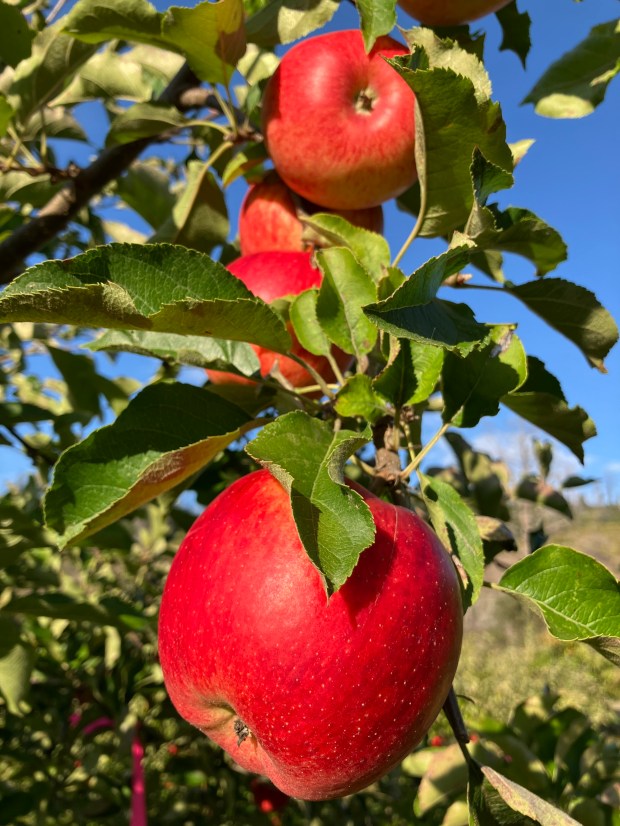
Jonagold apples are especially bright…and quite delicious!
Bursts of Rain
We’ve had two storms so far bring precipitation, but the soil is bone dry 2’ down. It hasn’t been enough rain to stop needing to irrigate. Nevertheless, in the fallow fields and meadows – the first herbs have germinated and the green blush is growing into outright blankets of verdancy.
The GreenUp has started – germination in fallow fields
Last night in the wee hours I was awakened by the rattling of the house. Thunder! Some caught great movies of lightning strikes over the Monterey Bay. The last thunder that rattled things was back in 2020 when an orchestra of timpani rolled and rolled, ‘Rolling Thunder’ went from myth to reality. So, up from bed I was forced and off to gawk out the windows to see what was up. Alas, the flashes were too rare, the thunder had moved off and the night was calm once again. No rain then but rain rumored to be forthcoming this weekend.
Between rain storms, it has been nice, even hitting 82F this past weekend. A firefighter asked me what the relative humidity has been – ugh, not Rx fire weather: 85%!
Shorter Days
We clock the shortening days through anticipation of the last light for harvesting apples for the following day’s market. We need enough daylight to sort the apples with even the tiniest blemish from the perfect ones that go to market. That moment is 6:30 this week. For those of us with day jobs, that makes for a very tight window to harvest and sort. Today, there were 11 hours of daylight: the night is surely taking over to the glee of owls and other night time predators.
Lone Fangsters
The fiercest of predators are guarding their territory and prowling alone through the lengthening nights. Long tailed weasel mating season has been over for some months: they fend for themselves, darting up to 30 miles per hour and winding slowly through the narrowest of rodent holes. Their scat is everywhere across the farm, reminding their brethren who is who and where they’ve set up shop.
Fiercer still, mountain lions are just starting to think about pairing up with the first caterwauling a few weeks back. There was a memorable pre-fire Winter Solstice where we heard 3 lion females yowling from different ridges around the farm. That seems about the normal date for that kind of behavior, and it is a ways away. Meanwhile, massive solitary male mountain lions prowl a huge area all the while worrying about running into another male, which can be fatal or at least badly injurious. They scent mark to avoid such encounters. The urine scratch marking of Big Cats has started on the trails through the dark redwood forest along Molino Creek – signs we haven’t seen for 6 years.
Bird Season
Now that their young are on their own, the chickadees, goldfinches, and Anna’s hummingbirds are also about, cruising without immediate families. Chickadees and goldfinches flock with other unpaired tribal members, though in fairly small groups around the Farm. 6 chickadees seems like the biggest flock right now, and even that’s unusual to see. Goldfinches are hanging in similarly small groups but there are many of those tea parties.
The Anna’s hummingbirds, though – anything but social: they bomb and whistle at each other fighting for territory with what little nectar can be found, mostly around home landscapes right now. Those hummers will be the first of these non-monogamous birds to nest: in January they start gathering lichens and spider webs to weave their beautiful baby-homes. Those tiny nests will in a few months glisten with raindrops and grow transplanted mosses, cradling tiny eggs and their near torpid sheltering parent. Now, these future parents aren’t associating with one another, but instead joust for food, and try to get fat on the dwindling nectar.
Deeply Social Birds
For whatever reason, our blackbird flock is extraordinarily large this year. I counted 80 birds in one tree yesterday. Another flock came in this evening to join that one – over 100 birds. Perhaps it is because we allowed cover crops to go to seed this past spring, so there’s lots of food. I dread the bird seed predation right after the planting of cover crops. This year, we opted for only bell beans for orchard cover crop – the seeds so massive as to avoid easy bird swallowing. Late germinating bell beans are welcome salad greens for a lot of birds, though.
I ponder how the blackbirds know to stop singing all at once. Their sing-song squeaky cacophony sounds a bit more melodious than a long line of train cars squeaking and screeching on ice cold rails. All of the sudden, they all stop: not one at a time, no slow lowering of the volume. How do they do that…and why?
I would be remiss under this heading to not mention the California quail. Never fear, the coveys are numerous, the birds fat and happy. What a show!
Arkansas Black – a dark apple with a bright white inside
Harvesting
The Two Dog crew returned to Molino Creek Farm to harvest their wonderfully productive tomato patch this week. At the same time, their pepper field is knee high and hanging densely with fruit. And, 2 Dog winter squash leaves are wilting revealing rafts of colorful squash.
Molino Creek Farm tomatoes, on the other hand, are mostly picked though the plants are putting on a flush of new growth after the early rains. Zucchini plants still push out yummy food. But, the season for that business is winding down – maybe only two more weeks of farmers markets to go!
The apple ripening season is just beginning to unfold. There was an unusually low amount of Gala apples and almost no Mutsu: our early varieties. So, this week we finish gathering the Galas and look to other types next. We’ll pick Jonagold apples – big, shiny, beautiful fruit and the prizewinner of our farm’s apple tasting competitions time and again. We are lucky to have a good number of those to share this season. Braeburn are close behind. But, the big amount of fruit is in the Fuji crop, which is 3 weeks away from being ripe. Will we be harvesting Fuji apples in the dark, or how will we figure out how to harvest so many of those fruit?!
Olives are hanging – December harvest?
The see-sawing of apple abundance is a result of what is called ‘alternate bearing’ syndrome. 2021 – post fire season, nothing much to harvest, then 2022 big year…2023 little year…2024 epic year…2025 little year. The way around this is to thin, thin, thin – and clip off fruiting spurs and so forth to make harvest more steady. Let’s hope we can keep up with thinning next spring – a crucial year to break this cycle.
Granny Smith – the quintessential winter apple….not ripe for months yet!
Limes!
The Persian lime crop hangs heavy – what an abundance we will have if this all works out. We are frequently told that our limes are the best on Earth, and we agree. Someone wanted to see if we could pick them now, while they are green, to provide people with what they expect to be limes. So, off we went to squeeze and test and try to find a green Persian lime worth selling. Sample number 3- the squishiest green limes we could find and the results…NO! No juice! The vesicles, or ‘juice sacks,’ just haven’t matured: they were pungent, poppy and quite void of juice. So, we’ll have to keep explaining to folks that the yellow citrus are the best limes in the world. We’ll have about 500 pounds of them this year to share…in February – March, or thereabouts.
Persian limes are getting HEAVY
So, the shortening days doesn’t mean the end of the harvest. Nay, the harvest for our tree crops is just beginning!
While the nights are clear – get you outside to a dark area and enjoy the night time sky. We are marveling in the big, clear Milky Way from Molino Creek Farm these long, dark nights.
High in the canopy…Bacon avocados for a year from now!
“Here comes The Rain!” they said, and it poured. Scuttling long tomato harvest hours, for many days, rescuing the fruit. Waves of warmth before the chilly precipitation. Then, the wind. Ravenous deer. Big colorful sunsets.
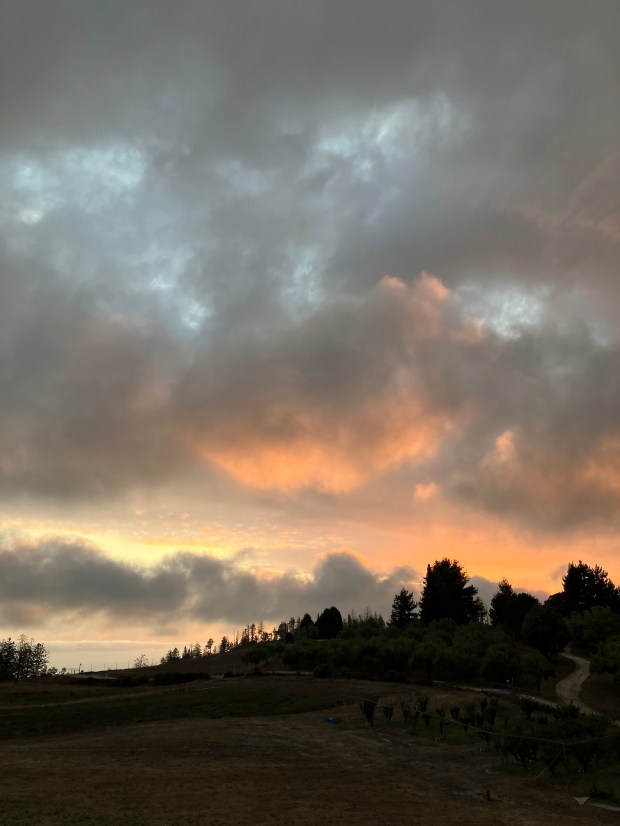
Another magnificent sunset at Molino Creek Farm
Deluge
Stepping out of the shower, there was this massive rumbling noise from outside. Breathing deep to combat a visceral fear growing: “What IS that sound?” Brain grabs an idea: Is that a low flying big aircraft? “No, that’s not it.” I recall the adage that tornadoes sound like freight trains. It has been years since my teenage Georgia experiences with twisters close at hand. I forget the noise. A quick round of glancing out of every window, every direction: no sickly gray-green sky, no breaking tree branches…probably not a tornado. But, it is raining so hard the roof is rumbling. Blustery but not extreme, the windows rattle and bow. The air could hold no more water. The surface of every bit of flat-ish soil was everywhere a deep liquid sheen where a rough moist surface had been moments before. Rivulets feed deep moving pools carrying rafts of debris. Luckily, it lasted only a few minutes; otherwise, it would have been a major disaster. Scary.
In a few hours, the world transformed. Gone is the dust of the long, dry summer. The Fear of Fire evaporates: we are given reprieve.
Coyote Bush Female Plant About to Burst with Seed (to the wind!)
Germination
This was the Germinating Rain, an unusual phenomenon of Mediterranean California. Billions of seeds scattered at the onset of the drying tawny summer and buried by crisp dead thatch are now sprouting, turning the brown landscape to green. The verdancy blushes at first, so subtle as to make you doubt your eyes: you must look closely. It will be February before the prairies are so green as to make your eyes hurt. It takes time for the new growth to overtop the skeletons of last year’s plants.
The farmers never gave up weeding. They were at it as recently as last week. Now, they will be overwhelmed by the flush of seedlings stimulated by the rain. But the harvest is nearly over and the moist ground is better prepared for planting the Winter cover crop. There will be more purposeful germination in the dark brown, fluffy richly scented soil for the next couple of months.
A raft of radish weed seedlings has germinated in this tomato field
Fall is Here
The subtle signs of Fall are arriving. Black walnut leaves rapidly yellow. Willows, too, turn paler hues. But the most profound change is in the bracken: vast patches of hillside fronds have withered to their signature brown. The rain moistens those leaves and scents their vicinity with sweet straw bitterness.
Bracken fern fall
Turkey Tales
As Thanksgiving approaches, one would assume that the wise wild turkey would know something untoward is approaching. The scent of their roasting flesh will waft across the landscape right on schedule and they can’t have missed that for generations. Is that why they’ve become so scarce?
Then again there was the horrid sound, the screaming alarms and furtive loud complaints from the woodland two weeks ago. I took a walk in the newly moist world today down toward the forest via the Camp Road, towards the creek – yonder the way of the terrible turkey noise. No sign of problems. Not a turkey feather askew. On return, as if to bolster the ‘something’s not right’ sense: a single (male?) turkey takes a thunderous flight from one branch to another in the high-up redwood canopy. Where did the other 5 of that one’s friends go?! We wait and watch to see how this story unfolds and miss the flock which had so regularly meandered across our farm.
Two Dog Really Truly Dry Farmed Winter Squash
Sunsets and Fruit Picking
The stormy weather has produced the most remarkable sunsets, lighting the evening as the harvest winds down. As the predicted First Storm approached, every person possible took to the vines buckets in hand to pick as many tomatoes as possible. Rains can easily ruin the crop. Water starved plants, dry farmed tomato vines in particular, faced with sudden abundant moisture soak up so much that the fruit bursts. Stems and leaves suddenly moist are excellent surfaces for a rain of bacteria and fungi eager to devour cells. Melt down is commencing. As Judy says, we are lucky if the crop can last until Thanksgiving. It is a rare year when that happens. The trade off with beneficial end of Fire Season is the unfortunate commencement of the end of the tomatoes.
Meanwhile, in the orchard there is another kind of harvest underway, a harvest unaffected (we hope!) by the onset of rains: apples! It always takes such patience to await the ripening of apples, but the small harvest of the early ones (Gala) emphasizes the wait for those to come. Plus, there are no mutsu apples this year, so the next in line are Braeburn…still a ways off, but the taste of the first ones…with overtones of citrus and tropical fruit…make us excited. And the size of the Fuji crop is oh-such-a-bonanza.
Braeburn apples are slowly ripening
Onward we go…soon to the mowing and onto the harrowing-in of cover crop seeds.
Behold, the peak of ripe, sweet, delicious dry-farmed tomatoes. The best in the world at the peak of the season, which will wind down soon. Lots of people are canning, drying…putting up food as the harvest rolls in, a bounty beyond any other season. Jays and acorn woodpeckers, too, rushing about, storing food like so many others.
A Ripe Molino Creek Farm Tomato: YUM!
Harvest
Tomato farmers can barely keep up, and people are buying. There are three particular crunches in the season: planting, weeding, and harvest. Each has its particularly critical moment interspersed not so much with ‘what do we do’ but more ‘how many people are necessary’ to do the work. The crunch times require more people than the weeks between, making it difficult for labor management and economics for small farms.
Soon, the Community Orchard will face that final crunch. It seems to be a year like the last one when all varieties get ripe simultaneously. Gala apples are suddenly all ripe at once and the Braeburn and Jonagolds aren’t far behind. Luckily, the Fujis are going to wait a bit…and they are the biggest crop this year. It is a scratch year for the Mutsu variety for some reason. There are ten other varieties with one tree each that will get ripe in about 2 weeks. So, we’ll start preparing for a cider pressing gathering to process 1,000 pounds of apples in 2-3 weeks.
Two Dog Farm’s pepper field is lush and green with abundant fattening fruit. Their winter squash patch is still luxuriant and green with hundreds of butternut squash peeking through the leaves. Their Chardonnay grapes are getting honey-green and close to ripe…all ~2,000 pounds.
Wild Life
Baby owl begging, distant coyotes singing, a mountain lion caterwauling, masses of quail, a morning garter snake, bright-eyed deer herds, and many, many ground squirrels.
Every now and then one of the baby birds strikes up a unique racket; this time, it is a baby great horned owl…begging. The begging goes all night long and it is loud and obnoxious. I suppose if you are the Queen of the Sky, you can make that kind of racket and not fear getting eaten. With no other baby around to mimic, a single young owl can pick whatever obnoxious voice to really bother its parents. This one ended up being half way to a barn owl screech, but louder. Mom and Dad owl hardly bother to hoot as the baby steals the show. You’d think it would get hoarse.
Sylvie reports a mountain lion caterwaul – that’s new since before the 2020 fire! Celebrations!!! Welcome back lion momma.
There are streams and rivers of quail pouring out of the brush to peck-peck-peck at masses of seeds strewn everywhere on the ground. They are fat with glossy plumage. It has been a good quail year.
Open the front door first thing and there’s a 2.5 foot long garter snake on the stoop. What luck. First snake in a long while. The other moist morning or late evening snake to see is the (common here) rubber boa…haven’t seen that one for a month.
There are a record number of deer hanging out on the farm. Deer highways pound grass flat and expose soil along hoof-rutted trails. Piles of fertile deer poop litter the ground every few feet on the north-facing grassy slopes where they graze on a mix of grass and resprouting shrubs. At night, flashlight beams illuminate more than a dozen pairs of eyes on that slope. Walking down the road to turn off evening irrigation sessions, my heart races to be too near to huge antlered bucks; hoping not to antagonize one: they seem feisty.
A flock of 60 blackbirds has gathered on the farm, a mix of Brewer’s and bicolored, singing their complex anarchistic melodies from atop bare-branched fire killed trees and then flying like wind-scattered fall leaves down into the fallow fields to feast on seeds. Their song lights up every hour of every day, a chorus that will entertain us through the winter. Their rhythm section has squeaky peeps that nearly match the repetitive, constant, mechanical ‘Chip! of ground squirrels scattered far across the Farm- between the two species it approaches cacophony.
A skein of 50 honking, white-fronted geese in a huge V flew West to East high above the Farm at 4:30 this evening.
Bills Open: Nuts!
Jay cries are muffled, acorn caps scattered. It is peak acorn season and the jays hardly have time to taunt. Their heads are down, shoulders hunched, beaks pried open carrying fat ripe green shiny acorns to-and-fro. Don’t watch them when they try to bury the nuts – they’ll get mad, pick back up the nut and fly to somewhere where you aren’t watching. They suspiciously glance about, quickly poking each nut into a hole, making a quick swipe to cover it up and it’s onto another one. Back-and-forth over and over: busy days! We are pleased that they are distracted from eating apples, leaving the fruit destruction mostly to yellow jacket wasps now.
Dahlias are a long-time specialty of Judy Low
Land Tending
Our great gratitude to one generous guy- Matthew Todd has finished his mastication work for us this year: 4 acres of brush ground to small pieces! We needed to do something about the weeds and he offered to help for a great big discount that made it possible. He resonates with our mission to keep our hillsides wild and native and tending back to coastal prairie and so he wanted to help. His wonderful skill and powerful machine took care of jubata grass, radiata pine, and French broom, which had proliferated after the 2020 fire. Now we have a better chance of tackling those scourges with other tools – excavators, pulaskis, burn piles, and broadcast burns will join a several year mastication project to reduce the broom until we can get livestock to help manage the restoration areas. Thanks, Matthew!
We’ll collect a bunch of grass and wildflower seed this next spring to hurry the restoration along.
Hoping CalFire will be able to help this Fall with another prescribed burn.
The bounty is upon us. The Horn of Plenty gushes forth a profound plethora of food as Fall begins. The Equinox returns old bird friends to the farm’s ongoing bird drama, including many galliformes. The meso-predators – fox and skunk, especially – roam and hunt each evening. Farmers sweat in frequent heat, weeding and harvesting. We are thankful the lightning has skipped us, yet, but WHAT’s WITH THE STORMS??!!
Farm Overview at Sunset – Color thanks to Tropical Storm Mario
Rumblings Afar
Last week it was Tropical Storm Mario, this week an unnamed spiraling monstor. Mario spewed a swarm of lightning bolts 30 miles offshore, jetting up the coast and not, as predicted, coming onshore. The unnamed storm spun arms of poofy clouds and hundreds of lightning bolts, mostly around Lompoc and the southern San Joaquin Valley. It, too, was predicted to come ashore with that violent weather this past Tuesday night but then, once again, it skipped us: the only a hundred or so lightning strikes were inland, in the foothills of the Central Valley. Tense times, these.
The mugginess, daytime heat, and even balmy evenings are unusual for us. Luckily, it hasn’t been scorchingly hot – the apples aren’t getting sunburn. And, happily for tomato farmers, there hasn’t been enough rain to even start to wet the ground – dry farmed tomatoes split with rain!
And, oh how those tropical storm clouds color our sky at sunrise and sunset. Brilliant orange hues are the dominant evening entertainment, dazzling near the horizon and all mixed up with purples and blues higher up, sprayed across cloud puffs or ethereal mists.
The Toil
Amidst the episodic heat, farmers work and sweat. The weeding never ends. One starts early to avoid the worst of it, but that early starts later…hoes hit the ground at 6:45 if we’re lucky. And the harvest takes hours through the day while the sun pushes prickles and wilting heat right through you. The sweat would drip except it is so very dry, salt cakes on the skin roughly mixing with dust. Harvesting tomatoes bent fully over, gingerly stepping between sprawling plants and peering into the dense foliage for hidden fruit, carefully extracted…boxes and boxes of big swelling fruit emerging from so little ground – it is an epic year! What a contrast to last year’s crop failure.
Two Dog Farm dry farmed winter squash, each year a stunning miracle from such seemingly dry ground
Fruit Ripens
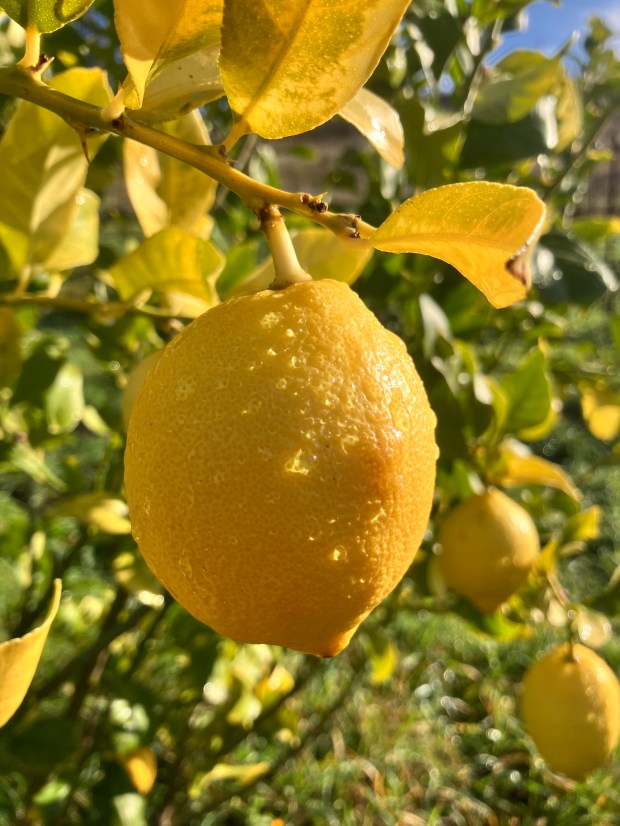
In the orchard, the apples ripen with lemon harvest still in swing. Eureka lemons get ripe by the day, our first year of sending them for weeks to market. These lemons are popular among our Community Orchardists, too – they are catching on – so, the ‘seconds’ lemons are getting claimed voraciously. About 50% of the lemons aren’t perfect enough for market, and so 25 pounds a week are getting distributed. It seems like next year we’ll have surplus for the Pacific School, once they return from the summer. Our lemon trees have just past 10’ tall, a bit lanky and need of some shaping – sharp spines make portions of the getting-dense trees hard to harvest. It is surprising how difficult it is to discern the varying shades of yellow on the fruit, sometimes with hidden tinges of green, to harvest the ripe ones as they turn ever-so-slightly deeper colored.
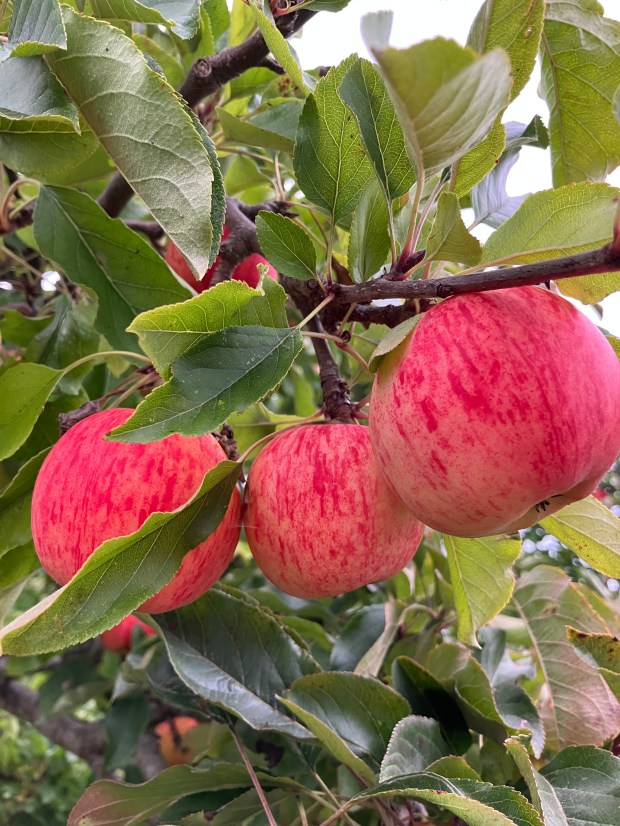
Gala apples are the first to ripen: we sent our first box to market out to the Community this past week. The background peach color, beneath the red streaks, is so obviously a sign of ripeness. They are gorgeous when ripe.
Ripening Gala apples in our Community Orchard
Reclaiming the Land
We are so thankful to our various partners for their assistance in restoring the natural areas of Molino Creek Farm. Last year, the Central Coast Prescribed Burn Association’s (CCPBA) massive network of volunteers and dedicated staff put Good Fire on the ground, nudging our scrub invaded systems back to coastal prairie. Their work also makes our farm safer from wildfire, which has been much on our minds of late. This fire break augments a many miles long regional firebreak that runs on our border and protects Bonny Doon and then Santa Cruz further down the fire-shed.
This week, the new President of the CCPBA, Matthew Todd, has been using his expertise and big, expensive tool to take that burning a bit further. His Bobcat runs a masticator, and he’s mowing down huge patches of the invasive French broom which sprung up after the 2020 fire. Alongside that broom are acres of brush that has taken over super-diverse prairies that were dominant in photos as recent as 1988. Matthew is a landscape artist – it is looking so great and we are much-relieved to have his help bashing broom…and jubata grass…and coyote brush. Broom control protocol calls for several years of mowing in the Fall, like we’re doing now, and we are going to do just that – maybe with a bit of Rx Fire thrown in there.
Rumor has it that CalFire will do a training burn in a few weeks (after grape harvest), so more to come.
Matthew Todd on his masticator, taking care of prairie one strip at a time: Thank YOU!
Natural Production
While our Farm Fruit is abundant, so is the fruit of the woods. Jays and Acorn Woodpeckers have turned their attention to the acorns, which have swollen and started to drop. On the ridgelines above the Farm, the manzanita bushes have their first massive berry production since the 2020 fire. The seeds have tasty dry, sweet pulp and hard as rock seeds. Some critter has been feasting on them and then pooping out the remains in our apple orchard – a long haul, but someone has a circuit.
Critterland
It is easy to see a fox at night if you just go looking. We must have a large population. They bark and yowl. You can’t hear them, but you can certainly smell them … skunks are prowling farm-wide. The hayfields are full of their nuzzling holes where they seek mice or crickets. The bunchgrasses we’ve been nurturing in our hayfields have turned green and since we didn’t harvest the hay, there is plenty of hunting ground for skunks.
Native bunchgrass, California brome (Bromus carinatus) hay field with skunk hunting sign
Welcome Back Sparrows! And…
Golden-crowned sparrows returned, as usual, with the Equinox. In the dark of the night on 9/19, hundreds of these winter birds dropped out of the sky and started feasting on what seeds remain from the entire summer of feasting of the other birds. They were quiet and shy at first, maybe a bit tired from their journey, but now they are feisty and squeaky.
At the same time, other types of birds arrived. The meadowlarks landed in the meadows lower down and closer to the ocean. And, the blackbirds – Brewer’s and bicolored – have suddenly formed their cacophonous flock at the top of the trees around the periphery of the farm fields.
Gallinaceous Bird Drama
The turkey flock was attacked in the forest, what a terrible noise, and only the male has been about. Seems like a good idea to go to that place of turkey noise and see what happened. A coyote or even a pack of coyotes would stand quite a challenge against such powerful birds: maybe it was a lion? Tracking is in order.
Massive quail coveys flush and whirr at every turn. They are Very Jumpy because there is a Very Good Hunter about: Cooper’s hawk is energetically flying about. Do kestrels eat quail? There’s one of those around, too.
Do we revel enough in the produce on our plates? On the Farm, we get to see the food from its tiniest seeds through to buckets of production and onto the internment of the spent plant bodies back into the soil to start the cycle once again.
The not so subtle beauty of zucchini plants
Zucchini-Summer Squash
Big blossoms sit atop tender green fruit; both are edible. The giant leaves shelter the center stem where climbs rank over row of production of new zucchini. We keep a close watch on them to harvest at just the right time when the fruit aren’t tough or large seeded and yet are larger than the tiniest, finger sized tender fruit. The succession from the tiny to the huge can happen rapidly: we must be ever vigilant – the fields must be visited daily, the crop harvested every other day. You can almost hear the squeaky squash flesh stretch and grow.
Winter Squash
Isn’t it funny that the hard rinded ‘winter squash’ are squash just like the so different zucchini? What makes them winter squash? Oh, it’s just that we get to eat squash in winter, long after summer squash has gone, even in the recesses of the produce drawers of our refrigerators. In market, the zucchini comes from Mexico in the winter. As I traversed the road next to Two Dog Farm’s winter squash at dawn, I was surprised at wafts of sweet perfume: the winter squash in full bloom en masse has the most delightful citrus-y scent! The vines are romping across the field – soon, no soil will be visible. It is becoming one big mass of big umbrella leaves.
Onions at Molino Creek Farm
Onions
Our farmers grow the most delicious onions – red onions, yellow/sweet onions. Their spikey leaves are so perky. Row after row of waxy cylindrical foliage subtended by growing bulbs. One day, the leaves start to FLOP! Then we know they’re ready. Fresh onions go to market now and soon bucketfuls will get scattered on the greenhouse tables to ‘cure.’ That will net many weeks of storing onions to go to market. Those onion rows have been weeded and weeded, and weeding isn’t easy with those delicate leaves creating such an impenetrable canopy. We miss weeding and the bulbs turn out tiny. The unintended pearl onions are labor intensive to harvest and more so to get to market, so they go to the neighbors who delight in their unexpected midsummer arrival. Never take for granted the work behind each and every onion.
Lamb Haas avocados…wait for it!
Avocados
The Lamb Haas avocado has an 18-month ripening period. The fruit from this year grows alongside the fruit from last year for many months. It is looking like the few we have this year will get harvested in a month or so, but they look like the right size. The ground squirrels have started, and abandoned, eating them- a sign that there is time still to wait.
Eighteen months is a long time for fruit to hang out, vulnerable to weather and pests. No wonder these fruit are so expensive! We are just past the Avocado Fall where the old leaves fall off and the new leaves unfurl. The trees look so lush, expansive, and vigorous. The Community Orchardists have done a top-notch job of making the main grove of our avocado trees look marvelously cared for and tidy. Next year, 6 years after the fire and the subsequent mass plantings, we’ll have a good harvest of fruit, again.
Critters
Last week, Sylvie reported seeing a skunk and some raccoons. She showed a short film of mother raccoon standing down her car to protect the too innocent young who were too curious to get off of the road. Wander the farm at night and you’ll soon encounter the scent of skunk. Skunk’s diggings through the thick thatch in search of mice or crickets is everywhere. To compliment the mesopredators, an opossum wanders the road at night increasingly close to the Farm each encounter. Sylvie also reports a one-eyed fox; we all hear the foxes yelping and yowling, so vocal.
The herds of deer are incredible. Cassandra reports the mother and daughter deer are still stuck in the farm fenced area; luckily, they have all they need to eat and drink in there. At some point, mother was ‘knocking’ at the gate, but took off when we tried letting her out. What does one do with a nearly 20 acre fenced area after you repair the fence with the deer inside? Apparently, you feed them organic chard, peas, grape leaves, and tomatoes. Our artesian wells leave big puddles to quench their thirst. They are gourmet.
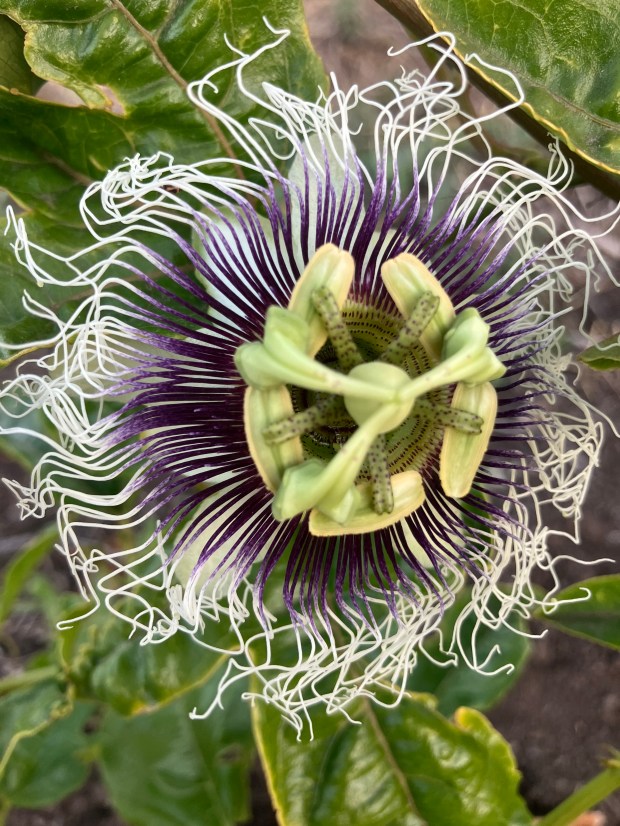
Our first passionfruit in a long while are on their way: variety ‘Frederick’
-post simultaneously published at the Molino Creek Farm webpage


















 Grey Hayes