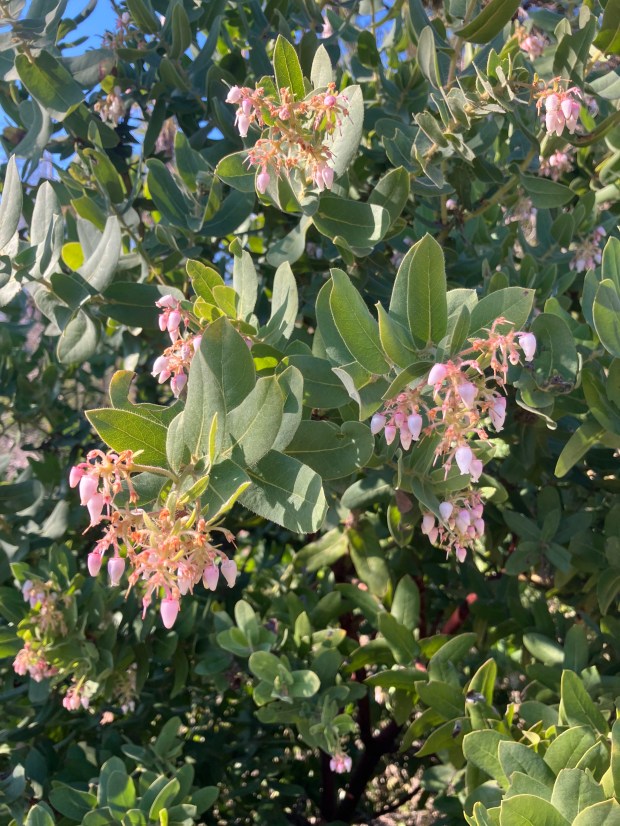

The ridgeline expanse of chaparral lay dormant, wafting resinous scents, clicking and crackling as the morning sun’s first rays dried the maroon, shredding bark strands which hang peeling from the skin-smooth twisty manzanita trunks. Through the late summer and fall, each day brought the same routine, sometimes hotter days, sometimes nights bringing fog, dripping and awakening lichen which festoon branches and carpet the ground, nestled into lichens and patches of rabbit poop. Then, the rain came, soaking the rocky ground. Now, months later, maritime chaparral awakens with its first bloom.
Recently, on an early morning drive to the trailhead we encountered huge white, slippery frost patches along the spine of Ben Lomond Mountain where Empire Grade bisects high chaparral, towering oak forest, and miles of burned conifer trunks. We were off to Big Basin not for lingering in the recovering redwood forest as much as to spend time in the warmth of chaparral. Once on the trail, my cheeks and nose were numb with cold, as we descended from magnificent wet old growth forest onto drier rocky ocean view ridges with a different type of snow…petalfall.
The 3 types of manzanitas at Big Basin and Butano State Park have already been blooming since December. The best show is from a shrub that only grows in the southern part of the Santa Cruz mountains, but there are two other species of manzanita also flowering. The woodland edge manzanita, a species that can get 20’ tall, is aptly called Santa Cruz manzanita; it gets large clusters of obviously pinkish flowers. Glossy leaf manzanita with its small dark green boxwood-like leaves form the neatest of dense bushes with tiny white flowers. Giant woody burls of brittle leaf manzanita send out much less organized clusters of trunks, intertwining with other shrubs to add to the branchy complexity of impenetrable scrubland. In the chill shade below manzanita bush canopies, a carpet of white…the snow of spent blossoms covers moss mats and gravelly barrens.

More Unfolding
The manzanitas are first, but other chaparral shrubs are also awakening. We saw the first dusty, dark blue flower clusters of the pine-scented, warty-leaved wild lilac. Milk maid’s simple four petaled flowers adorned the trailsides where we walked along with the very first boisterous redwood sorrel blossoms emerging from a lush carpet of shamrock leaves. I look forward to hiking in chaparral in a month or so, when there will be an even more impressive profusion of flowers.
Next: Flowering Hillsides
We will soon encounter the 5th spring after the 2020 CZU Lightning Complex Fire, and the burned hillsides promise a Big Show. First up in the pageant: blue blossom, or wild lilac. They have just begun, but in 6 weeks there will be thousands of acres of sky blue flowers covering 10’ tall glossy leaved shrub-trees. Fire-following bush poppies are next, in June: 2” wide, cheery yellow flowers smiling from the startling silvery blue-green canopies of six foot tall leggy shrubs. Magenta flowering and very poky chaparral pea, twisty white flowers of twining wild morning glory, and white spikes of chamise. For more than half the year, maritime chaparral is a colorful show with patches of yellows, splashes of blue, rafts of white and pink, and dots of red set in cushions of diverse blue-green mounds of shrubs, sometimes towered over by occasional pines or redwoods.
Misplaced Scorn, Not Enough Love
These shrubby ecosystems are being disrespected (again) right now, but we should show them more love. News and talk shows about the fires in southern California frequently include scorn of the shrubby landscape which carries fire so fiercely. ‘Control that vegetation!’ some say. ‘Cut down those shrubs!’ others exclaim. At the top of Loma Prieta, cell phone tower owners mow down many acres of the most beautiful chaparral. Even local parks have started destroying chaparral along trails and fire roads. Few note that no matter how much energy you put into messing up that habitat, what comes up will still be flammable, and probably badly so.
On the other hand, chaparral blankets and protects the poorest of soils allowing rain to replenish the groundwater. In places where humans have tried hard to convert chaparral to something else, they manage to create a terrible weedy patch – fine fuels that carry fire fast. And, in those places, the hillsides give way in heavy rains and fill streams with sediment, creating flooding and debris flow problems. Where these amazingly drought tolerant chaparral shrubs are given a chance, they hold incredibly steep poor soils in place allowing rainfall to soak in without landslides.
Now, Go!
If you can find some time to spend with chaparral, try taking a few trips to the same place in the next few months to watch the flower display change and unfold. Those ridges in Butano and Big Basin State Parks are great chaparral displays. Summit Road near Loma Prieta is also quite nice. Despite fuels management and long intervals without fire, some patches of chaparral persist in Wilder Ranch and in/around Nisene Marks, both State Parks. Montara Mountain in San Mateo County is my favorite chaparral trekking location…amazing views, too.
When you go to these places, here are some questions for the trip:
- How many Ceanothus, aka blue blossom or wild lilac, do you see? Is there variation in flower color? What’s your favorite?
- What kind of rock is the chaparral anchored into? Do you see any soil? How do these shrubs get water?
- How long has it been since there was a fire in that patch of chaparral? Is there a lot of dead fuel build up? Are there young or old pines, which might indicate how old the stand is?
- Is the chaparral well managed by people? Are invasive plants under control or spreading? Are the roads and trails eroding or well maintained? Are the nearby houses, power lines, and roads sensitively integrated into the system?
After your return from your chaparral tour, please keep this conversation alive. Talk to your friends and family about chaparral. Read more about it. Vote as if chaparral mattered: political candidates should have opinions about how to protect rare habitats given the constant onslaught of poor human behavior.
This column originally published as part of BrattonOnline, a weekly news publication to keep our community informed about pressing matters at home and abroad – check it out! Subscribe! READ!
 Grey Hayes