Bruce Bratton

Toyon

There’s an important plant showing off right now. Cast your eyes across our hillsides or hike deep in the ravines, and you may catch a glimpse of large multi-trunked treelike shrubs festooned with bright white blossoms. In December, these plants will be weighted with bright red berries, just in time for the holidays. Branches with berries were so popular as wild gleaned holiday décor that Californians had to pass laws to prohibit harvesting in the early 1900’s. This big shrub or at times small tree is called “toyon,” Hollywood, or Christmas berry.

Little rose-family flowers of toyon

Madrone-like Different Apple

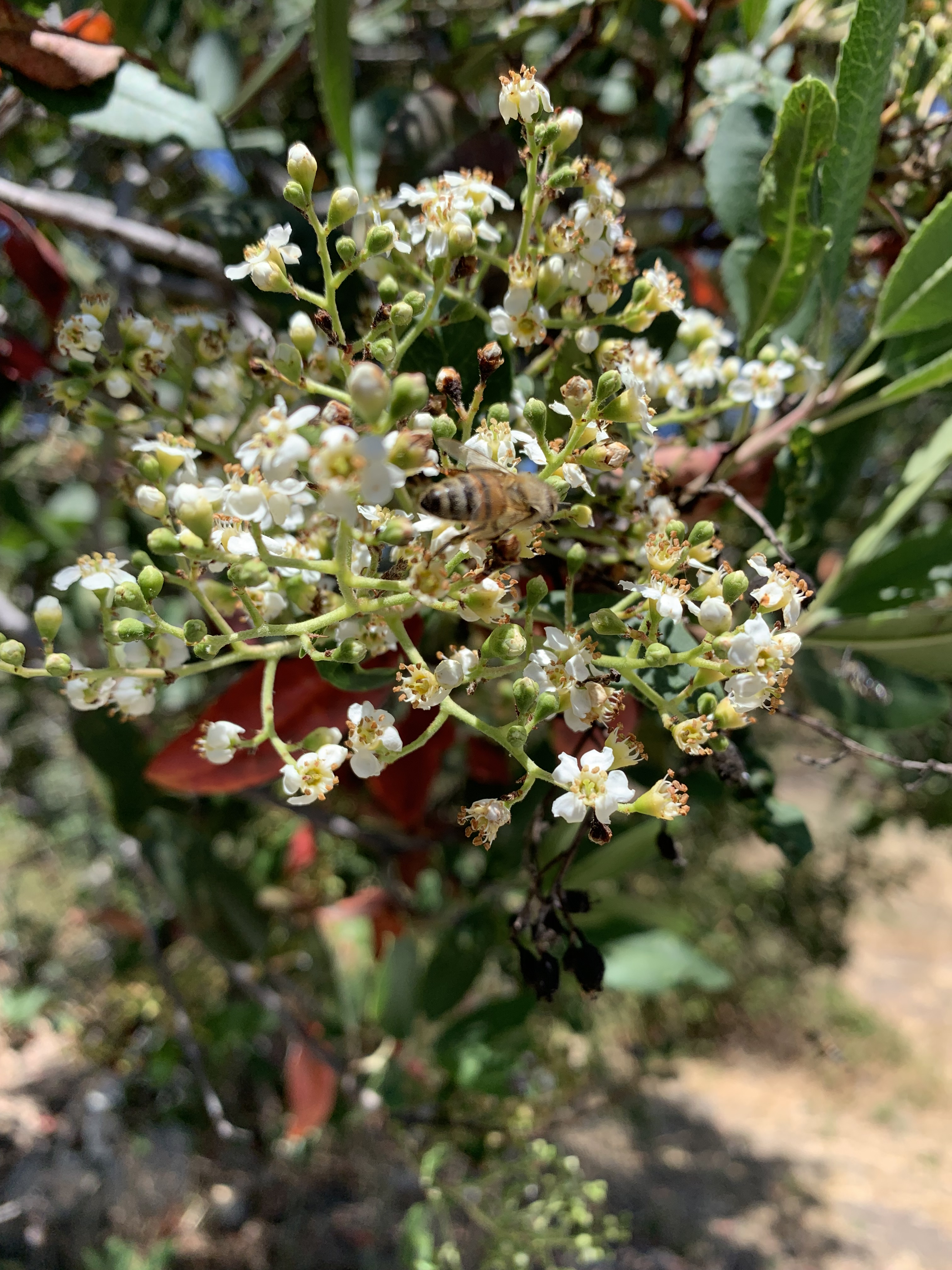
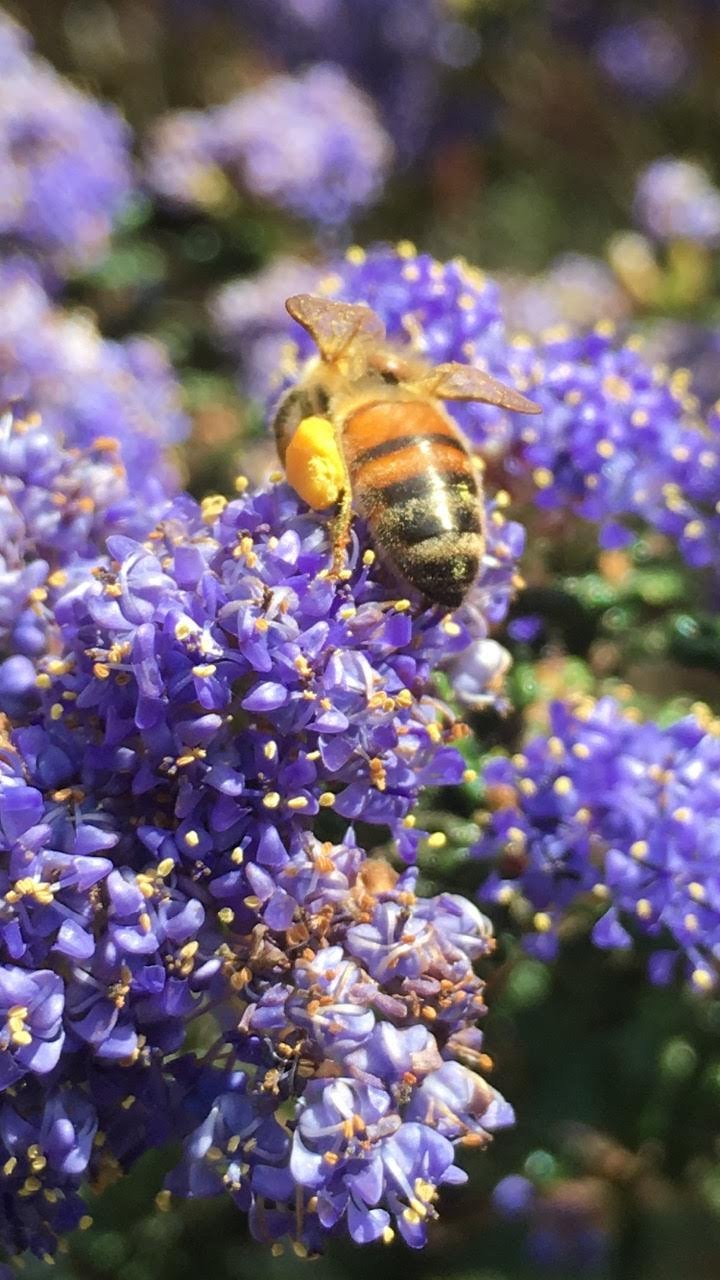
The plant’s genus name “Heteromeles” means ‘different apple’ (“hetero” translates as ‘different’ and “meles” references the apple genus ‘Malus’), which makes sense because this super shrub is related to apples, which are also in the rose family. You can see why it is a rose relative if you examine the small flowers and find that they are five-petaled, like wild roses. I captured a photo of a honeybee visiting Toyon flowers (note the attractive red leaves in the background). Like roses (and apples!) the flowers have an alluring scent…some say like Hawthorn – but, does anyone know how to describe hawthorn smell?? Oh, so much to learn…in Nature, there’s always more to learn.

More plant name etymology…as we already covered the secrets behind the genus name. Botanists often play most playfully with “plant nomenclature.” As a profession, they might be the punniest. This shrub-tree’s species name is “arbutifolia” referring to the shape of the leaves, which are like leaves in the genus Arbutus, which includes our native madrones. I recognize that the overall leaf shape fits and that the leaves are extremely waxy like madrone leaves. But, Toyon leaves are a darker green and have little teeth on their margins, unlike madrones. Nevertheless, if you cut branches of this plant for the holidays, you’ll get both a dark green ‘holly-like’ leaf color as well as the bright red distinctly holly-like berries- a fine combination.

Do We Eat Them?

Yes, we do eat them. The original people of this land made delicious food out of Toyon berries. The name Toyon is a Spanish-era mispronunciation of the native peoples’ name “totcon.” There is a problem, though…when ripe, the seeds are full of cyanide, so one must process the berries to get rid of that poison. I don’t know anyone who has done that work, and I leave the berries for the birds.

What Else Do We Do with Toyon?

Toyon wood is epically useful but little known these days. Know anyone with a toyon wood anything? Native peoples used the wood for poles, arrows, bows, pegs, pestles, frames for furniture, bowls, etc.

Nowadays we use the plant in restoration and habitat management. The birds, pollinators, and mammals like it a lot- a prime candidate for restoration in many ecosystems.

Wildlife Food

Wildlife worship at the Toyon many times a year. Now, when the shrubtrees are in bloom, they vibrate with pollinator noises in all octaves. Being one of the only early summer abundant sources of pollen and nectar, Toyon is the go-to nectar bar for a wide variety of buzzing floral resource collectors. The distinct drone of European honeybees emanates from the flowering canopy, joined by the high whine of numerous flies and the deeper tones of larger native bees. And then there are fruit…

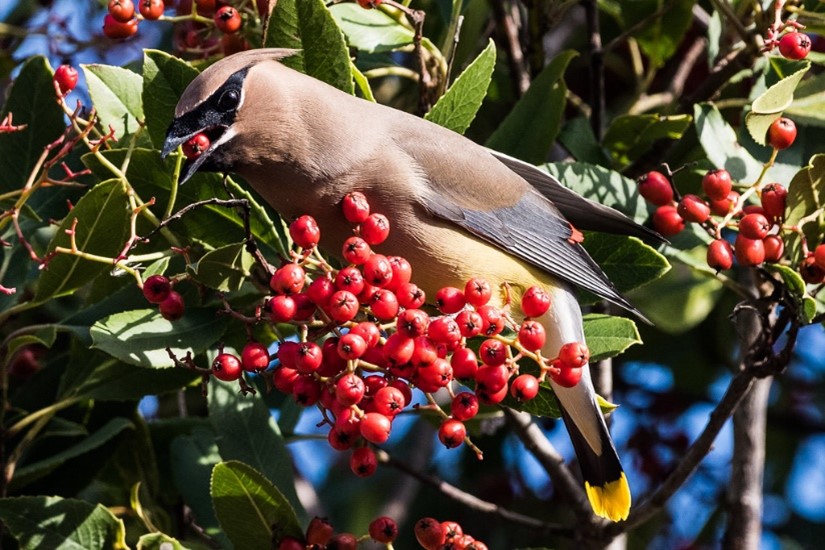
Cedar Waxwing on toyon (copyright by Creative Commons and photo by Flickr user Becky Matsubara).

The fruit take a long time to mature, a long wait until berries are ripe and delicious, but as with the good fortune of early summer flowers, the fruit arrives at a time when few other such foods are available. One of my favorite wintertime visitors, flocks of noisy cedar waxwings descend on a toyon and feast joyously on the berries. The amazing photo above is copyright by Creative Commons and is by Flickr user Becky Matsubara. Robins, too, regular fruit eaters, gulp them down. I’m not sure how coyotes reach the Toyon fruit around here, often too high to reach. If there were bears still around, they would feast on Toyon berries, probably tearing off limbs that bore berries too high for their reach. All of these critters disperse Toyon seeds with their poop. If you aren’t lucky enough to have a waxwing-dispersed toyon sprouting up in your home’s vicinity…or, if an open space near you doesn’t sport crowns of Hollywood stars…there’s always a chance to plant them!

A mature toyon near Davenport, California

Landscaping with Toyon

Toyon is a great landscape and restoration plant when you want a large, resilient, and wildlife friendly shrub. The species isn’t the fastest growing, but it is quick enough! After 10 years, you can count on a 12’ tall, 10’ diameter plant with a full round crown chock full of flowers. What you can’t count on is a full canopy of leaves…or red berries…it seems that those only occur on the driest of sites – mine get mildewy leaves that fall off readily and the berries turn moldy black in many years. The flowers, though, consistently appear in larger and larger bee-covered masses. Count on multiple trunks with smooth grayish bark that are easily pruned up to be more fire safe. If there is a fire, you can count on Toyon to bound back with new sprouts so perhaps once established a shrub can live a very long time. Another bonus- although Toyon is ostensibly evergreen, it does shed its leaves a few at a time…and as those leaves get ready to shed they turn a bright and beautiful red.

I took this photo of a 10 year old toyon just today, high above Davenport- in bloom and very lush looking.

Your Task

Your homework, should you decide to take my advice, is to spot the Toyon. There really aren’t that many trees or near tree shrubs to learn in our area, and this one is a great one to add to your repertoire of local knowledge. Where will you go to find this species???            

-This post originally posted by Bruce Bratton in his weekly blog BrattonOnline.com

Botta Pocket Gophers

Pocket gophers are an important and very common mammal in many habitats in our area, so it seems appropriate to learn a little more about them. Most people know them as pests of ornamental plants or crops, but they play important roles far beyond that pestiferousness. And, just look at how cute they can be- photo by Flickr user Chuck Abbe:

What is a Pocket Gopher?

Why is this critter called a pocket gopher? No, it’s not because of some 1970’s fad of domesticating gophers and putting them inside pocket protector-lined pockets. BTW, this fad fantasy must include pocket protectors because gophers have sharp teeth that they habitually gnaw with to wear them down…without such nervous-seeming gnawing, their teeth would be 11” long by the end of the year. This fad could really take off one day because pocket gophers are not legally protected by the State!

Back to the subject at hand…the ‘pocket gopher’ name comes from odd pockets that these critters use as their cargo containers, hauling soil or food. Those pockets extent from the cheeks back to their shoulders. Inside those furry pouches, they haul food into their burrow, creating food storage piles in a deep portion of their burrow system. This food pantry also serves as their sleeping, baby raisin area, so food’s close at hand. That makes me think that maybe there’s a niche for food-storing bedroom furniture for humans!

Local Gophers

Our local species of pocket gopher is the most widespread in California, and so there’s lots of information around about its natural history. Our species, Botta Pocket Gopher, is almost everywhere in the state except the high Sierra Nevada. Like most pocket gophers, the males of this species are larger than the females. So, its likely that the Jury Room sign that was posted for years ‘Home of the Giant Gopher’ referenced a male. Not that you’d try, but you tell pocket gopher species apart from where they live and then the size of their rear feet, the shape of their ears and the relative size of the dark area around their ear.

Territorial Gopher

Pocket gophers are very territorial, protecting their extensive burrow system which represents the extent of their feeding ground. The size of their territory depends on how much food there is, but they range from the size of a tennis court or, sometimes, you can fit 10 gopher territories in the space of a tennis court. If you kill a gopher, its burrow system won’t be vacant for long…

Waves of Dispersing Gopher Young

During breeding season, gophers become less territorial, allowing visitors into their burrows, which seems sensible for reproduction. Where people aren’t watering plants, and the summers are so very dry, pocket gophers have a single breeding season in late winter. They bear 2-5 blind babies (aka ‘pinkies’). Gophers kick these offspring out of their burrows as soon as they are weaned (40 days after birth), and those young have to find a place to live. Those dispersing gopher children are why folks suggest leaving root protection cages out of the ground 6 inches. That wave of dispersing gophers will try to occupy whatever burrows they find…including the burrow complexes that have been abandoned by other gophers due to trapping or old age. People think that our gophers only live 3 years.

Gophers Drought Solutions

Gophers are soil engineers and are so good at their work that they are known to be an important solution to California’s water crisis.

Some have suggested that restoring mountain meadows in the Sierra Nevada could store as much water as two new giant reservoirs. Part of this would be done with reintroduction of a different rodent, the beaver, but another part is already under way by the pocket gopher. Pocket gophers are excellent hydrological engineers, assuring infiltration of snow melt and rain through the soil through their burrows, which include specific drainage architecture. Gophers can drown and need to breathe air, so their burrow systems must accommodate drainage for the rainy season.

Native Meadow Gardener Gopher

The better local natural historians around us will already know about the super-diverse and super-interesting mima mound meadows around Santa Cruz. These are caused by eons of soil movement by gophers, which means that they are literally “ecosystem architects.” Atop the mima mounds, there are poppies, lupines, purple needlegrass and other ‘dry’ loving species; between the mounds there are buttercups and rushes as well as streams and pools of water weeping from ancient gopher mounds during the winter. Dry and wet gopher-created ecosystems in close proximity makes for extraordinary species diversity.

Gopher Burrows: Habitat for Other Creatures

All of those gopher burrows are quite inviting to other creatures. In other places, scientists have described insect species that only live in gopher burrows. I see a species of brown fly come out of gopher burrows around here- there’s probably much more to be discovered. Pocket gophers don’t much like to invite things to enter their homes, so they plug their holes with a distinctive soil plug. However, I’ve seen newts poised for nocturnal forays at the mouths of gopher burrows. Others have seen rare California tiger salamanders using gopher runs. Those tunnels would of course be cooler and moister than the surrounding habitats in the summer. I commonly see the aptly named gopher snake winding its way from one gopher hole to the next, only the middle of its body visible. If gophers plug their holes, how do the snakes find their way in? Somehow they know…I saw a gopher snake recently quickly and energetically ‘dive’ into a gopher-strewn dirt pile and disappear quickly. Many are thankful for gopher predators because of the damage gophers can do to human-plants. Gopher snakes and alligator lizards are the most effective gopher control, because they can get down in the gopher burrows and eat the pinkies, controlling many gophers at one sitting.

What to do About Gophers

There are plenty of websites with information about how to, and many tools to, kill gophers, but is there another way to coexist with these creatures? I have spent a fair amount of money and time killing gophers or protecting plants from gophers using buried metal caging, and I have a few suggestions for gopher coexistence.

Lawns are pretty much passe at this point in California, so how about letting gophers make their homes in what would have been a lawn? The only drawback I’ve experienced is the mounds of dusty soil that they pile up, making a mess of what I want to be level ground without trip hazards. Use a gravel rake and smooth those mounds out and you’ve got a great seedbed for wildflowers to sprout from next spring. Yes, with all of that soil disturbance, gophers are doing a great job of preparing wildflower beds- poppies, lupines and other wild pea relatives, new yarrow seedlings, redmaids, owls’ clover, and lots more appreciates that fresh ground.

Another thing to do is choose plants that gophers don’t bother. Colt rootstock for cherry trees is highly resistant to gophers. Wild rushes (especially Juncus patens) stay green through the summer and are so tough that gophers can’t destroy them.

A final solution is to cultivate meadow voles, which are superior at running gophers out of their tunnels. Voles like lots of mulch- put mulch around and voles proliferate…and the gophers run away (or die at the homicidal teeth of the vole militia).

I’d like to see more discussion about human-gopher coexistence, so these important creatures can continue to do so much good across our region.

-This post originally presented as part of Bruce Bratton’s BrattonOnline.com weekly blog…check it out!

Birds from the Coffee Region

Many of us enjoy both delicious coffee and the fascinating birds that hail from coffee growing regions: how do these two seemingly disparate subjects relate to our daily lives?

Coffee Botany

Coffee shrubs are beautiful, lush shrubs, 6-15’ tall and wide with many stems and glossy oval leaves with long ‘drip tips’ – a common feature in rainforest plants that help shed water. I have a potted, indoor coffee plant and many of my friends have raised them, but they are notoriously finicky to care for and especially prone to indoor plant pests. That coffee plant is the thirstiest of my house plants, wilting quickly when drying out: at least it is good at communicating! That thirstiness makes sense as coffee is naturally an understory plant, originating in the lush damp shade of African tropical rainforests.

After 5 years, my coffee plant blossomed this spring, and I was reminded of it’s very sweet smelling (like jasmine!), small white tubular flowers. Now, I’m looking forward to the tasty fruit, which is confusingly called a ‘cherry’ and turns deep maroon-red when ripe and is soft-fleshy (slimy?) sweet (like hibiscus) and full of antioxidants. In the center of the red fruit, there will be a pair of seeds…called coffee ‘beans’ – another misnomer associated with this plant as the plant isn’t related to cherries or beans! Whenever I encounter a small red fleshy fruit, I’ve been trained to suspect the plant co-evolved with birds for seed dispersal. Even when coffee is grown far from its African origins, there are birds that devour the fruit, but cultivated coffee has a more important relationship with tropical birds.

Coffee Farms and Birds

Coffee is a lucrative tropical farming product and is cultivated on 27 million acres. Tropical regions are the most biologically diverse areas of the planet with many species still being discovered. Conversion of tropical rainforest to agriculture is occurring rapidly, threatening that biodiversity. Soybeans and palm oil are two crops that are expanding rapidly, but coffee is much more lucrative per acre. And coffee can be grown more in harmony with tropical biodiversity, but only if it is ‘shade grown.’

Shade Grown Coffee

As reviewed by independent, peer reviewed, published science, the only credible shade grown certification is from the Smithsonian Migratory Bird Center, carrying the logo inserted here.

The standards for this certification include maintaining real shade provided by diverse overstory trees as well as organic practices (certified by another agency)…and diverse other plant life, maintenance of natural mulch, and protection/buffering of waterways.

These standards have been shown to support native bird life as well as providing habitat for many other native species, including mammals.

The Effects of the Central Coast’s Coffee Shed

Here on California’s central coast, we are lucky to have both coffee AND birds that hail from coffee growing regions. Judging from the aroma of roasting coffee, the many businesses supported by serving coffee, and the plethora of local coffee labels, our region greatly appreciates this caffeinated beverage. I am curious about how many acres of coffee farms are needed to support Santa Cruz County’s coffee-drinking habits – anyone know? We can call that our ‘coffee-shed.’ If we support a coffee shed that nurtures the birds that come visit us in the summers, we can look into those birds’ sparkling eyes through the steam of a latte and be proud of those connections…

Beautiful Migratory Songbirds

There are many migratory bird species that come to California’s central coast for the summer to nest, raise young and store up enough reserves to return south before our winter gets too harsh. I’ve been enjoying steaming cups of shade grown coffee while watching two beautiful tropical migratory songbirds this summer. The startling colored thick-billed black headed grosbeak is fledging young right now on the Central Coast. Check out this photo from a Flickr site by Kersti Niebelsek; maybe this striking image will inspire you to purchase certified shade-grown coffee and grab some binoculars to see the bird in the wild.

The other striking species that lights up my mornings and gets me pouring boiling water to drip through freshly ground, certified shade grown coffee is the lazuli bunting. Be similarly inspired by another extraordinary photo, this time by Flickr user Julio Mulero who captured this pretty bird at Ed Levine Park in Milpitas.

Both that grosbeak and the bunting may have traveled from the coffee growing region of southern Mexico, where they spent last winter. Other species come from coffee growing areas even farther away, including: ash-throated flycatcher, olive-sided flycatcher, Wilson’s warbler and yellow warbler. That last deserves a photo, as well. That photo is compliments of Flickr user Kelly Colgan Azar.

Finding and Procuring Certified Shade Grown Coffee

Surprisingly, it is Very Difficult to find certified shade grown coffee in our area. You can always search the internet and have it delivered! Last I checked Whole Foods had one of its wall of coffees that was certified shade grown. Not so for any of our other local grocery stores! You can find all sorts of supposedly “bird friendly” or “shade grown” coffees, but only those with the certification shown above are verifiable. Because shade-grown coffee produces less per acre, you are going to pay more for it. Think of those extra dollars going to the trust funds for these beautiful birds.

This post originally published as part of my series with Bruce Bratton at BrattonOnline.com Thanks, Bruce, for keeping Santa Cruz actively informed!

Land Ethic

Have you formed ethical standards for your relationship with Earth? Most people teach ethical standards to children in what behaviors are ‘right’ and how best to treat other people. As we grow, we learn through experience how to build on those ethical standards to be good people. But, few people I’ve met have taught their children the ethics of their relationship outside of the human world. How would you answer questions about how to act ethically with the natural world?

Aldo Leopold wrote possibly the most influential modern treatise on this subject, which was published in his Sand County Almanac and entitled The Land Ethic. I suggest you read that 14 page essay first and this second, as I supply a framework for how his thoughts apply in our shared place, the central coast of California.

We Hold These Truths…

Are these statements true to you?

  • Our food, air, and water are products of Nature
  • Nature is very, very complex: there is wisdom in considering the precautionary principle when considering impacts to the natural world
  • As citizens of this particularly ecologically rich place, we have a particularly high level of responsibility for nature conservation.

Land as Economic

As Leopold suggested was normal throughout the USA in 1949, so it is today…we citizens of central California are continuing to commodify nature. We treat our agricultural lands as short-term profit-making properties; most are barely cover cropped so that soil is washing away at tremendous rates, many agricultural properties are awash with fertilizer and chemical pesticides that have had too little human health and environmental impact study. Our conversations around property circle around what ‘rights’ we are afforded, not what duties we have: even knowledgeable people lack the information to well manage private property. Land Trusts commodify land that they hold, managing negatively impactful agriculture, grazing, and other uses and expanding recreational use with little idea of its impacts. Public parks are even more guilty of commodifying nature for highly exploitive, barely planned/monitored recreational uses that are rife with negative impacts on soil and wildlife. Economic interests drive these types of nature commodification, those interests are embedded in even local politics, yet few people vote for candidates based on these types of issues.

Aldo’s Land Ethic

A thing is right when it tends to preserve the integrity, stability, and beauty of the biotic community. It is wrong when it tends otherwise.” – Aldo Leopold

What would happen if we all used Leopold’s land ethic when weighing proposals on natural lands around the Central Coast? For instance, how would application of that ethic affect how you feel about the development of the Homeless Garden Project in the middle of Pogonip Greenbelt’s main meadow? What about the way proposals have been made for the new trails at Cotoni Coast Dairies? What would you think about the plans for post-fire re-building of Big Basin State Park’s visitor center?  How do your feelings on those proposals compare with how you think about applying Leopold’s Land Ethic to the planned wildlife tunnel under Highway 17…to restoring the Scott Creek Marsh on the North Coast?

Is Education Enough?

Most people with whom I discuss the Land Ethic emphasize a problem Leopold anticipated: they focus on a perceived need for more education before it will be possible to apply the Land Ethic. I have spoken with leaders and practitioners of environmental education around the Monterey Bay, and they all reiterate the primary need for education until a more ethical approach to Nature can take hold. And yet, almost none of these educators are familiar with well-established tools to change human behavior towards the environment. I wonder how many would be able to help others by describing what a Land Ethic might be?

The same goes for most staff whose jobs entail environmental protection. Parks law enforcement staff rarely give tickets for environmental destruction, preferring ‘education.’ Municipal planning agency personnel rely almost entirely on education in hopes that it will serve to protect nature in the Central Coast. The personnel responsible for protecting whales and other marine mammals in the Monterey Bay also entirely rely on education to accomplish their mission. With the many interactions I’ve witnessed with these individuals, none have ever tried to help elevate awareness of the ethics of caring for Nature. I have heard political decision makers cite anything like the Land Ethic very, very few times.

The Central Coast has a large variety of environmental organizations focused on environmental education. I hope that they will incorporate the Land Ethic in their curricula, including the many available local case studies to further illustrate lessons.

A Place for Science?

We are lucky to have the California Environmental Quality Act (aka CEQA) as a potential to start the conversation about portions of Leopold’s suggested Land Ethic. For instance, lead agencies using CEQA might ask ‘How does the proposed project affect the integrity of the biotic community?’ What if this question were posed about the numerous wetlands that will be obliterated along the proposed Rail Trail on the North Coast? I would anticipate that the lead agency would pick scientist-consultants to outline a restoration program somewhere along the coast that would ‘improve’ the integrity of wetlands in the project vicinity…checking that box in CEQA…and proceeding with the project. The ‘improved’ wetlands would likely have some attention for restoration for 3 years, but with no long term proposal for management or monitoring. It is very likely that the more correct answer to the Land Ethic-informed question would be ‘the proposed project negatively affects the integrity of the biotic community.’ But, even in the unlikely possibility that the lead agency received that answer from their paid consultants, they would likely proceed with a “statement of overriding considerations” and proceed anyway…because there is no chance that anyone would be held accountable during their election to political office. In short, there is a lot of demand for consultant-scientists to create plans that appear to address the Land Ethic but which in fact are just the excuse a project proponent needed to proceed with their destruction of Nature.

The Solution?

Any decision maker in our region whose work impacts the environment should have access to the smartest ecologists around, so that they receive the best information possible to make excellent decisions to conserve nature. For a while, this happened in the Santa Cruz County Planning office. That model could expand. There are certainly a very many well respected biologists in our region who we might learn from!

-this originally published in Bruce Bratton’s weekly blog BrattonOnline.com

Save the Bees!

As the fields of lupine blossom at higher and higher elevations, other flowers follow in wave after wave of color and design, and the bees dance and hum celebrating each new unfolding.

Bees! There are so many types of bees: mason, bumble, leaf cutter, long horned, orchard…For each of those, there are many species. For instance, there are 10 species of bumble bees in Santa Cruz County. As with most species on Earth, all those bee species are in decline.

Flower Pollination

Bees pollinate flowers. Sure, there are other types of pollinators such as butterflies, moths, and flies. Even some types of mosquitoes and ants pollinate flowers…as do hummingbirds. But, bees are the most important pollinators in general.

Evolutionarily, bee (and other) pollination gives plants the advantage of shaking up the genetics, helping populations of plants be more resilient to change in climate, disease, and even fluxes in pollinator communities.

Invasion of the Honeybee

Honeybees are not native to our area, and yet they are everywhere. They were introduced in the late 1600’s to the United States and then moved around more easily in portable hives in the mid-1700’s. In California, beekeepers earn money by strategically moving large numbers of hive boxes into agricultural areas to perform pollination services. When they aren’t doing that work, they must find areas to put those boxes where there are enough flowers to feed the bees and keep them healthy. Especially in wintertime, coastal areas in California are prized by beekeepers because it is not too cold for flowers; something is bound to be in bloom year-round. At the same time, honeybees have escaped into the wild, becoming naturalized. Swanton’s Jim West has documented a honeybee colony year after year in an old redwood tree for most of his 74 years of life.

Honeybee on Ceanothus; nonnative bee on native shrub

The Good Honeybee

Most of us know about all the good honeybees can do from pollination to honey and wax production. Almond growers in California’s Central Valley have been particularly worried about the ongoing problems with honeybees as they have been reliant on imported bees to pollinate their early-flowering trees so that they will make nuts. With the mysterious Colony Collapse Disorder, honey and beeswax prices have increased, making us appreciate even more honeybee production.

The Bad Honeybee

Most people I talk to are unaware of the problems honeybees can cause, including competition with native pollinators, plant community changes, invasive plant species proliferation, and disease vectoring. I was lucky to attend UC Santa Cruz at the same time as the brilliant Dr. Diane Thomson who has studied honeybee and native bee interactions in our area for decades. Her research adds to a growing body of scientific evidence warning us about the negative consequences of honeybees to native bees, with whom they compete. That science has suggested that 20 honeybee boxes rob the food from 2 million native bees. This competition can cause some plant species to be pollinated and not others, shifting the composition of plant communities. And, because honeybees can pollinate some invasive species more than native bees, they can cause bad trouble, like adding momentum to thistle problems. Oh, and by the way….honeybees carry diseases and parasites that can negatively affect native bees. For example, there is a virus that causes bumble bees to have deformed wings – honeybees carry it!

In the last few decades, Randall Morgan documented the diversity of bees in Santa Cruz County.

The Good Native Bees

Native bees are important for pollination, contributing to crop production for humans and food production for wildlife. Dr. Claire Kremen and others have shown that California farms that have a good amount of native bee habitat around them have better crop pollination. Native bees are also essential for pollinating native species of plants, which produce fruit that are important for wildlife. For instance, native bumblebees pollinate manzanita flowers, which produce fruit that is eaten by native foxes and many bird species. Likewise, native bees pollinate coffeeberry bushes that produce fruit eaten by lots of birds, including band tailed pigeons as well as foxes and coyotes. There are many other examples of the natural fruit that is wildlife food made possible by native pollinators.

What You Can Do

You can help conserve native pollinators by helping do the right thing with nonnative honeybees. The first thing to do is help spread the word about these issues. To learn more, read this publication by The Xerces Society for Invertebrate Conservation. That paper has good details about where it is, and isn’t, appropriate for raising honeybees. This caution caught my attention: don’t put hives within 4 miles of “habitats of special value for biodiversity and/or pollinators:” I suggest that this covers most of Santa Cruz County, which has special habitats full of rare pollinators throughout. The plethora of native bee habitats throughout our area would also suggest good potential for gardens and farms to be visited by enough native pollinators to perform enough pollination for the fruits we desire. Besides not placing more honeybees near native habitat, there are other things you can do.

If you know a beekeeper who wants bees, you might point them in the direction of harvesting bee swarms out of native areas and exporting them to urban or agricultural areas where they can do some good and avoid impacts to native pollinators. Also…read below about avoiding bug zappers and darkening night lighting. Finally, reducing or eliminating pesticide use is also important. One of the biggest threats to native bees (and honeybees!) is neonic pesticides; to learn more and write a letter to California’s decision makers, see this Natural Resources Defense Council webpage.

Bug Zappers

I’ve recently heard about people in our area using ‘bug zappers’ that attract insects to ultraviolet light and then electrocute them with a grid of electrified screen. Anyone buying one of these devices has been scammed: they do not work against biting insects. Instead, they kill a broad range of native insects that might have otherwise performed pollination, controlled pests, or fed birds. On top of that, the owner destroys their own nighttime peace with obnoxious electrocution noise and light. Oh…and speaking of light-

Night Lighting is Bad

Turn off outdoor lighting! Darken your windows. Anything you can do to make for a darker nighttime world will help conserve native insects and pollinators. Find out more with the International Dark-Sky Association. Urge local decision makers to reduce light pollution.

-this post originally posted in Bruce Bratton’s online blog at BrattonOnline.com

Teach Your Children Well, Part 2

I received lots of great feedback from my column a couple of weeks ago, maybe in part because people resonate with the need for raising our children with love and respect for nature. When we see people damaging nature, we must redouble our efforts to make sure we avoid making new people like that – by reaching out to children, to teach them well. This made me wonder what are core lessons we need for children (and adults!) for being good to nature right here in Santa Cruz. I hope the following is a good start- please send me more ideas for a future, more in depth publication.

News: Apocalypse Cancelled

The most damaging words I hear regularly about nature is how we are doomed. Even generally well meaning and educated people I know enter into what I call the apocalyptic mindset. You’ve probably heard it…maybe even participated in such a dialogue. It starts with, for example, how can we ever address global warming…its such a huge lift…governments aren’t doing anything…oil companies have too much power…people are greedy…the planet is going to be uninhabitable…the human race is going to disappear. This type of conversation seems to always end with ‘the human race is going to disappear,’ sometimes due to disease, sometimes nuclear war, and now sometimes global warming. Maybe we avoid this story with children, saving it for adult conversation, but if you entertain such notions at all, you can bet the children catch on. This story is magical thinking, and the rationale for such stories is beyond my expertise (but, please: ask yourself “why?” if you hear such things). Humans have survived very hard times – through plagues, terrible wars…through ice ages, famines, massive volcanoes, long droughts, etc: it is a safe bet that there will be people around for a very long time…long enough for us to tell a different story, so we think about a longer term presence and the need for earth stewardship.

A Better Story

The different story is supported by evidence near at hand. Go to Pinnacles National Park and watch a condor soar. Take a whale watching boat and see a blue whale. When you drive across Pacheco Pass or tour Pt. Reyes, see the tule elk. All of these species were ‘doomed’ but people decided that they were worth keeping…we changed our behavior, and they are recovering. The better story is of the inherent compassion of humans and our ability to improve how we live with nature. If your better story has people living alongside elk, whales, condors, and mountain lions in a world with grizzly and polar bears, elephants, giant pandas, and coral reefs, then it will inspire us to work together to make it so.

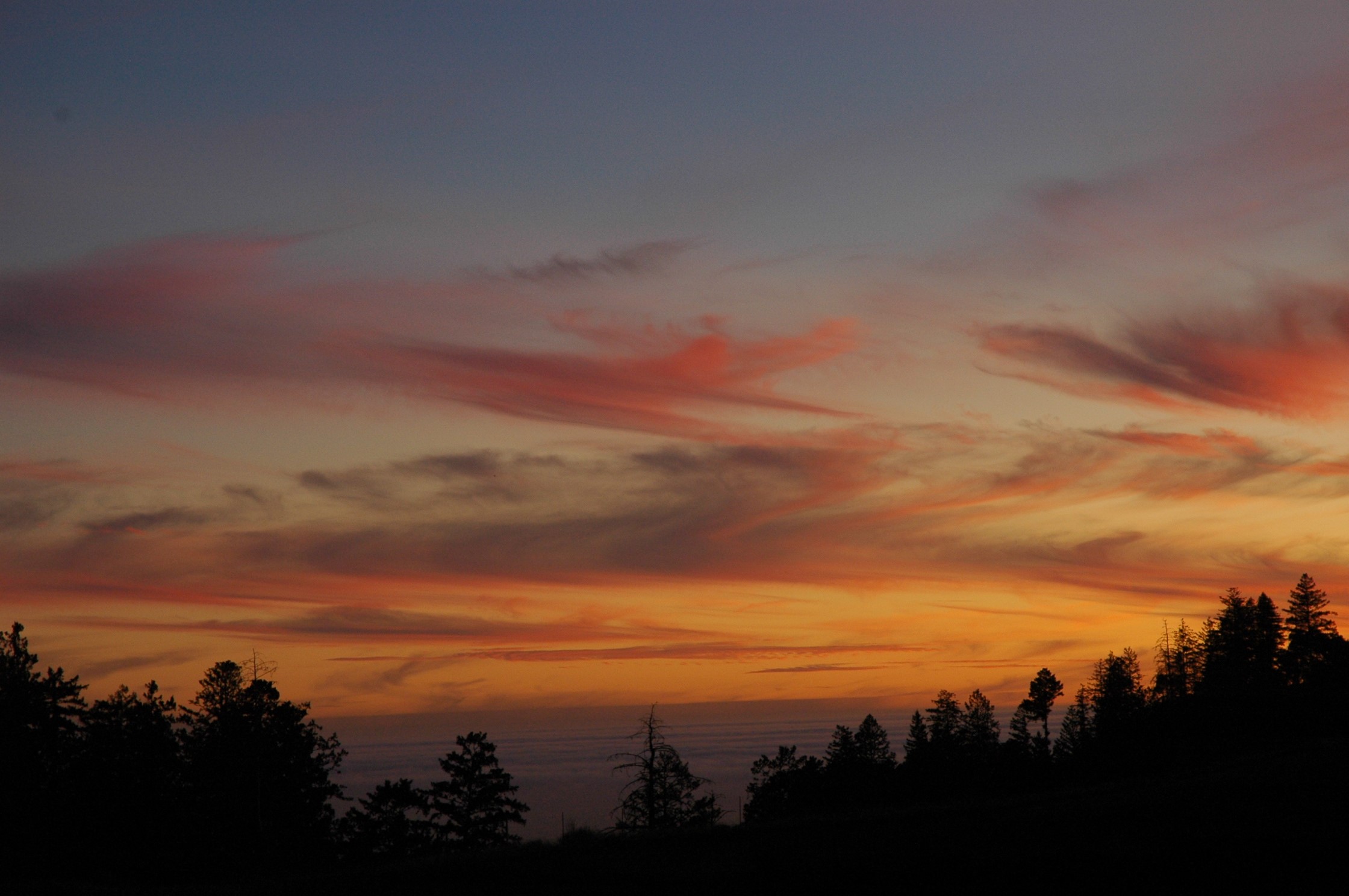
Sunset on the North Coast

Stewarding Soil, Air, and Water

There are, of course, other things to teach the children, such as care for soil, water, and the air. The science of soil formation has been taking place on Santa Cruz’ North Coast for a while, so we are fortunate to be proximate to the story of soil, and how incredibly slowly it is created. The Dust Bowl lessons are long forgotten and chemical fertilizers have been hiding the need for soil, but all the same- soil is sacred and everyone should know that soil loss is a terrible thing, that prime agricultural land is precious to conserve, that soil needs stewardship. All children should know where their food comes from. The same goes for water; I wonder how many appreciate where their water comes from and the care that must be taken so that it isn’t contaminated…thanks to government and rules. And, it is similar for the air. That we have good soil, water, and air are again testaments to the good that humans can do when we work together. But, we can all use some education about what we can do to help keep those situations improving.

For the soil, water and air lessons, here are some field trip ideas. Next winter, go for a walk at Wilder Ranch and see if the soil is covered or if it is washing off into the ocean. Take a trip to Loch Lomond then to an auto repair shop upstream in Ben Lomond; discuss the dangers of petroleum ending up in drinking water. Watch road runoff in ditches next winter and think about what that oily sheen means for water quality and how it might be captured. Stand next to a busy street and smell the air, talk about what is in tail pipe emissions and where that stuff goes and what it does. To have these kinds of conversations might take some homework- how many of us can have informed conversations about these simple and everyday situations? If children knew more about these things, would it help?

Non-Humans

Children should know about living well with non-human animals. Often, kids are introduced to domesticated animals…and too often they share their parents’ misconceptions about how best to care for and train those pets. Perhaps family time discussing well vetted videos about living with pets is in order. Meat eaters have an obligation to have some honest conversations about how livestock are raised and how they come to the plate. Field trips may be in order on that front. A little more on the wild side is the need for children to understand the host of issues from animals that aren’t domesticated that tag along with human civilization – termites, Argentine ants, roaches, stray cats, rats, mice, pigeons, starlings, etc. Just around the corner is another teaching subject: native wild animals which are doing perhaps too well at adapting to human ecosystems, such as ravens, crows, gulls, jays, racoons, etc. By learning about these and the invasive animals, perhaps children will learn to be more tidy and perhaps they’ll figure out other ways to mediate the impacts of these species. Into the real wild,  children need to learn about the needs of wildlife – for habitat, landscape connectivity, peace, respect, and for the science needed to better plan for conservation.

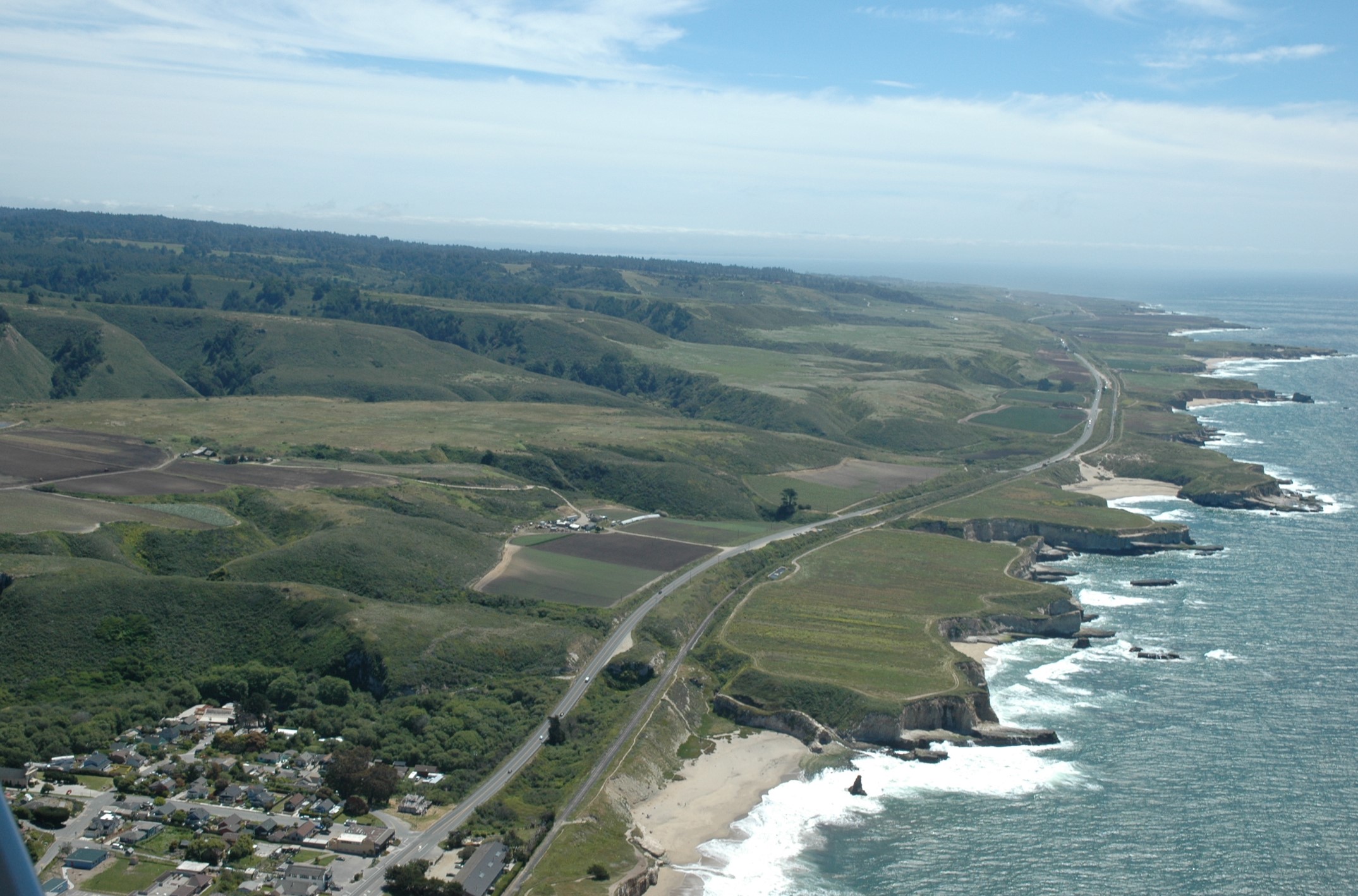
Santa Cruz’ North Coast

Children Becoming Citizens

As age appropriate, children will one day be old enough to need education about how the above concepts enter the civic world. They will need to understand how land management agencies do or do not protect open space for wildlife. They will need to understand how clean air and water regulations are promulgated, incentivized, and enforced. And, it would be good to teach them how to critically think about the environmental issues they encounter and how to seek credible information to inform their thinking. Are these issues addressed in schools adequately? How else might we help children to understand these issues so that they are engaged citizens?

Engaging

Nature brings peace, so perhaps the most important lesson for children is how to experience nature. I see families taking talkative strolls with children, but few parents sitting quietly in nature with their young ones. With luck, children should be able to witness a bird building a nest and feeding its young. They should see tadpoles and then tadpoles with legs. We all feel delighted to see a fox or coyote pounce on prey. There’s a fascination to watching the dusky footed wood rat taking a huge mouthful of twigs to its 4’ wide stick home. There are salmon swimming upstream to spawn in nearby creeks during the early winter. Giant whales are lunging into schools of anchovies close to boats that leave every day from local harbors. None of these things are easy to see as chance encounters. Like all good education, it will take some work, but it is worth it.

The more time we spend with children sharing these types of lessons, the better the chance of future generations saying ‘we are sure glad that people figured out how to restore beavers!’ or ‘wow- look at that tule elk!’ Richer lives and a better planet require us collectively to raise children who are eco-literate. Please do your part, even if you aren’t a parent.

-this article appeared first in Bruce Bratton’s BrattonOnline.com weekly blog.

Iceplant

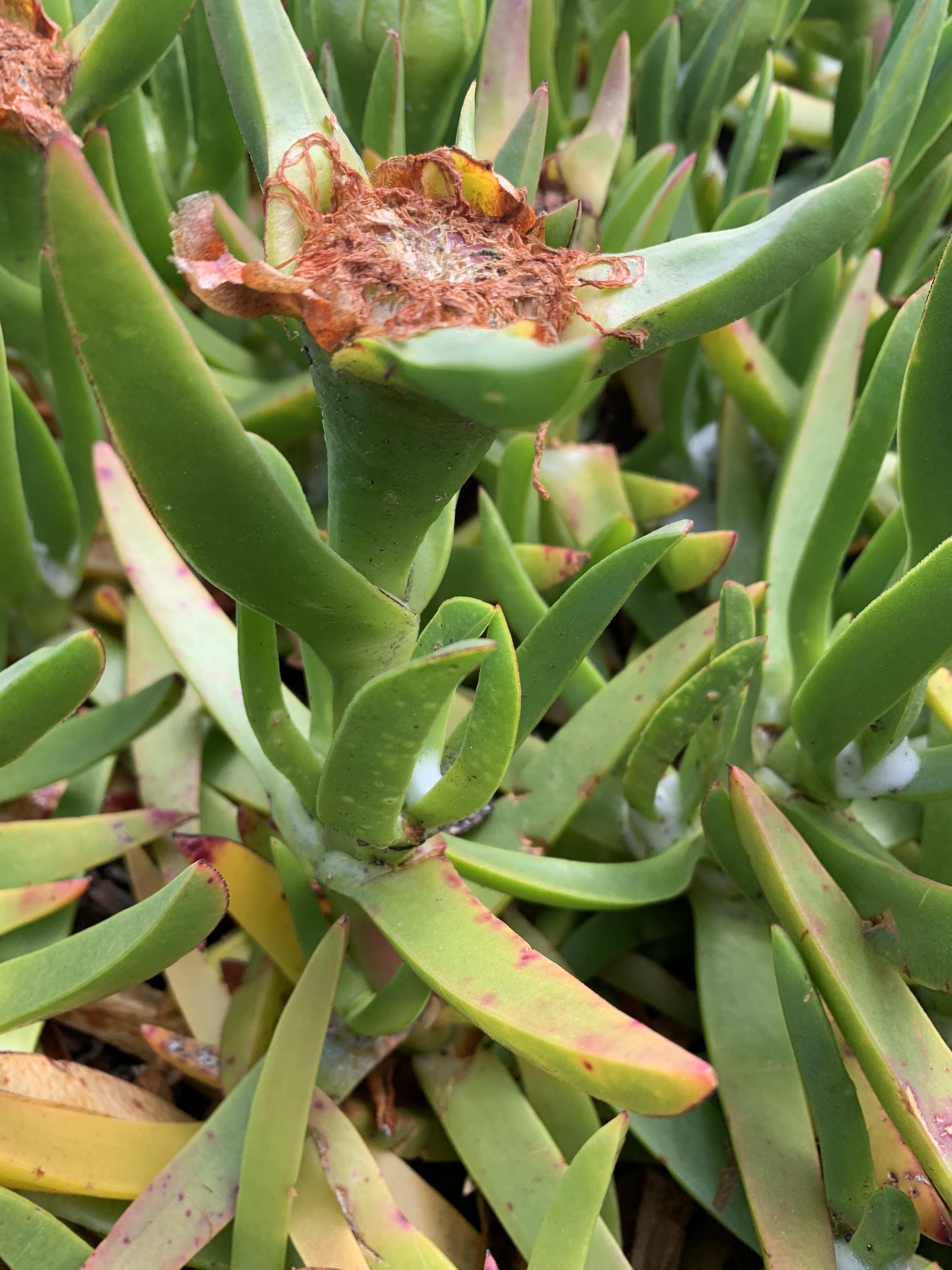
Succulent carpets sporting pale yellow, rich magenta, or light purple flowers blanket the bluffs and hang over the cliffs along the coast of California. Joining oleander and cotoneaster as historic roadside plants, ice plant has been dropped by public works landscapers for many good reasons. Several species of ice plants are quite invasive in parts of California, spreading 3’ a year, wiping out rich assemblages of native plants and changing wildlife communities.

Native Ice Plant??!

When my mentors taught me the native flora, they wanted me to recognize the difference between the ‘native’ and non-native ice plant species. However, the ‘native’ ice plant turned out not to be native, proven by a clever scientist who sleuthed for a pollen record in pond sediment from an ancient pond in Marina, California on the Monterey Bay. The trick is to find an old pond, drill into the sediment with a hollow tube, and pull out a long plug of mud: deeper muck is older. Scientists can reference ash layers from volcanoes in the sediment and use carbon dating of bits of organic matter to index the history in the sediment core. In that pond sediment, they discovered ice plant pollen beginning in the 1800’s and occurring steadily in the pond sediment ever since. That was the age of lots of Old World species’ arrival…a time when invasive grasses and herbs spread rapidly across the landscape. Some species spread faster than the invading people so that the first Old World botanists didn’t know whether something was native or not. How did ice plant get there?

South Africa: Iceplant Home

South Africa is home to many ice plant relatives. That Mediterranean region is a biodiversity hot spot for many interesting plants, including plants in the ice plant family. Many ice plant relatives have stunningly bright colors and thin, reflective petals. There might still be a patch of ice plant relatives in the South African collection at the UCSC Arboretum. When I worked there, I came across that patch on a sunny spring day and was mesmerized by the color, gazing at first one intensely bright color and then the next. Peeling my eyes away from those flowers, I was shocked to find a world of temporarily muted color (a world of gray!). Something in my eyes had been overloaded and it took a while to get normal colors back. Only a few of the South African ice plant relatives have become weedy in California- not to say that more won’t in the future, should they find their way via the nursery trade.

Limey!

Scurvy is a horrible disease of malnourishment caused by too little Vitamin C. Part of the ‘success’ of the Imperialist British Navy is due to the recognition of the need to pack limes on board ships, earning those sailors the name ‘limeys.’ Some sailors might have been better called ‘iceys’ but that term doesn’t appear in the history books. The term for ice plant seed pods was “Sea Fig,” and the fruit was packed aboard ships to combat scurvy the same way limes did.

Tasty Treats

Ice plant fruit is ripe when the pods are wrinkly and shriveled, having narrowed from their once plump shiny tautness just after the flower fades. If you try eating one too early, it is very disappointing. Wait a while and you get to enjoy sweet, tart, and salty fruit loop flavor. Like figs, ice plant seeds are on the inside of the fruit, suspended in a sticky, stretchy slightly slimy gelatinous goo- that’s the tasty stuff to harvest out of the pods. I am pretty picky about where to harvest the fruits because of what I’ve seen dogs do on ice plant carpets. The biggest flowering of ice plant is under way now, so you have to wait a while for the pods to ripen.

Rats!

Us bipeds aren’t the only ones who like the ice plant fruit- they are favored food for all sorts of small mammals. The moisture in the fruit might be attractive, but the protein-rich seeds are nutritious – so much so that all that food elevates small mammal populations above what might normally occur. Ground squirrel, rat, and rabbit numbers increase, and herds of these animals scurry into areas surrounding the ice plant patches and graze down native vegetation, making way for still more ice plant with seeds dispersed in the critters’ poop. Sit on some of the large cliff-erosion combating rock piles near West Cliff’s ice plant carpets some evening and watch the cracks between the rocks. You will probably get to see part of that ice-plant fed thriving rat population.

Salting the Earth

Feeding the ice plant gardening small animals is one way that the plant is clever, but there’s an even more genius method of invasion: salt. Ice plant is very salt tolerant. As it grows it concentrates salts in the soil under it, creating more saline conditions than much of the native ocean bluff flora can tolerate.

Biocontrol Story

As I mentioned above, there once was a fondness for ice plant for stabilizing soil along roads and railroads. Many older readers probably recall ice plant lined roads; CalTrans maintained at least 6,000 acres of ice plant in the 1970s. Native plant enthusiasts never really liked that ice plant landscaping, long recognizing the species’ invasibility, and so they rejoiced when an iceplant pest made it to the New World and started killing ice plant patches. The scale insect was taking a serious toll on highway and railroad plantings, and native plant conservationists were transporting sick ice plant to new areas to spread the pest. Others regarded the pest with disdain, and they ended up winning. Cal Trans funded and UC Berkeley launched a biological control program to fight the ice plant pest. UC researchers found a few species of wasps that controlled the scale insects and released those wasps in masses. The wasps established and now control the ice plant destroying pest.  

Removing Iceplant

Don’t worry: ice plant is controllable! Volunteers for the California Native Plant Society and other groups have embarked on ice plant pulling sprees to protect particularly rich areas of dunes and ocean bluffs. While the plants are quite heavy, they aren’t particularly well rooted, so are easy to yank. Pulled up parts of the plants are piled high and slowly decompose. You have to keep coming back to make sure some of the piled plants don’t re-root, but that follow up work isn’t very hard. And, one typically finds a few plants that were so small they got missed the first time pulling in an area. Ice plant is easy to recognize, so you might get to know it and pull it when it is out of place. Turn a pulled plant upside down, roots in the air, and it will probably die. After a while, the bare patches left from pulling ice plant might grow native plants. Often, old patches of ice plant leave behind a thick carpet of dead leaves and salty soil that takes some time to get back to something that can support native plant species. Hopefully, this essay will help prevent more people from planting ice plant in new places!

-post originally published at Bruce Bratton’s online weekly.

Teach Your Children Well

Five shovels, five rakes, and ten of us sweating and smiling as we worked to restore trails in UCSC’s Upper Campus Natural Reserve. For a few years in the mid-1990s, UCSC undergraduate volunteers joined me, Campus Reserve Steward, one Saturday a month to reverse the harm that hundreds of mountain bikes were causing. We spent the most time along 7 Springs Trail and the Interpretive Trail. Both trails were off limits to bicyclists and clearly signed; they still are. These are very sensitive ecological areas replete with wetlands, springs, and highly erosive soils. They have been set aside for teaching and research, visited by classes and sites of long-term forest research. While we worked, we frequently encountered bicyclist after bicyclist, some skidding to avoid hitting the volunteers. Our team was trained and eager to inform the bicyclists about the trails being closed and why. More than half of the bicyclists were aggressive and unfriendly, unwelcoming to such an interaction. We were yelled at, called all sorts of names, and there were occasional threats of violence, and even spitting. I was thrown to the ground and stepped on once by a particularly aggressive individual. Our work to close the trail was regularly and expertly vandalized and signs frequently defaced. This is a dominant culture of mountain biking. These instances are not outliers, the behavior far too common. I have been hearing similar stories from many people for years. Once, I told a person with his son that I would call a ranger if they jumped a gate headed into a closed, sensitive natural area. He responded, “I AM A RANGER!” And I recognized him as one of the head rangers for State Parks…and off he went, a fine example for his son.

Givers Vs. Takers

I recommend reading Daniel Quinn’s book Ishmael; one of the things I recall from the book is a characterization of humans as being either “givers” or “takers.” Santa Cruz County has been fortunate to have a historic giving culture. A very large percentage of the County has been set aside as parks or is stewarded by large private landowners who take very good care of their land. There is little area for urban sprawl, but now we are facing the next biggest threat: natural areas recreation, one of the top threats to biodiversity on the planet. Leading the assault are trails advocacy groups, some of which have been at this for decades. There will apparently never be enough new mountain bike trails for the funders of these groups. These groups and others like them around the world are being funded by industry through organizations such as the Outdoor Industry Association. Mountain biking trails-building volunteers working for these advocacy groups are spending their free time expanding corporate profits while repairing a small fraction of the damage they’ve collectively caused with their thrill-seeking sport. These are what Ishmael would call ‘takers.’ Together, mountain biking (aka ‘trails’) advocacy groups and the outdoor recreation industry are pressuring every public land management agency in the Bay Area to expand mountain biking trails in an apparent bid to turn every inch of natural area into a high-speed playground, maximizing profits at the expense of the wildlife and the quiet walks once enjoyed by families with small children, bird watchers, and contemplative hikers. On this subject, someone urged me to consider Hanlon’s razor: “Never attribute to malice that which is adequately explained by stupidity.”

The Corruptors’ Rule: Keep Them Stupid

I suspect that a fraction of those building new trails at Cotoni Coast Dairies innocently think they are doing the right thing. The groups organizing these events certainly won’t educate the volunteers about the dubious nature of their work. They won’t share with them the long and expertly crafted critiques of the park’s planning process by the region’s leading biologists. They won’t tell the volunteers already riding mountain bikes on the trails that a broad coalition of conservation groups oppose using the trails before a biological baseline is collected. They won’t tell the volunteers that their sponsoring group has, without expertise, testified in contradiction to conservationists during the planning process in an apparent bid to gain points, and a sole-source trail building contract, with the BLM. The volunteers, knowingly or not, have become active participants in the commodification of nature. So, they are “takers.”

Our Chance

Conservationists (aka “givers”) point out that we have a once-in-a-lifetime opportunity at Cotoni Coast Dairies to collect a biological baseline before trail use commences. With this baseline, we can better understand how trail use affects wildlife, plant communities, soils processes, and the spread of invasive species. The property has been very lightly visited by humans for more than 100 years. Because the property is designated as part of the California Coastal Monument and as part of the federal National Conservation Lands network, there are extensive policies that support and even require such a baseline…this level of policy support is absent with any other conservation land in the County. Do the trails building volunteers know that, through their work, they are supporting BLM in shirking critical land conservation responsibilities?

Snap!

I have put these arguments to volunteers of trails groups working at Cotoni Coast Dairies and have been reminded of a series of fallacious arguments that have been trotted out for decades. The most common statement is: “It’s a done deal, trails were approved and are under way, get over it!” This statement ignores the ongoing and active appeal to the planning process by a coalition of conservation groups. And, even without such an appeal, the statement overlooks the need to manage trails forever and land management agencies’ responsibility to adaptively manage trails to avoid impacts to protected natural resources and user conflicts that would favor certain user groups (such as mountain bikers).

Avoid the Trap

In a bid to trap the unwary, some of the leaders of the trails advocacy groups have suggested that their groups are ‘conservation’ groups. If you are confused, ask the leaders of these groups about what is ‘enough’ and what is ‘too much?’ For instance, when will there be ‘enough’ mountain bike trails? What specific metric would indicate too much soil erosion on a given stretch of trail? What, specifically, is too much user conflict- such as how much displacement of families with small children who fear their 3-year-olds getting hit by mountain bikes (like one person recently reported to me)? How specifically will we know when there has been too much wildlife loss due to natural areas recreation? If the trails advocacy group truly had a conservation platform, they would have answers, created through methods of carrying capacity analysis and they would be able to offer threshold limits of acceptable change (‘enough’ or ‘too much’). I have long interacted with these groups, and this is where I see evidence favoring ‘malice’ instead of Hanlon’s razor ‘stupidity.’ With this kind of experience, one might discover which groups are primarily interested in the commodification of nature, and are, thereby ‘takers.’

Past Evidence

In the 1990’s, one of these trails advocacy groups began their ugly but organized, well-funded campaigns to expand mountain biking trails in this region. I was at the table when the group negotiated the opening of the U-Con trail from UCSC to Henry Cowell. They promised volunteers to close and keep closed the myriad of unsanctioned trails bleeding tons of sediment into the San Lorenzo River; they said that they would post volunteers at trail heads to “self-enforce” closure. They did no such thing. I was also there when mountain biking representatives showed up at the first Gray Whale Advisory Committee meeting, having worked with State Parks for a year to prepare detailed plans for an extensive network of new trails through that property (now part of Wilder Ranch State Park) without any understanding of/interest in the extensive areas with sensitive ecology and erosive soils. Because of their intransigence at coming to agreement with Parks and the Committee, there is still no long term trails management plan and no plan for protecting critical sensitive species. A group consulted with me when Nisene Marks State Park General Plan was being drafted and mountain biking advocates were aggressively advocating for more mountain bike trails, in contradiction to permanent deed restrictions against such use….wasting extensive State and private resources and, once again, needlessly dividing our community. More recently, I countered a mountain biking group publicity campaign that sought to educate the public falsely about the ‘need’ for more mountain bike trails because of the purported paucity of such in the County. After correction, they walked back the campaign and it subsequently disappeared. These situations are, in my opinion, more evidence of ‘malice’ rather than ‘stupidity.’

We are Winning

Despite all of this, the ‘givers’ are winning, pushing forward protections for Nature in parks around Santa Cruz. We realize that the vast majority of us want healthy wildlife AND access to natural areas where we can recreate without fear. We reject the politics of division that those whose object is the commodification of nature so enjoy. Together, we won protections for Nisene Marks State Park. We expanded protections prohibiting mountain bikes in extensive wilderness areas of Castle Rock State Park. We created extensive Natural Preserves at Wilder Ranch State Park, thwarting miles of new mountain bike trails. We have (thus far) maintained prohibitions against mountain biking on single track trails at UCSC. A coalition of conservation groups has recently made great headway in improving the poor recreational planning at Cotoni Coast Dairies. With community support, the San Vicente Redwoods conservation coalition is enacting the most progressive recreation and conservation adaptive management regime our region has ever seen. Expanding awareness even forced one mountain biking advocacy group to change their name to seem more PC. And soon, we may have Congressional representative Jimmy Panetta instead of Anna Eshoo- a massive step forward in leadership to better manage the impacts of natural areas visitors to our communities and to wildlife. I have been fielding so many requests to help on these issues that I can’t keep up. Together, we are turning the tide: there is hope that future generations will be able to enjoy peaceful strolls and see sensitive wildlife in our natural areas, after all.

Your Time

Meanwhile, when you consider how to spend your outdoor volunteer time, focus your attention on groups that know how to help you to truly become a ‘giver’– groups like the Peninsula Open Space Trust, the Land Trust of Santa Cruz County, and the California Native Plant Society.

-this essay originally published in Bruce Bratton’s weekly blog BrattonOnline.com

It’s Lupine Time

In the local prairies, it is an especially prolific lupine blossoming year. Do you have a favorite place to visit lupines? The most prolific, bright, large flowered annual lupine in our area is called sky lupine, because when it is in full bloom in large fields, it looks like someone turned the world upside down. The scent is heady- it smells purple. For those of us who grew up smelling purple in grape Kool Aid or various artificially flavored grape bubble gums, it makes sense that sky lupine smell purple. In good years, I am able to go to my favorite lupine patches at just the right time when acre upon acre are giving off that scent and making extensive mats of lupine colors.

Lupinus nanus, aka sky lupine, an annual native wildflower that grows best without grassy competition

Lupine Diversity

Lupines are pea family plants. Look carefully, and you’ll recognize that sweet pea shaped flower. Lupines typically have flowers in a spike of tightly packed whorls with older flowers turning to seed pods at the bottom and new flowers opening at the top. Lupine seed pods look like pea pods. Sky lupine pods explode on warm days pitching seeds far from the mother plant.

Sky lupine flowers and seed pods

Sky lupine isn’t the only lupine around, there are many lupine species in Santa Cruz County. It might make a good treasure hunt to try to see them all. According to Dylan Neubauer’s Annotated Checklist of the Vascular Plants of Santa Cruz County, California (every naturalist in the County should have this), there are sixteen lupine species in our tiny county. Sky lupine is the only one to make a big show in the grasslands.

A very modest lupine, Lupinus bicolor, aka ‘miniature lupine’ another of the 16 species of lupines in Santa Cruz County, California

Who Eats Lupines?

Italians eat lupines! Strains of white lupine, Lupinus albus, have been cultivated for food throughout Europe. But you have to grow the right strain- some strains are very toxic! In fact, most lupines are toxic…

Here’s a challenge: find sky lupine leaves that are being eaten by a butterfly or moth caterpillar! In researching this essay, I explored the possibility that some beautiful butterfly larva fed on sky lupine. Nope! Lupines famously have some potent toxins. Some species of lupines poison cattle, though I’ve not heard that livestock owners are concerned about sky lupine around here. There are some butterflies and moths that feed on perennial lupine bushes locally, but none that we know of that feed on sky lupine.

Masses of Lupine propinquus popped up after the 2020 CZU Lightning Complex Fire at Molino Creek Farm

Lupine Pollinators

It isn’t a burden to sit in a sky lupine patch to watch for pollinators. You’ll quickly realize that bumble bees love lupine flowers. And, if you look at those bumblebee legs, you’ll see the distinct yellow orange sky lupine pollen color – they collect big globs of it.

And yet, sky lupine doesn’t need a pollinator, it can self-pollinate. But sky lupine flowers make more seed if they get pollinated by bees. The species has an interesting adaptation- some tiny hairs that prevent self-pollination at first; these hairs wilt with time, allowing self-pollination if all else fails.

Sky lupine mixing it up with California poppy- a common combination and always lovely

Planting Lupines

You might be tempted to plant sky lupine- certainly expensive wildflower mixes contain this species and display its color on the fancy seed packets. However, its not that easy. Sky lupine seeds are tough and unpredictable to germinate. Friends have been sending me pictures from places they’ve never seen sky lupines before- the seeds have been in the soil for decades waiting for the right year to germinate! Check out the seeds, sometime- they are beautifully marked with a shiny, waxy seed coat. The seeds are hard as rocks, meant to last years in the soil.

There are many different types of sky lupine, each adapted to its own microclimate. So, if you really really want to get some sky lupines growing, get to a patch nearby and get local seed- collect the pods as they start to dry. Place the drying pods in a paper bag in the sun and wait. Soon, you’ll get to hear the pods exploding in the bag and you’ll know that you got some good seed. Make sure that the pods and seeds are nice and dry before storing them until next fall. As the first rain storm is predicted, cast the seeds around where you want sky lupine…rake them into the soil if you can…and wait- sometimes for years!

Lupinus albifrons, silver bush lupine, in the Bonny Doon Ecological Reserve- post 2020 fire flush

Lupine Places

Back in the early 1900’s, many regular Santa Cruz citizens would enjoy Spring wildflower trips to the North Coast grasslands to collect wildflowers. They would bring bouquets home with them and garland their hair and clothes with colorful displays. Now, with long mismanagement of many of those grasslands, there are few wildflower patches left. Anyway, if you do find wildflowers, you’re not supposed to pick them anymore. We ought to leave them for whatever remnant populations of rare pollinators might be around, waiting for us to figure out how to better manage the prairies.

Locally, two places to visit sky lupines come to mind. It used to be that the Glenwood Preserve in Scotts Valley had good sky lupine displays, but I haven’t had a report this year. A little drive to the south, and spring always brings great sky lupine displays in the grasslands and oak savannas of Fort Ord National Monument. There’s something particularly appealing to me about the large patches of sandy grasslands full of lupines surrounded by gnarly short coast live oaks at Ft. Ord. Those sky lupine patches are frequently large enough to get that lupine smell, experience that upside down world with the sky on the ground, and thousands of bumble bees bopping around the flowers.

-I originally published this post at Bruce Bratton’s weekly blog BrattonOnline.com

Recreation vs. Conservation in Natural Areas

We face a quandary for which there are many solutions: the northern region of Santa Cruz County is one of the nation’s top biodiversity hotspots which is increasingly facing one of the largest threats to biodiversity – recreation within conservation areas. Globally, the coast of California is recognized as one of the most important crisis areas where natural areas tourism impact overlaps with critical conservation areas called biodiversity hotspots.

Biodiversity Hotspots

Biodiversity hotspots have been scientifically catalogued in precise ways to direct conservation funding and activities. These areas have particularly high numbers of species limited to small geographic areas, correlating with large numbers of endangered species. Areas with numerous endangered species in different groups receive higher hotspot scores: Santa Cruz County has many endangered species in three groups: ‘herptiles, arthropods, and plants,’ and so is one of only two counties in the nation to receive the highest hotspot score. Similarly, with a larger lens than county boundaries, the San Francisco Bay Area, including northern Santa Cruz County, is recognized as one of the top three biodiversity hotspots in the country. The rationale for using biodiversity hotspot indices for conservation prioritization is so widely accepted that this measure has become the focus of the most funding of any other conservation initiative, a total of $750 million up to 2010. Our region has long benefited from such largesse, including the generous funding to set aside areas like the BLM’s Cotoni Coast Dairies and POST/Sempervirens Fund’s San Vicente Redwoods conservation areas. And yet, purchasing of land for conservation purposes only begins the process of conservation, which will last many lifetimes. Fortunately, there are many strong protections in place for these areas that help to guarantee that they will long be managed primarily for biodiversity protection.

Wildlife Protected at Cotoni Coast Dairies

There are a host of guarantees for biodiversity protection at the Cotoni Coast Dairies property. In 2017, Obama’s presidential proclamation making the property a part of the California Coastal Monument there are protections for such a breadth of ‘Objects of the Monument.’ Monument designation carries with it mandates for very careful planning, inventory, and adaptive management to assure natural resource protection. In addition, the property has been designated as part of the most protected lands in the Country: National Conservation Lands. In addition, BLM maintains and regularly updates lists of ‘special status’ plants and animals to guide protections on their lands. For those interested in mandates for BLM management for biodiversity on National Monuments, I encourage perusal of their Manual 6220. Using one ‘Object of the Monument’ as an example, the 6220 Manual requires that BLM inventory the dusky footed woodrat on the property and, in collaboration with experts at its National Conservation Lands Office, include in its property-wide science plan specifics about how managers will monitor and adaptively manage the property to assure the species’ protection. Regulations protecting biodiversity on the nation’s highest value conservation lands well reflect the majority of citizen’s interests in protecting wildlife, even if it means personal sacrifice. This is good news for conservation in natural areas because of the natural conflict between recreation and conservation.

Recreational Use is Contrary to Wildlife Protection

There has been much published about the negative impacts to wildlife of recreational use in natural areas, but here are a few illustrations of types of negative impacts. The following species are listed as “Objects of the Monument:” gray fox, bobcat, and mountain lion. Predators such as these three species are well recognized as extremely sensitive to recreational use in natural areas, leading to decreased density and abundance of these types of animals. Researchers working in the Santa Cruz area have noted that mountain lions are substantially sensitive to noises from humans, which reduce their use of recreational areas and lead to changes rippling through the rest of the wildlife community, including increased numbers of mice and potential increased frequency of Lyme disease. But, mammalian predators aren’t the only types of wildlife to be disturbed by recreational use.

The Monument Proclamation also calls out protection for Wilson’s and orange-crowned warblers, downy woodpecker, tree swallow, Cooper’s hawk, and American kestrel. Burrowing owl, golden eagle, tricolored blackbird, and white-tailed kite are also listed as protected on BLM’s special status animals list for California. Some bird species have been shown to be especially ‘flighty’ in the face of recreational use, requiring study and specific trail design to adequately buffer distances to avoid impacts. While the effects on specific species varies, some species can be negatively affected by the mere presence of humans, so, unless specific studies can ascertain effects, scientists suggest that avoiding new trails in natural areas is the best measure for conserving sensitive birds. Grassland birds, such as the burrowing owl, are particularly sensitive to recreational disturbance, perhaps because it is so difficult for these species to hide. There are also studies that would suggest care must be taken to avoid recreational disturbance to species like the California red-legged frog, deer, and native plants.

BLM’s Dilemma

BLM managers of Cotoni Coast Dairies face the many dilemmas of managing land for conflicting visitor uses alongside the conflict between recreational access and nature conservation in an especially sensitive ecological area.  The varying types of recreational users run the gamut from mountain bikers who use trails for the physical thrill of staying upright with speed and obstacles…to more scenery- and/or exercise-oriented mountain bikers and hikers…to more passive recreational users such as wildlife viewers…to photographers and painters…to restorationists…and scientists of natural history. Each user group conflicts with the next and the ones further apart with their expectations conflict even worse. I have not seen a plan by BLM to accommodate or monitor such conflicting uses, which will lead to what is called displacement, mainly of families with children and more passive natural areas users. Instead, BLM managers have shown a personal and strong affinity with the mountain biking community, which is also the agency’s closest ally in advocating for and developing recreational trails designed for their use on the property. On the other hand, BLM managers have turned away from engagement with passive users such as wildlife viewers, restorationists and scientists of natural history. Without welcoming this engagement which would have made up for their professed lack of such capacity, BLM managers are now moving forward with little understanding of the distribution and abundance of species, including those protected by statute. The evident BLM managerial-mountain biking community conflict of interest should be a great concern of those of the public who are concerned with biological conservation.

The Collaborative Management Solution

We should be advocating for an alternate way forward where BLM public engagement staff serve as facilitators of solutions-based approaches to the conflicts between users and between recreational use and natural resource conservation. The first step would be for BLM to adhere to its policy requiring a science plan informed by a baseline inventory of the Objects of the Monument and other special status species; this plan would include a carrying capacity analysis and an adaptive management framework to assure protection of the resources. All of those steps could be done collaboratively with scientists and volunteers as is outlined in BLM’s policy guidance. There have been offers for substantive financial resources to assist with this planning. Instead of hiding its scientific studies as it does now, BLM would proudly share what science it has gathered on a public interactive website. Once completed, the science plan could then be the focus of collaborative management of the property including all interested parties working together with the common goal of conservation of biological diversity while providing recreational access to the maximum extent possible. We are lucky to have a coalition of many groups working to make this vision real, including: Rural Bonny Doon Association, Friends of the North Coast, Sempervirens Fund, and Davenport North Coast Association. Your support of those organizations will help greatly.

-this post originally appeared last week in my weekly column at Bruce Bratton’s weekly BrattonOnline.com