Bruce Bratton

Animals of our Hearts

We each come to loving non-human wildlife for our own reasons, and we want to assure that all species are thriving for future generations. Among the many people with whom I interact, their answer to an intriguing question is uncannily and increasingly resolute.

“How many species do you need to maintain the quality of life you desire?”

“All of them” is the answer more and more people are giving me.

How does that work?

Only through the goodness of our hearts will we conserve wildlife. What doors open our hearts enough that we are willing to act to restore wildlife?

Cute, Fuzzy Creatures

As children, we are fascinated and kind towards non-human animals. Often, what we glean from children is that they find wildlife to be ‘cute.’ Whether they are stuffed plush toys or animated cartoons, we indulge our youngest children’s inherent love of wildlife. They have pets, or visit friends’ pets, and develop relationships with non-human species. Children learn to cuddle and stroke pet fur, and the pets purr and roll, and show pleasure, giving love back. Humans and non-humans give and receive love, reducing stress and building trust. We expand the community from our core human families to include non-humans.

As adults, we carry with us that love of cuteness, the desire for connection with non-humans, the tactile pleasure of the furry cuddling interaction. And we develop still other ways to connect with non-human animals.

Non-Human Friends: Our Pets

The friendships we create with non-human species are complex, and we each have our own approach. Many share a basic understanding that has developed with our non-human pet species. There are troves of common wisdom about dog and cat behavior towards, and expectations of, humans, which I will not repeat. I’m sure you have plenty of material to reference, as this is a deeply cultural realm and the subject of many conversations, especially when extended family gathers and ‘pet talk’ is a relatively safe space for discussion.

As those pet conversations get more personal, it becomes clear that many humans rely on non-humans (and vice versa) for friendship. Our pets go with us on adventures and reveal to us much that we may not have otherwise experienced. Our pets recognize our ups and downs and participate actively with all of our emotional territory.

Wild Friends

It’s not only pets: some people recognize friendship with wild creatures. The stand-out crowd are those who feed or provide water for wild birds. This bunch is so numerous as to have a sizeable economy surrounding these connections. People buy and maintain hummingbird feeders, bird baths, bird feeders, suet cages…some even invest in specialized foods such as worms or fruit jellies for their favorite bird species. There is an emerging movement in gardening for wild birds.

Still others connect with the wild furry animals that they frequently encounter in parks or in their yards…squirrels, deer, and foxes are the ones I hear about the most. People put out squirrel food, some even getting to know a squirrel well enough to feed it out of their hands. Some folks get to know a certain local doe and her fawns, watching her through the year as she raises them from spots to adolescents. The doe may very well know about the safety net provided by their proximity to a friendly human’s habitation. She and her fawns will feel comfortable near the humans they recognize. Being very sound-centric, they respond attentively and curiously when we talk to them. The very habitual fox, trotting the same paths at the same times each day, will know just how to avoid human encounters but we catch glances of them when we break our rhythms. They poop on our shoes outside the door as a way of saying hello. For a while, foxes were so regularly seen in Bonny Doon that when their populations dipped a whole community was saddened.

Wildlife Viewers

Many of us are falling in love with more and more species of wildlife. We call ourselves naturalists or wildlife viewers. We study the critters we encounter in order to learn new stories. Domesticated dogs provide a gateway into the natural world…through our regular ‘dog walks’ and through our observation of their sniffing around and explorations. Wild animals do those things, too, in many more ways. They draw us out of our cozy homes to visit them and see what they are up to. Observing their behavior, we learn new things about the natural world. As our curiosity grows, we find ourselves in places we wouldn’t otherwise venture, at times of day we might not otherwise get out. Wildlife viewers must get up very early sometimes. To see a river otter, they go to the riverside; to see whales, they go out in boats; to see pond turtles, they spend time gazing at logs in ponds; to see snowy plovers, they squint into binoculars on a wind-blown beach; to hear owls, they stay up late and scritch gravel to goad them to calling.

Hunters

A significant and important segment of the human population connects with wildlife as part of the hunt. Sometimes, hunting provides important food for subsistence; historically, this was even more so. Other times, hunters enjoy the sport as well as the food. Hunters and people who fish get to know the species they pursue and the habitats those species rely on. And, their love of wildlife for hunting has actualized incredible conservation successes. Ducks Unlimited and Trout Unlimited are two of the many organizations supported by hunters which have helped steward wildlife habitat and recover species.

All of Us

Statistics suggest that the vast majority of humans, even here in the apparently divided USA, strongly support wildlife conservation. When we realize the importance of wildlife to our standard of living, we are compelled to learn more about what wildlife need to survive. When we connect with wildlife, we realize we are part of something greater than ourselves, bigger than our simplified human-oriented world. When we see wildlife make a connection with us, we feel part of the natural world, and our basic selves become more grounded and real. When we work to conserve wildlife, we are at our best…serving the world that serves us. Three ways we can be effective at wildlife conservation:

  • Vote for candidates that detail their approaches to conservation. Every political candidate has the means to make a bigger difference than any one of us acting alone.
  • Join a wildlife conservation organization, donate more than membership fees. The Center for Biological Diversity is my choice. The Audubon Society is a good one, too. I’m vetting others…suggest one that you think I should mention!
  • Tell your friends heart-felt wildlife stories. Help create a culture that connects with wildlife!

-this post originally part of a Bruce Bratton weekly blog at BrattonOnline.com, read it and be enlightened!

-to be further enlightened on this subject, see the recording of my recent presentation about local wildlife by clicking here.

Surrounding Sounds

As the Great Marvel occurs, the sounds so change also. The Great Marvel is the onset of winter rains. As citizens of a Mediterranean climate, this should be as monumental as it is for the other living beings around us. Simultaneously, the sounds of winter set in. Are you listening?

Humans are very visual, but we have other senses that would be good to emphasize. Let’s call this next week “Sound Awareness Week.” This will have particular meaning for those who can’t hear at all or hear well: for those of you, perhaps your gift this next week is to help more people describe what they are hearing, a two-for-one kind of experience. For those of you who are already acutely aware of sound…there is always more to explore!

Background, Seasonless Sounds: Rural and Urban

Everywhere you go, there are always a few noises no matter what season. Airplanes: more so on weekends with recreational aircraft. Roaring motorcycles: replete with accentuating noise apparatus, illegal, but unenforced! Barking domestic dogs, a seemingly Universal human mishap: some dog owners can’t seem to hear their own hounds (or don’t care)!

Seasonless Urban Noises

As many readers are situated in urban or near-urban areas, let’s first sift through the background sounds that a realtor once told me (mistakenly) that I would ‘get used to’ so that one day I ‘won’t even notice.’ Traffic: the hum or revving of engines, the squealing of tires. Car stereos played so loudly as to accelerate deafness. Sirens. Fighting domestic cats. Crows, hundreds of crows cawing. Pigeons cooing. The mechanical noises of Boardwalk rides and the accompanying screaming.

Uniquely Rural Noises, All Year Round

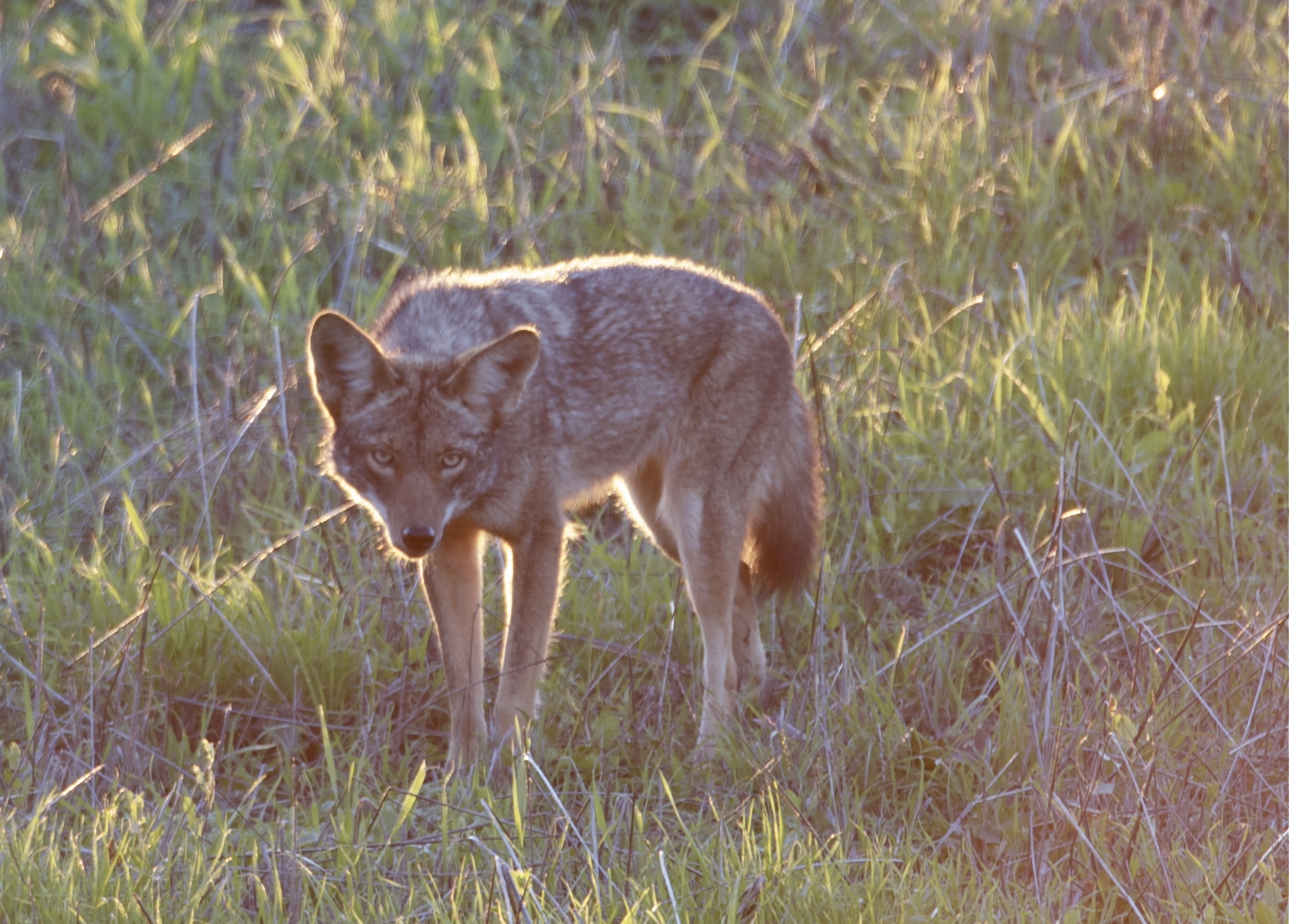
A few birds and coyotes sing the same all year round. Dark eyed junco, spotted towhee, Stellars and California scrub jay, great horned owl…all birds that seem to go on and on with similar calls all year round. Many other birds clearly vary their songs more seasonally. Coyotes yap and chortle-howl most any time during the year.

Winter Noises

Think about those prior non-seasonal noises, review them and visit them in your mental soundscape…then think about what you are hearing these days that’s different than say a month ago.

The three big noises that mean winter most to me: rainfall, wind, and waves.

Rain

The many sounds of rain make me smile whenever I stop long enough to enjoy them. The sound of urban rain – on pavement, bouncing off cars, pouring off of roofs, rushing down storm drains. In the City, its like you are part of a giant cement fountain where all of the water is guided this way and that, popping out here and there by design.

In the country, you can enjoy the very varied sound of rain hitting different plant communities. Grassland rain is very quiet as millions of grass blades expertly catch and lower raindrops, springing back for the next one, dancing on and on, up and down. Conifer forest rain is quiet at first, too: needles delicately capture the oncoming rains. After a bit, the sound changes as the needles let loose big droplets that clamor as they pass down through the canopy and onto the ground. Waxy leaved plant communities, oak and madrone forests and chaparral have particularly rattly-noisy rain sounds. Raindrops pop when they hit those leaves, spattering and spraying with more noise still. Rain on the ocean, in lagoons and estuaries, and on ponds has the most soothing sound, where you can really get a sense of the minute changes in rainfall intensity and duration.

Wind

City and country wind sounds are different, too; either way, the wind noise is significantly heightened with the onset of winter storms. Tuning into wind noises in either place, you can visualize zephyrs and gust fronts as they pass by, come towards you, or after they retreat.

In the City, wind makes varied and unique high whistling noises as it passes through wires; there are wires everywhere in the City. If you live near a tree that catches the wind, you come to know its song. Palm trees rattle and bark. Conifers roar with different pitches. Bare branches of the many street trees also sing songs.

In the Country, the ridge top forests are often talking through the winter. Depending on the wind direction, each ridge and forest type has its own distant hum-roar-swoosh. If you are in the forest when its windy, you get to hear the groan and sometimes pop of trees swaying. Leafy evergreen live oaks make a noise in the wind that makes you wonder if its raining.

Waves

Big wave events are common around the Bay through the winter, and those waves make big noises. Besides bird song, listening for the waves is what most frequently brings me back to the moment. When I catch the wave noise and pause, I try to pick out individual waves even from far away. I try to follow that wave as its crashing progresses directionally. Then, I listen for the crescendo or the lulls of the varying sets. I pay attention to my breath to compare the tempo. Sometimes, I think I can feel the waves through the ground, perhaps the big noise reverberating into the ridges and terraces. After a particularly long lull, I pick up the spray off of the first big wave before the subsequent waves drown out that higher note. I’m thinking of late that long sets of big waves make tones like singing: listen for the notes, am I right?

Other Winter Noises

There are a few other winter noises that are unique to the city or countryside.

In the City, the sound of traffic changes as rolling tires are louder, making wet and splashing noises. The Boardwalk makes less noise.

In the Country, the ephemeral streams start their chorus. Post-storm waterfalls sing. Under the redwoods in the mountains, you can hear the flute-like call of the varied thrush, a winter denizen. In orchards and in riparian forests, you might hear the distinct whiney ‘weeent’ of the red-bellied sapsucker, another species only around in the rainy season.

Now Listen!

Its over to you…check it out…report back on the onset of uniquely winter sounds. Tell me, tell your family, tell your friends what’s all that noise about? Compare notes.

-this originally posted by Bruce Bratton in his outstanding weekly blog BrattonOnline.com – check it out, donate…and read it!

Good Roach Stewards: Shifting Baselines

“Shifting baselines” is a term used to illustrate how humans acculturate to reduced wildlife, thinking that what they experience is normal and good. “Good enough” is perhaps a better term. Too many people measure success by saying ‘good enough!’ With species diversity in general and wildlife population health specifically, ‘good enough’ for some people is probably not what most people deserve and ‘shifting baselines’ is the problem at hand for large areas of Santa Cruz County.

Current Baseline: Shift Happened

Fifteen thousand years ago, a combination of poor human stewardship and climate change created a mass extinction event in California. Dire wolf, mastodon, mammoth, lion and other big cats, camel and horse relatives, the California turkey, a flightless duck in the lagoon at Laguna Creek, ground sloth, short-faced bear, and a host of other critters disappeared in a very short period of time. We don’t miss those species – they aren’t part of our cultural memory. But, we do seem to reminisce about beaver, gray wolf, tule elk, the California grizzly, badger and pronghorn…species that disappeared from the Central Coast more recently. Well, I’m not sure how many people really think about those species and ‘miss’ them. I do. The miracle recovery of some whale species seems to excite people, but those same people generally don’t consider the vastly reduced numbers of those species. In sum, our current wildlife situation is what is known as ‘depauperate’ – much reduced from historical numbers. And yet, most people think that what occurs today is ‘normal’ and they don’t much think about the opportunities to recover wildlife to more healthy populations on at least public lands in the Central Coast. Our experience of our “biological baseline” is greatly different than humans 15,000 years ago.

What will future generations of humans come to think of as normal? Will they one day realize that California is down to three species of wildlife, all cockroaches, and form some sort of cultural pride to recover the last remaining wild species? This is the trajectory we are moving towards because no one seems to care about the situation with the Central Coast’s wildlife, right now. If they did, local parks managers would hear about it and politicians would hold them accountable.

Parks Manager Responsibility

Whether we are thinking about State Parks or land managed by the Bureau of Land Management (BLM), the officials in charge of more than 20% of Santa Cruz County have a responsibility to monitor the impact of their management choices and to maintain wildlife populations for future generations. Specifically, all State Parks are required to have a General Plan and, in those plans, to outline how they will manage responsibly to maintain healthy wildlife populations. Similarly, the BLM is required to manage Cotoni Coast Dairies first and foremost for conservation, which requires wildlife surveys be conducted that can inform the agency’s management of livestock, ecosystems, and recreation.

Cotoni Coast Dairies: A Singularly Special Opportunity

What makes BLM’s management of Cotoni Coast Dairies a grandly special opportunity is that the property has not yet been opened to the public, so BLM can collect wildlife data before recreational activities begin to impact species. The wildlife of all other parks has already been negatively impacted by recreational use and so we can’t as easily understand how to improve the management of recreation in those places. Perhaps trail use on the trails BLM has already built will have no impact on wildlife – that would be extremely unusual! Chances are good that recreational use will negatively affect wildlife even hundreds of feet away from the trails. We won’t know how significant those effects will be unless data are collected before recreational use of the trails. And, we won’t learn which species are impacted by what numbers, timing and types of recreational use: those things would be very relevant to BLM and other regional parks managers in order to accomplish their mandates.

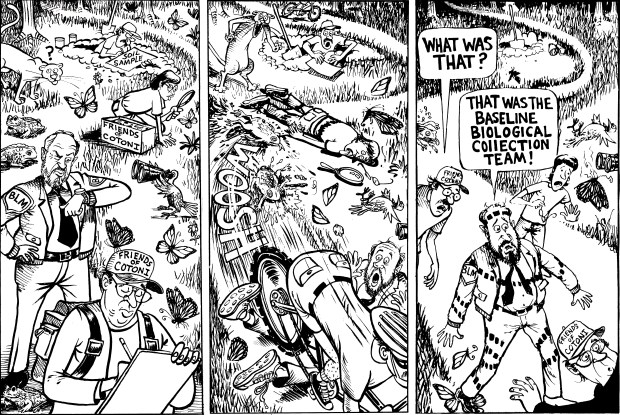
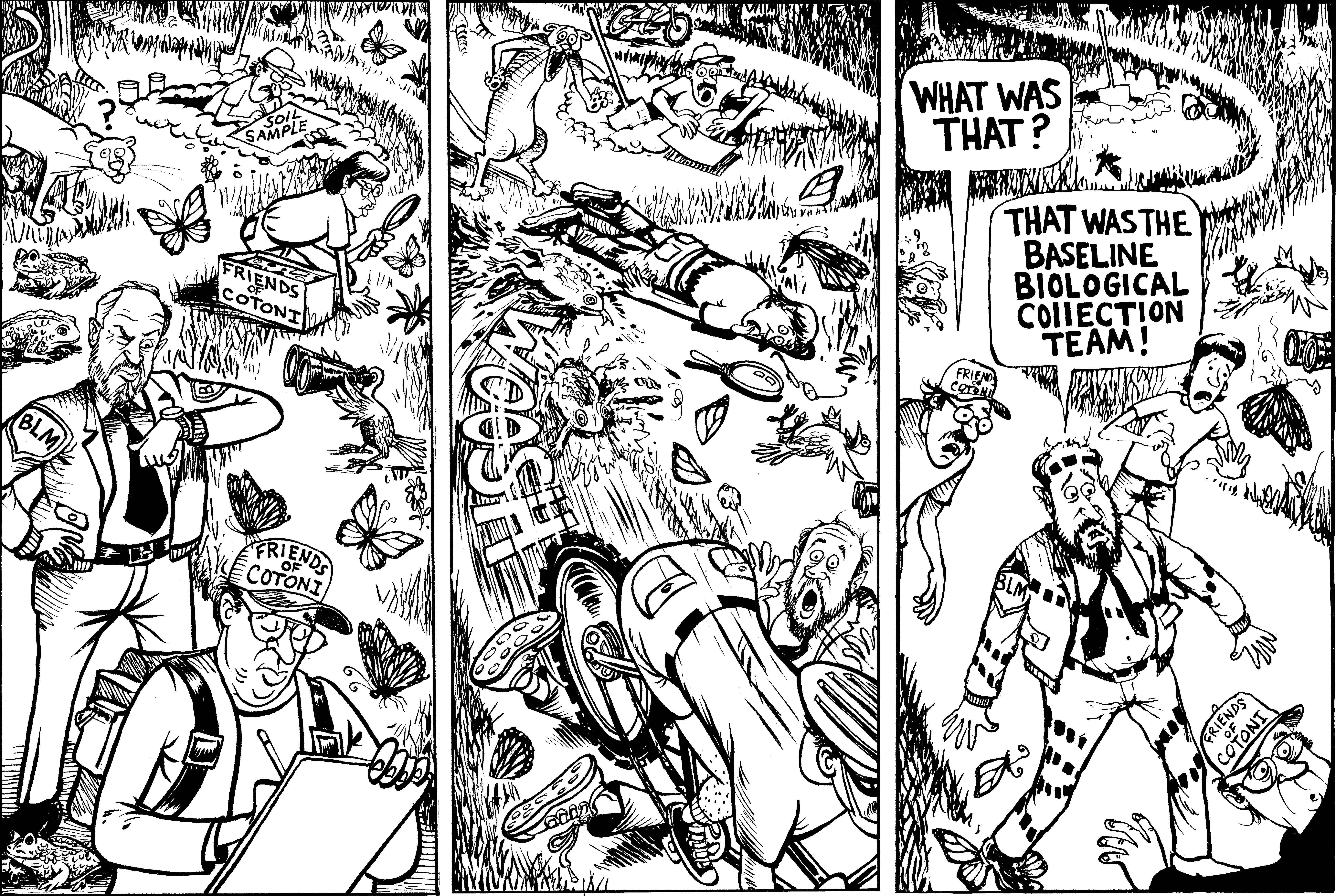
Illustration compliments of Steven DeCinzo

On the Other Hand: ‘Good Enough!’

Here’s some of the things I’ve heard about biological baselines to inform land management in Santa Cruz County. Mostly, land managers say that they have enough information to make good decisions. This is important for them to say because they are required to use the best available science. If they say that they don’t have sufficient science, they are admitting fault and might be held liable, so they can’t say anything but that they have enough science already.

When pressed, they say something akin to “Just look! Habitat!” You dare not suggest species are a better measure of management success because they have a world of arguments against that approach. Their argument goes…if you have a grassland, you have done all you can to protect grassland species…a redwood forest! Violà! Redwood forest species all taken care of! If the species aren’t there, they say something like “well, that’s beyond our control” or “they’ll show up some day.” In short…some vague habitat description and a map of the presence of said habitat is ‘good enough.’ The fact is that species are much more sensitive to management of those habitats than manager’s broad brush would suggest. The problem is…any more refined monitoring might be either expensive and/or could hold managers accountable.

Accountability

What if you had rare wildlife species on the land you managed, what would you do? Might you consult with the agency that is responsible for recovering those species? The California Department of Fish and Wildlife has good wildlife biologists, and they have survey protocols that are useful in documenting a species’ presence/abundance. Same with the US Fish and Wildlife Service and the National Marine Fisheries Service.

Would you want to make the public aware of the conservation work you are performing, and how successful it has been? Would you be worried about negative publicity?

Do you think lands managers feel accountable about more than their conservation mandates? Do you think that they feel accountable to certain recreational user groups? How would you know which type of accountability they feel more concerned about?

Your Role

I hope that you have joined a pro-wildlife advocacy group. Working together, we can make sure that the wildlife our children’s children experience is more diverse, and more plentiful, than what we experience now. The alternative is bleak: children fascinated by the last species, raising cockroaches in cages and hoping that their offspring might live in the impoverished ecology resulting from a world of shifting baselines. I don’t think that is good enough.

– this article published in Bruce Bratton’s fabulous weekly blog BrattonOnline.com Sign up at that site to get the alert that it is out and then enjoy some quality time reflecting on news that matters…as well as excellent film/media reviews.

This is Fall

The short days and chill nights have arrived, and there is much more about Nature’s Fall to take a moment to appreciate.

Mediterranean Fall

Mediterranean fall is the transition between the hot, dry season and the cool, wet season. We must thank the Rocky Mountains and the Sierra Nevada, and a variety of other factors for the lack of summer rainfall in much of California, including right here on the Central Coast. Mediterranean spots are very rare on Planet Earth, and their unique climates make for very interesting, species-diverse places. The “rainfall season” starts October 1st. If you manage property, your target date to be prepared for significant rain is October 15: if you are prepared by that date, you will almost always be in time for the first big storm.

Now is Dry

The rain-carrying wintertime storms are starting to sneak our way, but we aren’t quite there. Meanwhile, it is the driest time of year. The tiny rains we’ve seen so far have only wet the soil surface; the soil is bone dry as deep as it goes over most of our landscape. The last significant rains were from a storm that ended on May 3rd and, prior to that, a wetter storm on March 21st!

To Wet Things

The first significant rain is one inch of precipitation, which usually wets the soil enough that it won’t dry out again until Spring. Although there are many soil types across our region, one of the dominant ones is sandy loam. Each inch of rain saturates about 1 foot of soil. I count the inches and imagine the soil getting saturated deeper and deeper, eventually pouring through to the bedrock and recharging the water table, raising the level of groundwater, feeding the springs, streams, and rivers.

When it Keeps Raining

If we are fortunate enough to have a rainy winter, the rain brings so much life. First comes the petrichor, the smell of the newly soaked ground, a chemical that has been shown to be akin to cedar scent, but you know it when you smell it. Fungus gatherers delight in the seasonal parade of edible treats from boletes to oyster mushrooms to chanterelles (and many more). The mosses and lichens brighten, coating and dangling from every limb of every tree. The dust settles and the seeds produced last Spring start to germinate, the golden hills blushing with green.

Fall Bugs

The dry summer means few biting insects, but there are lots of other interesting insects around in Fall. Over the summer, dragonflies went through metamorphosis in streams and ponds and now the young adults are hunting in the uplands, far from their watery birthing places. Watch for them in meadows, over farms, and even in towns. They are gobbling up flying insects, including the rafts of flying ants that came out when it rained a bit a week or so ago.

Ants!

Each of the first rains triggers some insect or another to explode. This last rain produced millions of flying ants on the North Coast. The air was thick with them as they floated on the breeze, more like tiny butterflies than the bees that they are closely related to. One of these early rains will also trigger termites to fly. Both ants and termites nurture winged males and females that disperse to new territories. Different species seem to prefer to take wing with different cues.

Rain Beetles

Another insect flies with the first rains: rain beetles. These are extremely hard to see, but especially rewarding. Many of us celebrate the season’s first significant storm by going outside and getting soaking wet. Rain beetles are no exception. The male beetles make a loud humming-buzz as they seem to float around during the first big storm of the season, right at dusk, and always near chaparral with manzanitas and pines.

Pests

The first rain obliterates the very annoying canyon flies but also sets in motion the birthing of the season’s first mosquitoes. Canyon flies, aka ‘face flies,’ are the miniature flies that invade your eyes and ears and somehow make it into your throats, hack hack! They like the dry summer and even that last small rain made them disappear. However, whenever the soil gets wet, the soil-borne mosquitoes will hatch.

Newts and Salamanders Ahoy!

The first big storm also brings out amphibians. And here’s something you can do to help. I believe we are all pretty attuned to the first big rainfall, either by following the weather report or relying on a friend that does. As the forecast settles on the first storm of the season, stock up on your groceries and cancel your evening appointments. You’ll be safer and the critters that move around for the first deluge won’t die under your vehicle’s tires. Newts and salamanders await the first big rain and then they move around at night. They’ve been holed up in some burrow complex, pacing back and forth all summer eating beetles and grubs along a set of tunnels they have become quite familiar with. The night with the downpour means that they can move out of that familiar territory towards their breeding pools. And, move they do: in mass, across roads, in straight lines to their favorite pond.

First Flush

The first few rains also set loose a host of pollutants that have been concentrating during the dry season. Another reason to not drive on those first few nights of the Big Rain is that the roads are particularly slippery due to the concentration of oils that have leaked out of cars and plastered themselves to the roadways. After making the roadway treacherously slippery, those vehicle fluids then wash into the streams and rivers and flow out to the ocean. I have a habit of looking at the water flowing down the sides of roads in the City of Santa Cruz during the first rains and noting the continuous normally iridescent, oil sheen that is destined to the San Lorenzo and our precious Bay….so sad. If it is your job or you have any means of cleaning up the roads or other pollutant areas for that first flush of rain, I wish you luck in preparing for that, which is right around the corner. This also means you must pay attention if you have made any bare soil by gardening or farming- sediment loss is soil loss, and soils are a non-renewable resources, taking a long, long time to create.

-this column appeared in Bruce Bratton’s blog BrattonOnline.com, a place you should bookmark for the best coverage of local, regional, and international news.

Being Present, Naturally

Our best moments are when we feel the most present. The stories we tell, the good ones and the bad ones, reflect on the times when we were most attentive. If you read that statement and let that realization sink in, you might be inspired to take a break from reading this.

The media we return to is that which absorbs us. When we see or read something that catches our attention, we focus on it and the world around us can fall away. Likewise, when we turn our attention outward, the world opens up. The more we pay attention, the more we see. We are incredibly good observers if we stop to do just that.

My favorite way to open myself to discovery, is to find a quiet place in nature and let all that is occurring there slowly reveal itself. There is so much complexity in any wild place that the discovery goes as deep as you are willing to observe.

Jon Young at least used to live near Santa Cruz and has written and taught a lot about how to become more present in the moment and how that presence of mind can help heal. This 17 minute TedX talk summarizes some of his most poignant lessons. Telling stories, listening to stories, being aware of your natural surroundings, and allowing yourself to become more a part of your surroundings are all central themes.

Mr. Young advocates for choosing a ‘sit spot’ to visit as a door-opening exercise to discovering yourself and nature, to finding a way to be present. Visiting one spot in nature and sitting there for an hour regularly with little movement allows us the time for discovery and the time for those beings that occupy that place to accept our presence and reveal themselves.

The Nature of Being in Nature

When we go into nature, how do we change? Some people go into nature for the most active forms of recreation: extreme or less extreme mountain biking, jogging slow or fast, the many forms of exercise for people or beast called ‘horseback riding,’ and then there is destination hiking or exercise hiking. Some people go into nature for more passive activities such as wildlife viewing, natural history study, art, poetry, contemplation, meditation, teaching children, learning from nature, becoming more at one with the wild and other beings, or just plain observation. The active forms of recreation (fast mountain biking, especially) are not compatible in the same time and place with the more passive types of natural area visitation. And yet, natural area managers mostly plan for ‘mixed use’ or ‘multi-use trails,’ mixing all of those uses together when they design and manage open space. This is despite a very well-honed natural areas planning science enshrined by the National Parks Service and other agencies who manage for visitor use expectations and experiences. There are University degree programs focusing on training natural areas managers in this science. Unfortunately, despite the huge investments in natural areas, I am unaware of any such science being applied in our region.

The Num-Num Cult

I recently came across an example of the kindergarten-level conversation we are subject to by the local open space managers who design the visitor use experiences we must tolerate. Check out this survey to “let us know if trails are meeting your needs” recently offered by the Santa Cruz Mountains Stewardship Network. The survey is meant to help inform the “State of the Trails Project,” which mostly otherwise appears on the Midpeninsula Regional Open Space District’s website on web searches. You can view a video presentation about this report at this link.

I was disheartened by the survey in that none of the rich passive uses of parks were reflected in the choices respondents could choose from. Using their terminology, all my friends’ uses of parks would be forced to fit into one use – ‘hiking’ – which is very far off from our real and precious experiences in nature. Luckily for us, the survey has blank spots that allow you to add comments.

Majority Rules?

Such a survey makes me wonder where we are heading with managing natural areas for the quality of visitor use experiences. If businesses have any say, they will support visitor use experiences that raise the most capital, experiences with expensive equipment that breaks or wears out. More passive uses of natural areas will never compete. The most passive uses, the most healing uses, will create the least amount of spending. The frugality of healthy people is astonishing.

Will those of us who are turning away from techno-gadgets and buying things be so marginalized that we will have nowhere to go to have the natural areas experiences we cherish?

Nature Heals

Many of us already understand the importance of nature in helping us stay healthy. The most recent term highlighting this phenomenon is called ‘forest bathing.’ Health care professionals recommend forest bathing, which is about practicing mindfulness, being present in nature so that we see the wealth of colors, sounds, and smells that are around us. This requires peace and quiet, the most peaceful places are the places that heal the best.

Wilderness Changed

The term wilderness is fast disappearing, for better or for worse. The term was problematic, anyways as it ignored the wealth of indigenous presence across the whole earth and the importance of indigenous people’s stewardship. And yet, the idea of wilderness being a place where technology, bustle, and noise is left behind, where contemplation and connection with nature are paramount needs to be attended to in our natural areas. Besides the wonky science of natural areas management for the ‘quality of visitor experience,’ it seems we lack a phrase that well contains such places.

Your Turn

I hope that you take the opportunity to fill in that survey and that you let politicians and open space managers know about the many ways that you cherish nature in open spaces. Let’s inform them of the term ‘displacement’ when you no longer feel comfortable going to a natural area because of the type or number of other ‘users.’ Every one of us has a right to our kind of use in natural areas, and it is open space managers’ jobs to accommodate those uses. They should be asking us about the quality of our experiences and adjusting their management to maximize that quality over time.

I hope that you also take some time to do some forest bathing. It will do a world of good. The more of us that do it, the more peaceful the world will become.

-this column originally posted in Bruce Bratton’s esteemed blog at BrattonOnline.com – I strongly suggest you subscribe (and donate to support it!) – this is precious place to learn much of what you should know to be a citizen of the Monterey Bay.

Slowing Down -or- Rushing?

So much environmental degradation seems to be due to our rushing around. How can we best slow down? Each of us can do our part in creating the Great Slowdown that we need to sustain the planet.

Save More, Buy Less

The first and easiest way to help the Great Slowdown is to stop buying so much Stuff. If you haven’t watched the Story of Stuff in a while, or not at all, DO IT NOW. This 21-minute video is compelling, fun, and has changed more lives than many a 20-some minute experience otherwise. I think it’s worth watching regularly, perhaps in October just before the stuff-a-thon holiday season besets our culture. 

If you listen to the news, you will understand how important buying stuff is for our unsustainable economy. “Inflation is up, but ‘luckily’ consumer spending is cooking right along, otherwise our economy would be hosed.” A president once said in a national crisis, something like, “Just keep buying stuff!” Time is money, and by spending your money on useless crap, you are wasting your time, carelessly throwing away your life, and helping to wreck the planet. A few years ago, someone did a calculation and the transaction cost of each dollar spent was a liter of oil. I’m betting it’s worse now. Save a buck, keep a liter of oil from burning up.

Stop Rushing at Work

There is so much pressure to do more at work, but is that really helping anything? Chances are good that the more we rush, the worse off the planet is. How about we slow down? Carefully watch those who rush around with their work: why are they doing that? I’m betting that they mostly want to impress people, get others to work harder, or they are avoiding problems at home or something they might better be doing for Real Good.

The labor movement has something called ‘working by the book,’ which we might emulate to improve the planet. What is absolutely necessary to do with your work? What does the job description say? What are the metrics for success? Often, organizations keep the productivity targets elusive, to keep everyone guessing or trying to push for more. On the other hand, if productivity targets are defined, ask yourself if they are set too high. If so, it might be time to work with your colleagues to reduce them to something more manageable.

Slowing down at work is part of the solution, part of the Great Slowdown.

Working for the Planet

 The capitalist system mostly asks each worker to create efficiencies that are bad for the planet. As we learn to care more for the planet, we will find ways to sneak improvements into the workplace that will help Earth. Is there a way to reduce driving, material transport, waste? Does your workplace purchase recycled paper, organic foods, and other eco-friendly products? Maybe there’s a sustainability policy on your business’ horizon.

Beware the Fakes

If you see potential greenwashing, ask about it! I recently asked a seemingly eco-conscious caterer what they meant by “gourmet sandwiches, made from the finest local ingredients” and it turned out that they used very mainstream factory-farmed meats and conventionally grown produce distributed from warehouses far away. They soon thereafter changed their menu language. That was the third time I was able to affect that kind of change. Do we choose places that are true to their word about their products? How do we know if we don’t ask? Why would they be true to their word if folks never asked?

Buy Green

The list of businesses that are truly green is getting smaller, not larger in Santa Cruz. There are fewer restaurants serving local, organic foods than there were a few years ago. Local grocery stores are sliding further from, not closer to, sustainability. I suspect all of this is because people are not pursuing green purchases.

Keep Your Keel

How easy it is to go with the flow, but is that truly the best thing for the planet? There is a concept called ‘slippage’ where environmental policies are interpreted in ways that slip away from the intent of the policy, usually with negative environmental consequence.

If your work entails intersection with environmental policies, it is time to ask how you can help interpret those to environmental benefit, not environmental degradation. It is time also to ask what is the greatest good you can do with your work, focusing on the issues of greatest impact for environmental improvement. As I’ve said in prior posts, the metric should be species conservation: how can our work best affect that outcome? The answers are usually easy to arrive at.

Beware of False Dichotomies

Those who are most invested in slippage often use false dichotomies. Parks managers often note that they have a difficult dual mandate: to provide for public recreational access while conserving wildlife. For a large portion of Santa Cruz County, managers are leaning heavily on this false dichotomy to ‘sell’ the concept that it’s just fine for our wildlife to disappear because of their mismanagement. Trails erode tons of sediment into streams and wetlands, trash litters our beautiful beaches, and graffiti proliferates on sea cliffs because of the slippage that is embraced by the poor logic presented by parks managers’ adoption of their false dichotomies.

Parks Management Slippage

Many of these parks’ managers use other forms of slippage. The California Public Resources Code says this about State Parks: “Following classification or reclassification of a unit by the State Park and Recreation Commission, and prior to the development of any new facilities in any previously classified unit, the department shall prepare a general plan or revise any existing plan for the unit.” Look at the North Coast beaches, and Gray Whale Ranch…and, enter slippage: none of those have general plans, and all have ‘new facilities.’ I’m sure that someone, somewhere can provide some beautiful logic about how that can be possible. Has someone said ‘if anyone asks just tell them we never “classified or reclassified” those “units” and they were never “previously classified” (hardy-har-har-har, that’ll get ‘em).’ Anyone in their right mind would know that the responsible thing to do would be to create a general plan before opening a park, and that’s what was meant by that part of the Resources Code. Meanwhile, we must all ask WHY are these precious places opened to visitation without a plan to conserve wildlife on those spectacularly biodiverse places?? If you work for State Parks, you must ask yourself what place you have played in allowing such things to happen and how you might reverse this slippage. If you work for other land conservation organizations, you might have similar things to ponder: do you hold a false dichotomy promulgated by those with anti-conservation agendas? Where do you lie on the spectrum of serving Earth or serving Greed? If you are torn and in doubt, maybe it’s time to slow down and ‘work by the book.’ It might be better if you embrace the Great Slowdown in your job while you increasingly help others become aware of slippage.

-this post originally found at BrattonOnline.com

A Fine Legacy

How do we leave a good legacy that will benefit future generations in a world of uncertainty? Some suggest well-raised children are a sure bet, but with this the humble must demur. We must however try. I suggest two other things that are essential: 1) species and ecosystem restoration on natural lands and 2) building soil health on agricultural lands. These are things we can each find a way to support, and they are both crucial for the future of life on Earth.

A World of Uncertainty

We live in extraordinary, unprecedented times. Humans have built a remarkable global civilization with a burgeoning population. To survive, we are in a race to shed polluting fossil fuels. But, we have no idea if and how we can replace all that petroleum has provided to fuel population growth and the civilizing of landscapes. No matter what superficial form of government seems to be in place, the “oilogarchy” is deeply entrenched, exercising economic and political control. For evidence, just watch US politics: both parties’ have an inability to act in the expeditious way that the vast majority of citizens know to be necessary. And so, life, including human life, on Earth will likely become much more difficult for the next several hundred years. Of course, we should rise up and protest as if life itself depends on it, but there are other tangible things we can do to make the world more habitable for future generations.

Species and Ecosystem Restoration

There are a variety of activities you can partake in to help restore species and ecosystems, which humans will increasingly rely on for their wellbeing. As global warming creates climate chaos, and as humans increasingly falter without boosts from cheap petro-supplies, species diversity and resilient ecosystems will become more closely tied to better standards of living.

Oil and Water

For an example, let’s consider water. Some suggest oil and water don’t mix, but the two are closely intertwined over most of the world. We might suppose that the role petroleum plays in repairing, creating, and powering our water supply will be replaced by some renewable energy supply in the future. Plastic pipes will be made from hemp, renewable energy will power our pumps, electric vehicles will transport the legions of water district workers who maintain water systems, etc. However, when rain comes in torrential bursts or not at all, we will rely on very well-tended ecosystems to absorb and meter out rainfall so that we can benefit from more dependable surface or groundwater supplies.

Dust Storms

For another example, let’s consider erosion. The stability of our infrastructure- homes, utility lines, roads, dams, communication towers, airports, etc., depends on more than just good geological anchors: that stability is deeply dependent on functioning ecosystems. Species hold our stuff together. On the coast and along rivers and streams, species protect shorelines. On hillsides, in the mountains and on the plains, species hold the land in place. Without a wealth of species supported by resilient ecosystems, everything will come unzipped – gullies, floods, landslides…infrastructure collapse. At the same time, the bared soil will start to blow and dust storms will become more frequent, destroying engines, burying buildings and roads, and darkening the sky.

Restoration Means Now

The species that currently perform best at the “holding the soil in place” function are likely not the ones that will do best in a hundred years, given the rapidly changing climate. So, we must conserve every species, and plan to allow species migration through a healthy landscape of resilient ecosystems. Right now, this very year, we must quickly turn increasingly to restoration of the land because we have degraded too many places already. You can help by volunteering with the many habitat restoration projects in our area, taking better care of your land, voting for politicians that support ecological restoration and land care, spreading the word, and/or giving money to groups that are making a difference. Many people are joining this movement, we are making a difference, and we need more help.

Bye-Bye Soil, Hello Agricultural Substrate

Since World War 2, agricultural systems have become increasingly intertwined with petroleum at great expense to the soil that humans rely on for sustenance. Petroleum-fueled mechanical cultivation has destabilized billions of tons of soil which has already washed or blown away due to recklessness. You can watch it happening, still: in the Salinas and Pajaro valleys and along Santa Cruz’ North Coast watch the soil blow or wash away, depending on the season. At the same time, cheap fertilizers and expedient pesticides have been made possible by petroleum and the application of these have destroyed ecosystems that once sustained and built topsoil. Farmers for years have acted like soil is just a substrate, something to hold a plant in place long enough to harvest a crop. And so, most agricultural land is highly degraded and production is increasingly and deeply dependent on the supply of petroleum. While we can, there is a great opportunity to build the kind of soil health that will be necessary to feed humans when petroleum-subsidized fertilizers become too expensive, and the human population is still larger than it is now.

Soil Health

Healthy agricultural soils can retain more water, provide plants more dependable nutrition, and stabilize pest outbreaks. So, why would a farmer not create more healthy soils? There are two main reasons. First, investing in healthy soil reduces profits. For example, using cover crops to cover and build the soil during the rainy season means the loss of one or more potential harvests. That also drives up food costs, which then helps to create the second reason: mandates for soil health are politically difficult. The good news is that you can help with both of these conundrums.

You Can Help Create Healthy Soil

We all purchase groceries, and the choices we make can help support soil stewardship. Already, the organic agriculture movement has been growing and makes a difference for soil health. Certified organic agriculture requires farmers to find alternatives to pesticides and fertilizers that are synthesized from petroleum. In ‘conventional’ agriculture, novel petro-created compounds working alone or as a mixed concoction are released into agricultural systems without analysis on long-term soil health. Organic farmers more often rely on soil health as a means of production, and the higher cost of those products reflects that investment. Some tell me that they can’t afford organic foods, but discussions reveal that they are unwilling to make more basic food choices, preferring to rely on processed foods or meat that are especially more expensive when certified organic. Going organic may mean dietary changes that might be more healthy, anyway.

Besides using the power of your purse to support farmers who build soil health, you might more directly create healthy soils in community orchards or gardens. You can volunteer in a school garden which has the added benefit of helping children better understand soil health and healthy foods. You might also support, by volunteering or donations, organizations that are working to improve soil health on agricultural lands.

-this piece originally published by Bruce Bratton in his extraordinary BrattonOnline.com, the place to go for movie reviews and local news…unparalleled. Sign up and get it weekly. Donate and it is money well spent.

BLM Overlooking Precious Wildlife Conservation

Santa Cruz County’s newest conservation land managers are supposed to conserve the wildlife prioritized by the State of California, but are failing to acknowledge their obligations, which means some of our area’s iconic wildlife species will disappear faster due to lack of Federal cooperation at Cotoni Coast Dairies.

Background

The Bureau of Land Management oversees management of Cotoni Coast Dairies, but it is following much-outdated wildlife conservation guidance. Land management agencies like the BLM are guided by policies and procedures that guarantee that they do a good job of managing wildlife. For instance, BLM has its 6840 Manual “Sensitive Species Management,” which notes:

“The objectives of the BLM special status species policy are:

A. To conserve and/or recover ESA-listed species and the ecosystems on which they depend so that ESA protections are no longer needed for these species.

B. To initiate proactive conservation measures that reduce or eliminate threats to Bureau sensitive species to minimize the likelihood of and need for listing of these species under the ESA.”

In other words, BLM recognizes that the agency should not be contributing to wildlife species becoming rarer and so receiving more regulatory protection, which would impact private landowners by restricting the uses of their property.

Mouritsen’s Duty, Neglected

To avoid that, BLM California’s State Director Karen Mouritsen is required to, “at least once every 5 years,” review and update the BLM-maintained list of sensitive species in coordination with the California Department of Fish and Wildlife (CDFW). It is unusual for such policy guidance to lay out a specific timeline, which adds clarity to expectations. The last time California BLM’s sensitive wildlife list was updated was in 2010, before Director Mouritsen’s tenure: 13 years ago! A lot has changed in those intervening years, and scientists have recognized that many more wildlife species are in need of protection by BLM.

Repercussions at Cotoni Coast Dairies

What happens when BLM’s sensitive wildlife species list isn’t updated? Let’s look at the Cotoni Coast Dairies example. BLM has already completed a Resource Management Plan that is meant to guide wildlife conservation on the property. Under the guidance and environmental review provided by the RMP, the agency is building miles of trails and parking lots, implementing a cattle grazing program, and allocating funding to other prioritized activities. BLM will soon embark on a Science Plan for the property. The RMP didn’t and the Science Plan will not consider conservation of wildlife species that do not appear on the BLM’s sensitive species list. And so, the following 10 rare wildlife species will receive no attention, pushing them further towards extinction: ferruginous hawk, grasshopper sparrow, Northern harrier, olive-sided flycatcher, American badger, San Francisco dusky-footed woodrat, Western pond turtle, California red-legged frog, American peregrine falcon, and short-eared owl.

A Deeper Dive – Grasshopper Sparrow

Let’s consider one of those species with a little more detail, the grasshopper sparrow. If this species is nesting in an area, under California law they are protected and our state wildlife agency, CDFW, has been charged with their conservation. According to BLM guidance, Director Mouritsen is 13 years overdue in updating the agency’s sensitive wildlife list for California to include this species. As their name suggests, grasshopper sparrows are grassland-dependent organisms. There is an abundance of nesting grasshopper sparrows at Cotoni Coast Dairies.

Without active management such as with carefully planned livestock grazing or fire, all of the grasslands at Cotoni Coast Dairies will disappear, being invaded first by brush and then by trees. This is already happening with extensive French broom and coyote brush invasion.

Already, BLM has planned its livestock grazing and recreational trail uses without consideration of preferred habitat for nesting grasshopper sparrows. Livestock grazing could be taking place to the detriment of the species, already. The construction of recreational trails and parking lots may have already destroyed important nesting habitat. When recreational visitors start using those facilities, it may occur before BLM has a baseline study of the density and location of nesting grasshopper sparrows. So, the agency will be unable to understand how land uses are impacting the species and so will be unable in an informed way to adjust its recreational or livestock management to better conserve the species.

It may well be that BLM’s management of Cotoni Coast Dairies will further reduce nesting populations of grasshopper sparrow, pushing the species closer to the point where they will need to be listed as threatened or endangered. When that occurs, private landowners whose land supports nesting grasshopper sparrows will see increased regulation and oversight by the State and/or Federal government. Their property values will be reduced and their ability to develop homes, farms, or other uses will be diminished.

An Alternative

On the other hand, if the California BLM State Director Mouritsen were to meet her regulatory obligation and update the BLM State Sensitive Wildlife Species List in the near future, a bunch of good would result. First, Cotoni Coast Dairies’ Science Plan could provide guidance for conserving those species. Second, because BLM funding is tied to the number of sensitive species on each property, Cotoni Coast Dairies would be better situated for increased conservation funding. If the Science Plan succeeded in moving forward the conservation of sensitive species like the grasshopper sparrow, BLM’s leadership on these issues could help many other land managers do the right thing for species, contributing to the potentiality of ‘delisting’ species, reducing the potential for increased regulatory burden and loss of private property values.

Do Your Part

I’ve said it before in this column, but I’ll say it again. NOW is the time to write Director Mouritsen to urge her to do her job. She hasn’t replied to any of the numerous letters she’s already received, so evidently she needs more pressure to take this seriously. Here’s some language to send to her via her email kmourits@blm.gov Please let me know (or cc me) if you send something.

Dear Director Mouritsen,

I care about wildlife and plant conservation on BLM’s Cotoni Coast Dairies property in Santa Cruz County. I write to urge you to help by adding sensitive species found on that property to the State BLM’s sensitive species lists. Only if those species are on the State’s lists will local administrators consider impacts of their management on those species in their analyses and planning for the property. So, I ask that you please:

  • Publish an updated State BLM sensitive wildlife list in collaboration with the California Department of Fish and Wildlife, as mandated by the BLM’s 6840 Special Status Species Manual.
    • This list was last updated in 2010, but you are required to update it at least every 5 years.
  • Publish an updated State BLM sensitive plant list to include the State ranked 1B plant species documented at Cotoni Coast Dairies, as mandated by the 6840 Manual.

I would appreciate a reply to this email with details about how you intend to address these issues.

Signed, xx (you!)

-this post originally appeared as part of Bruce Bratton’s amazing weekly blog at BrattonOnline.com You an sign up and receive it automatic-like if you visit this site. You will be rewarded by getting smart commentary and news that is very relevant to life in general and life on the Monterey Bay specifically.

Humanity

Compassion for others in a political setting is a challenge that, as citizens, we must all ponder. As citizens in a democracy, we are active participants in the global experiment on Nature and how future generations will fare based on our individual decisions in the moment. We purchase things, we vote, and we make thousands of choices that each has an impact on other species. Each of us has our way and our reasons. A compassionate approach to others may open the many stuck doors to create a more lasting environmental conservation movement. And, we must ponder how institutions and individuals interact to enact that compassion.

The Government

Our style of democratic government reflects the will of the Nation’s people, over time. We vote directly for one of the three branches of government – the Legislative branch – and the House directly reflects representation of the majority of the population. The Senate changes the ‘majority rules’ notion to evenness of geographic representation, no matter the population, giving small numbers in sparsely populated geographies more power. Election of the Executive branch has a system of election using delegates, which also reflects an intention to create more even geographic distribution of power, but also has aspects that embed extra-democratic power relationships including freedom of delegate choice into the equation. Judicial branch members are appointed by that Executive branch and seated when confirmed by the Senate and so also reflect the problems associated with the elections of those two portions of the government.

In short, we have a system of government designed to amalgamate the geographies, popular opinions, and existing power relations in order to make choices that we are meant to respect as ‘representative.’ The way this works is particularly challenging to issues that do not raise to prominence for voters. When votes matter, politicians and the power network that supports them sway government actions. Environmental conservation is one of those issues that the power structure never wants to see come to the fore, and citizens are easily swayed in other directions. News media and social media, which are easily manipulated, herd citizens towards issues that are both divisive and convenient for those in power. Environmental conservation threatens all members of those in power, no matter what the political persuasion.

The top issues that sway US citizens’ votes are the ones that the media focus on: the economy (always first), healthcare, and safety – e.g., police (local), military (global). Environmental concerns always rank Way Down the list, despite being the single greatest element to having a sustainable economy, healthy humans, and a safe society.

When considering environmental conservation, it is the will of those in power and the government they manifest that creates the challenges to having compassion on two factions of our society: your fellow citizen, who is in some way responsible for the government, and the employees of government institutions, who act within governmental decision frameworks.

The Citizen

How do we approach compassion, to see the humanity in our fellow citizens when the government does so little for environmental conservation? It is easy to blame governmental actions on the citizens of the country, but is it fair?

It is also easy to understand why your neighbors, friends, and relatives do not prioritize environmental conservation with their actions. We are creatures of habit living in a difficult world. It is difficult to change our behaviors, even if they negatively affect the environment. It is difficult to see our individual choices as mattering and easier to blame the impacts on the environment on other people, other nations, or even evolution, fate, or a Deity. We all do these things. When we listen to the news or tune into social media, the messages there do not help us to understand elements of environmental conservation and what we can do about them. Even the supposed ‘neutral’ (really ‘centrist’) NPR rarely covers much of the breadth of environmental conservation import and then mostly with disempowering messages. Because the US has become so expensive and the pace so breakneck, citizens are afforded almost no leisure time to learn about environmental issues. And, with the decline in broad, critical thinking education, environmental conservation has become a tiny part of anything students are exposed to, favored by Science, Technology, Engineering, and Math (STEM) focus. The term ‘Science’ in STEM doesn’t mean organismal biology nor does it include any conservation elements. Highlighting this STEM education is a real success of the power structure in the US as they hope to create a (somewhat) skilled workforce.

In sum, citizens do not know, and cannot find a way to know, about environmental conservation and without such knowledge they act innocently and ignorantly in ways that collectively negatively impact the environment. Aren’t we all like that? Let’s have a little compassion for everyone and figure out where to go from there.

The Government Worker

Government workers are citizens who have even more burdens on their environmental conservation actions. Those people who work for governmental institutions that are supposed to protect the environment face all the challenges of the average citizen described above. While it is true that the government requires some of those workers to have higher levels of education to qualify for their jobs, the required bachelor’s or master’s degrees never train them for the environmental conservation elements of their jobs. The most relevant field is called ‘conservation biology.’ There are very few institutions of higher education that offer this focus, and the combined top ten programs in the US graduate fewer than 100 undergraduates, and far fewer graduate students, each year. Once out of school, these individuals have a high incentive to work in a lucrative field, environmental consulting where they can earn 5 times more than a government employee. And so, government institution personnel that are responsible for environmental conservation have not received the education they need for their jobs, have not been raised in a culture that supports inquiry, and are strained by economic and social situations that make it difficult to prioritize environmental conservation. And then they go to work in institutions with similar individuals under conditions of extreme political pressure exerted in contravention to environmental conservation.

Governmental Institutions

The government institutions that have responsibility for environmental conservation have never been designed to be effective with that responsibility. Because conservation rarely and briefly rises to the fore for politicians, consistent oversight and policy development is lacking. Instead, environmental conservation frameworks are weak and up to the interpretation of the agency. Locally, State Parks is required to have General Plans for all of their lands, but there is no required timeline for creating them, no mandate to update them (ever), and little guidance on key features of those plans such as what a ‘carrying capacity’ analysis might be. Locally, County and City Parks have no guidance at all about environmental conservation and there is none in the making. Locally, the Bureau of Land Management has guidance documents for environmental conservation, again with no timelines for enacting them and insufficient guidance to maintain the scientific integrity of those efforts.

Workers are Human, Too!

Even if they don’t recognize it and can’t hear it, the too few employees charged with environmental conservation at governmental institutions find themselves without sufficient means and support for substantive, science-based environmental conservation action. And so, they go about their jobs doing what little they can to try to make a difference. Most of them are proud of their accomplishments. Being social humans, they form bonds with their workmates and take their personal pride and form institutional pride. They are proud of the work of State Parks, they are proud of City and County Parks Department accomplishments, and they are proud to be part of the BLM team.

Many of us can relate. Many people find themselves in institutions that have elements of good and elements of bad (which sometimes we don’t want to see!); we choose to focus on the good work we are doing within those institutions. We make friendships at work and want to support those friends. Some of us work for institutions where the public believes that our work is good and just, and so it is easy to become proud of our institution and even to defend our institution when challenged. Let’s have a little compassion for the people we see who have ended up like that and figure out where to go from there so that there is better environmental conservation even by governmental institutions.

This post originally appeared in the important blog published by Bruce Bratton at BrattonOnline.com Subscribe Today!