wind

What’s In the Air?

Have you heard the question “What’s in the water?” I’ve encountered that question recently posed in the context of a situation when odd, inexplicable things had been happening at an organization. Then, new, seemingly fresh and rational personnel are hired, but those people quickly seem just as odd and inexplicable, less fresh and innovative and then things just stay the same kind of weird. How can that possibly happen?! And we exclaim, “What’s in the water?” It’s as if people are being medicated through their drinking water into a kind of sub-par state of being. “They drank the Kool-Aid” is another way of saying that same thing, I guess, except less innocuously referencing a terrible tragedy in South America some time ago. Judging by the amount of filtered water, bottled water, and such that people purchase, it does seem as if we are very, very concerned about what is in our water. What about the air? What’s in our air?

The Direction of the Wind

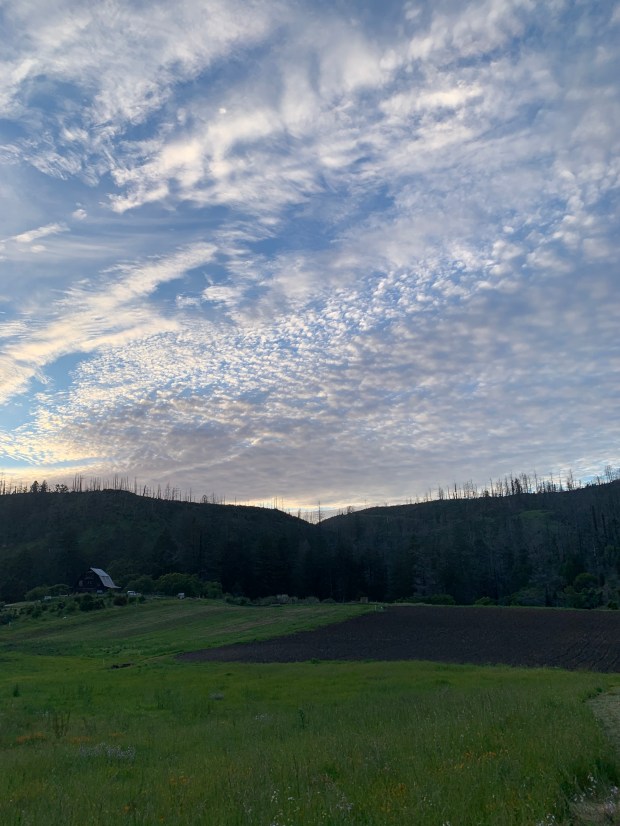
In my daily routine, each time I walk outside I try to pay attention to the wind. Which way is the wind headed? I feel the breeze on my skin or watch the swaying of the grass and trees. I tilt my body until I face straight into it, to know best the precise direction. Ialso ask how is the wind blowing right where I am versus farther away? Sometimes the wind is gentle close but raging nearby, on higher ground, where trees ‘talk’ and sway. 

The directions of the wind can be predictable, but it is becoming less so. Winds around the Monterey Bay are often from the north or northwest, mainly cool breezes. Winter storms especially sweep in with gales from the northwest. Bomb cyclones come from that way. Atmospheric rivers tilt the direction more from the west. Especially cold storms come more from the north. Once the breeze starts coming from those other two ways, things get weird.

CZU Lightning Complex Fire – The air looked like this for days

The downslope, Santa Ana winds of southern California (aka devil winds) make things really weird to our south. Those winds are from the east and can be very strong; fires rage, people freak out. Luckily, that phenomenon doesn’t happen here, but we do get occasional winds from the east. I swear I can smell the desert on those winds, the smell of creosote bush. Those breezes are warm and dry just like the winds from the south. I can very well recall the stormy winds from the south: those brought us the CZU Lightning Complex Fire as well as a couple other tattered hurricane remnants that created havoc across the state. When winds come from the south or east, beware of fire and keep your eye out for the odd human behavior associated with Santa Ana winds in southern California. We might also be concerned about the better-documented situation where those breezes carry the spores of fungi that cause Valley Fever, an air quality concern…borne on the wind as they say.  
Air Quality

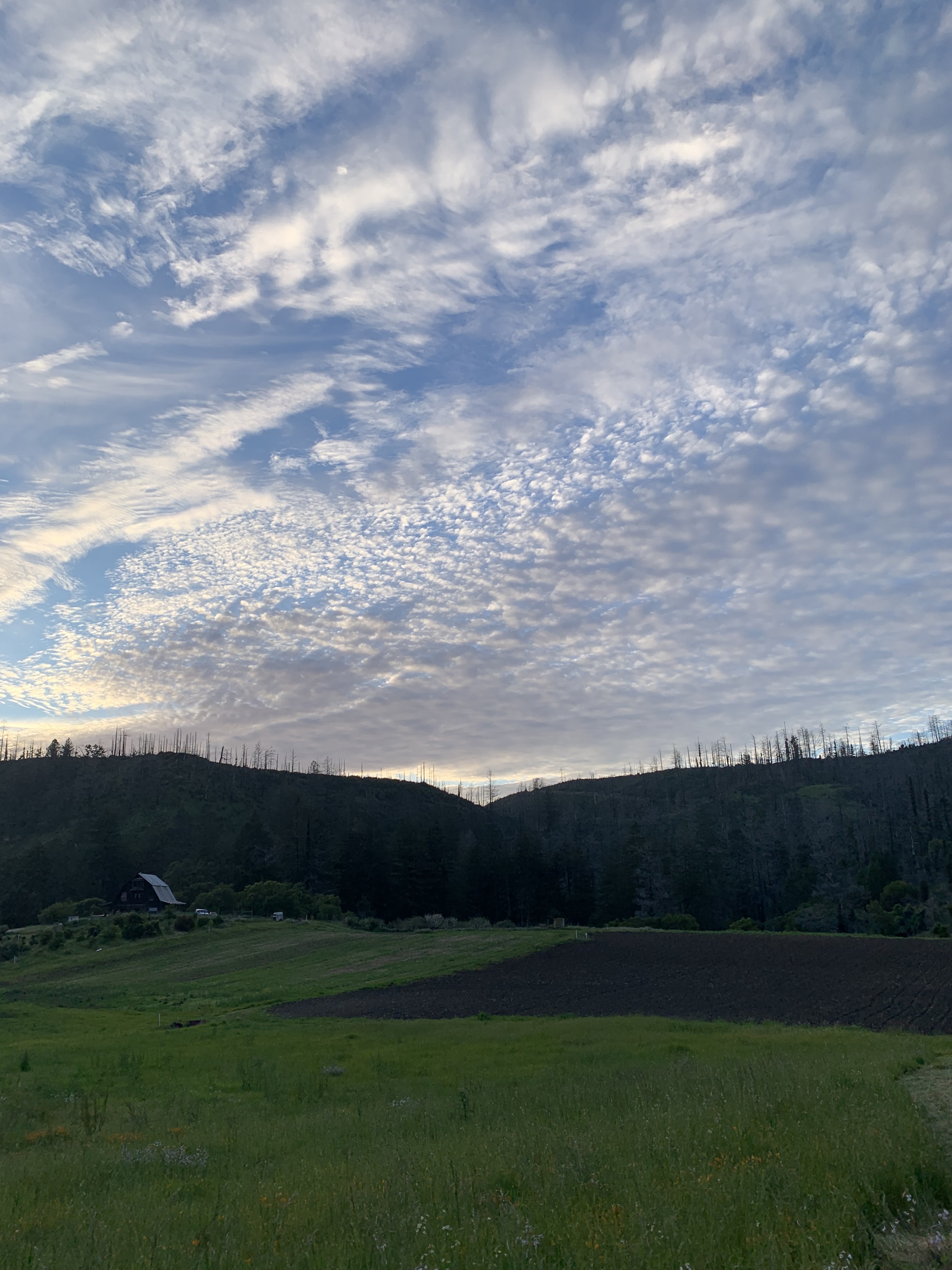
Once you recognize the direction from which the wind blows, the next question becomes what is that air carrying? When the wind blows ‘just right’ (from the northeast), we get a nasty soup of smog hanging out to sea, blown out of the Golden Gate and then generally downcoast where you get to appreciate that the Bay keeps us a bit sheltered and inland from those toxic breezes. Northeast winds are rare, but that smog carries lots of ugly chemistry. There’s stuff you don’t want to breathe for its toxicity, but there is also lots of fertilizer from car exhaust. Catalytic converters do a good job of turning exhaust into readily available nitrogen compounds that are fertilizing the landscape. Healthy? Nay. Fertilizer makes habitats more weedy, weeds grow bigger and make a bigger wildfire danger when they dry. The tall weeds outcompete native wildflowers. Fires carried by those weeds are devastating California’s deserts, endangering things like Joshua trees. The Golden Gate (NE wind) is one of our passages for nitrogen-laced air pollution, the other is the Pajaro Valley, belching out smog pushed by the more northerly breezes passing down through the southern end of the Silicon Valley.
Those ‘Fresh’ Westerlies

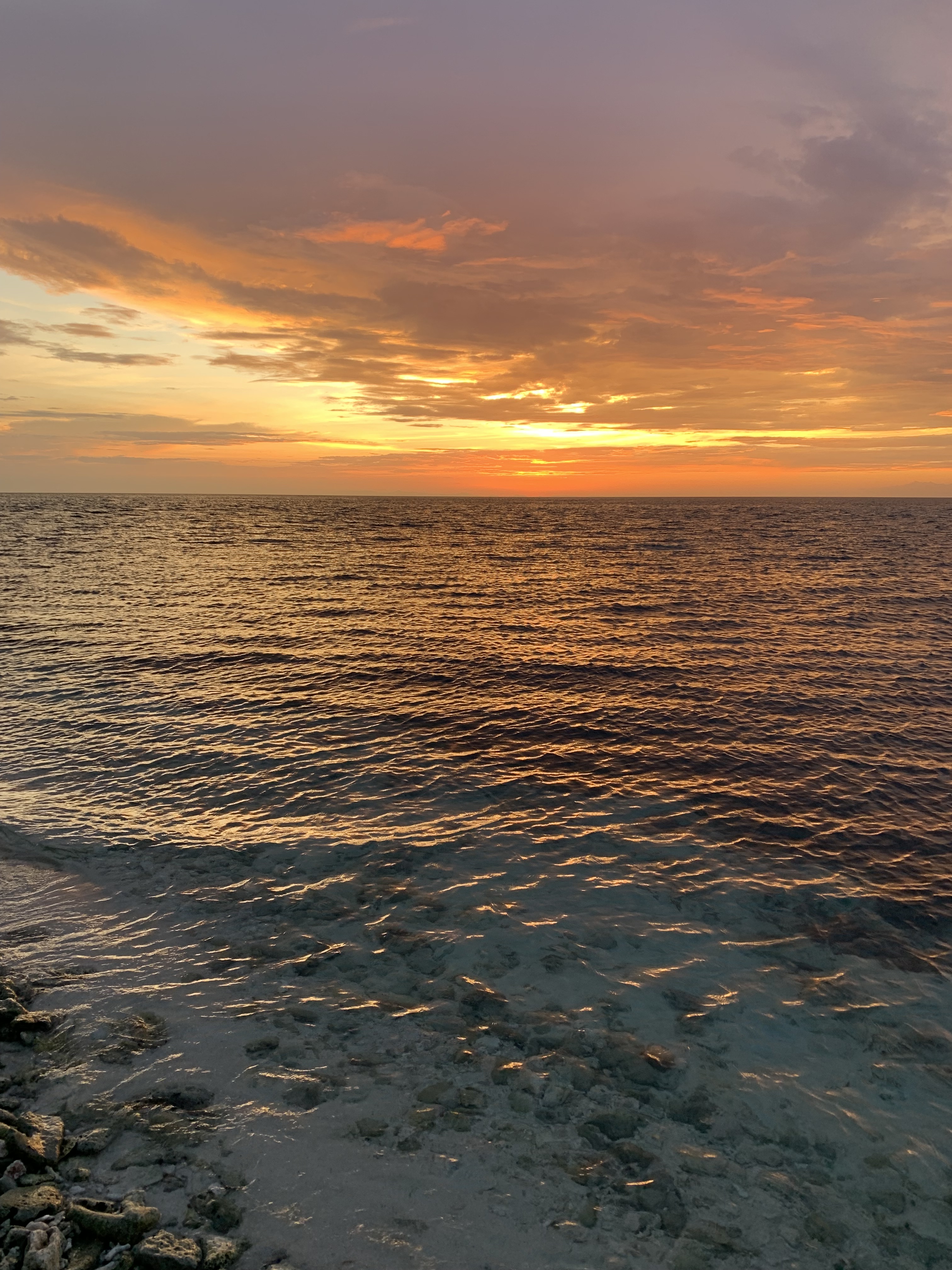
If you are like me, you feel lucky to have that great expanse of clean ocean air to keep us breathing well. Think again. We are seeing more and more pollution from China reaching our shores. Those giant cargo containers full of ‘stuff’ isn’t the only thing coming from the east. Coal fired power plants are making a yuckola mess of chemicals that are polluting California’s air. But, let’s not rest all of the blame on human’s insatiable appetite for stuff in the present. Some of the toxic air particles are from greed of the deep past: gold mining. Mercury was used in processing gold in California. That mercury flowed downstream and into the ocean; it is now being carried back to land in fog and rain, concentrating up the food chain and poisoning mountain lions in the Santa Cruz Mountains.

Famous Air Quote

“We have some incredibly talented people that know environment and what we’re doing probably better than any people on Earth.

From day one, my administration has made it a top priority to ensure that America has among the very cleanest air and cleanest water on the planet.  We want the cleanest air.  We want crystal-clean water, and that’s what we’re doing and that’s what we’re working on so hard.”

I’m guessing you know the source of this quote by now. If not, you can probably guess from the recognizable style. We hope that President Trump, like all politicians, recognizes how much the vast majority of citizens value clean air, so that there is ample motivation to do something about it. If politicians don’t act on these things, we all suffer. Unfortunately, few journalists hold any politician accountable to their clean air record: after all, it is anti-business to do so, and the news needs money.

Our Work

Vote. Get an air purifier for your house. Buy less. Go outside and think about the breeze…the direction of the wind…the strength of the wind…and what is carried on those breezes. 

-this post originally published as part of BrattonOnline.com – check it out! Updated weekly with keen insights into Monterey Bay and beyond.

Surrounding Sounds

As the Great Marvel occurs, the sounds so change also. The Great Marvel is the onset of winter rains. As citizens of a Mediterranean climate, this should be as monumental as it is for the other living beings around us. Simultaneously, the sounds of winter set in. Are you listening?

Humans are very visual, but we have other senses that would be good to emphasize. Let’s call this next week “Sound Awareness Week.” This will have particular meaning for those who can’t hear at all or hear well: for those of you, perhaps your gift this next week is to help more people describe what they are hearing, a two-for-one kind of experience. For those of you who are already acutely aware of sound…there is always more to explore!

Background, Seasonless Sounds: Rural and Urban

Everywhere you go, there are always a few noises no matter what season. Airplanes: more so on weekends with recreational aircraft. Roaring motorcycles: replete with accentuating noise apparatus, illegal, but unenforced! Barking domestic dogs, a seemingly Universal human mishap: some dog owners can’t seem to hear their own hounds (or don’t care)!

Seasonless Urban Noises

As many readers are situated in urban or near-urban areas, let’s first sift through the background sounds that a realtor once told me (mistakenly) that I would ‘get used to’ so that one day I ‘won’t even notice.’ Traffic: the hum or revving of engines, the squealing of tires. Car stereos played so loudly as to accelerate deafness. Sirens. Fighting domestic cats. Crows, hundreds of crows cawing. Pigeons cooing. The mechanical noises of Boardwalk rides and the accompanying screaming.

Uniquely Rural Noises, All Year Round

A few birds and coyotes sing the same all year round. Dark eyed junco, spotted towhee, Stellars and California scrub jay, great horned owl…all birds that seem to go on and on with similar calls all year round. Many other birds clearly vary their songs more seasonally. Coyotes yap and chortle-howl most any time during the year.

Winter Noises

Think about those prior non-seasonal noises, review them and visit them in your mental soundscape…then think about what you are hearing these days that’s different than say a month ago.

The three big noises that mean winter most to me: rainfall, wind, and waves.

Rain

The many sounds of rain make me smile whenever I stop long enough to enjoy them. The sound of urban rain – on pavement, bouncing off cars, pouring off of roofs, rushing down storm drains. In the City, its like you are part of a giant cement fountain where all of the water is guided this way and that, popping out here and there by design.

In the country, you can enjoy the very varied sound of rain hitting different plant communities. Grassland rain is very quiet as millions of grass blades expertly catch and lower raindrops, springing back for the next one, dancing on and on, up and down. Conifer forest rain is quiet at first, too: needles delicately capture the oncoming rains. After a bit, the sound changes as the needles let loose big droplets that clamor as they pass down through the canopy and onto the ground. Waxy leaved plant communities, oak and madrone forests and chaparral have particularly rattly-noisy rain sounds. Raindrops pop when they hit those leaves, spattering and spraying with more noise still. Rain on the ocean, in lagoons and estuaries, and on ponds has the most soothing sound, where you can really get a sense of the minute changes in rainfall intensity and duration.

Wind

City and country wind sounds are different, too; either way, the wind noise is significantly heightened with the onset of winter storms. Tuning into wind noises in either place, you can visualize zephyrs and gust fronts as they pass by, come towards you, or after they retreat.

In the City, wind makes varied and unique high whistling noises as it passes through wires; there are wires everywhere in the City. If you live near a tree that catches the wind, you come to know its song. Palm trees rattle and bark. Conifers roar with different pitches. Bare branches of the many street trees also sing songs.

In the Country, the ridge top forests are often talking through the winter. Depending on the wind direction, each ridge and forest type has its own distant hum-roar-swoosh. If you are in the forest when its windy, you get to hear the groan and sometimes pop of trees swaying. Leafy evergreen live oaks make a noise in the wind that makes you wonder if its raining.

Waves

Big wave events are common around the Bay through the winter, and those waves make big noises. Besides bird song, listening for the waves is what most frequently brings me back to the moment. When I catch the wave noise and pause, I try to pick out individual waves even from far away. I try to follow that wave as its crashing progresses directionally. Then, I listen for the crescendo or the lulls of the varying sets. I pay attention to my breath to compare the tempo. Sometimes, I think I can feel the waves through the ground, perhaps the big noise reverberating into the ridges and terraces. After a particularly long lull, I pick up the spray off of the first big wave before the subsequent waves drown out that higher note. I’m thinking of late that long sets of big waves make tones like singing: listen for the notes, am I right?

Other Winter Noises

There are a few other winter noises that are unique to the city or countryside.

In the City, the sound of traffic changes as rolling tires are louder, making wet and splashing noises. The Boardwalk makes less noise.

In the Country, the ephemeral streams start their chorus. Post-storm waterfalls sing. Under the redwoods in the mountains, you can hear the flute-like call of the varied thrush, a winter denizen. In orchards and in riparian forests, you might hear the distinct whiney ‘weeent’ of the red-bellied sapsucker, another species only around in the rainy season.

Now Listen!

Its over to you…check it out…report back on the onset of uniquely winter sounds. Tell me, tell your family, tell your friends what’s all that noise about? Compare notes.

-this originally posted by Bruce Bratton in his outstanding weekly blog BrattonOnline.com – check it out, donate…and read it!

Swishing

Our main old apple orchard and the hillsides around it recovering from the August 2020 fire

On a recent breezy day, I lay down, nestled into the 3’ tall drying grass and watched amazing clouds tearing apart and scudding across the bright blue sky. The grasses around me were singing, swishing with waves of delightful whooshing. The whooshing would rapidly approach, ruffle my hair and chill my skin then pass me to dance across more distant meadows. The breeze carried the scent of sweet fresh grass and the freshness of salty ocean air. In circles around me, between the grasses, and during lulls in the wind, beige California ringlet butterflies were skipping and fluttering – a welcome sign of grassland spring.

It has been exceptionally windy and cold for nearly an entire week straight. The wind has been more than annoying, it has been nearly prohibitive to being outside. The temperature differential between the cold cranium and the warm brain makes for a very specific head pain. We put on winter jackets and wool hats. The barn swallows above the front door complain about leaving their cozy warm nest too early on cold mornings, so I don’t want to disturb them but still must go out.

Last Sunday, an unpredicted series of showers pelted down sometimes very big powerful raindrops from ominous giant patches of fast-moving clouds, and then there was sun. No matter, I thought, I’ll keep mowing…and then it rained again so hard that water was pouring off of the brim of my hat!

Birds

The barn swallows are getting so friendly that they brush past me and I can hear their wing beats. They chatter “chui chui chui chui chui…” chasing one another, expertly turning to capture bugs. I don’t know why but one sometimes will sit in the middle of the road looking around at the others flying by. Nadia our neighboring land’s Forester tells me that the Purple Martins have returned- their homes are in a ridgeline tree up above our new tank complex. Purple martins are a rare thing around here.

Two great horned owls were hooting from the roof the night after yard mowing: a promising feast of newly uncovered rodent runs. They fly silently but you can make out their weight when they land on the peak of the roof: a gentle but solid…wump! When the winds pick up, the turkey vultures play around the eddies and updrafts around the Farm. They tilt their bright red heads to follow the movement of the others in what seems like playful chase, giant wings arching acrobatically.

On the other side of the size spectrum, many chestnut backed chickadees are chick-a-dee-deeing in the trees and shrubs along the field edges. A very bright bird caught my eye as it flitted into sight, staring right at me: oh! The lazuli buntings have returned! What a treat- this one a bright blue breeding plumage male with a nice neat orange bib. I could go on and on about birds…the Spring Bird Show is going strong.

Slithering towards the Leaping

The dust on the roads and trails reveals the movement of snakes…many big snakes. The 2020 fire has opened up acres of new weeds and grasses where there used to be shrubs. The herbaceous post fire world is rodent heaven…and therefore more snakes! Someone reported a rattlesnake near downtown Davenport. No reports from Molino…yet. We have gopher snakes wending their sleek long bodies silently through the grass, shiny skin and wary eyes. Their bellies push and flatten long wavy patterns through the fine road dust.

Many tiny tawny harvest mice have been leaping away from the mower this spring. This is the dominant small mammal and there never were so many. Snake snacks. Below ground, the gophers tunnel and store food. Digging a hole for a new table grape planting, the soil gave way and out came a softball sized cache of gopher groceries: a ball of grass and weeds stowed for future consumption. Gopher hay!

People Food

The orange trees are hanging heavy with fruit and we keep trying them to see if they’re ripe. Juicy – check! Tasty – well…just okay. Sweet – no! For all that juice, you’d hope for sugar, but we have to wait longer. The limes are great, though. Not enough lemons this year: maybe next year. The one remaining mature Bacon avocado tree has maybe 50 fruit on it that are just starting to hint about getting ripe, maybe a month from now. And that’s about it for farm food except for a few sprigs of arugula or kale, snacks on nasturtiums and perhaps some nettles for the industrious chefs. The apples have set fruit that is growing rapidly while still the same tree is in flower. We hope that the prolonged flowering means a prolonged fruiting season as well!

Gala apple with fruit and flowers at the same time!

Plantings

Our hard working Two Dog Farm partners are doing just that as another season ramps up. Headlights rake the hillsides, shockingly cutting through deep dark pre-dawn; off they go to start a new farming day. Long rows of new peppers and onions are settling into the fluffy brown soil of their Roadside Field. Mark Bartle (bundled up!) was recently steering back and forth, back and forth to seed this year’s crop of winter squash into beautifully formed seed beds. He is an artist with a tractor and his sculpture grows!

Two Dog Chardonnay
Two Dog Farm new pepper planting

-this originally and simultaneously posted at Molino Creek Farm’s website blog