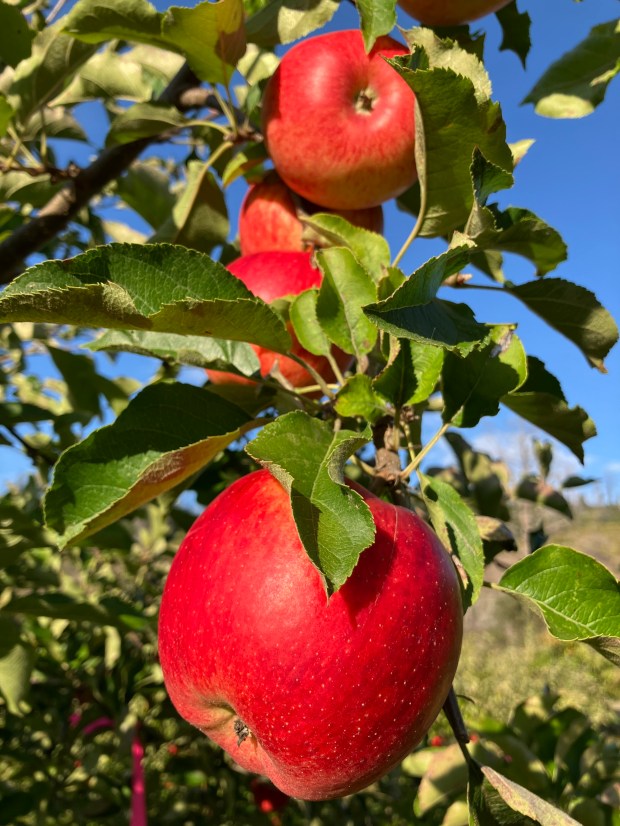
Soon, (the fairly dumb) Daylight Savings Time ends and the days will seem even shorter, by a quick, artificial burst. Wildlife adjusts to Fall, changing their behavioral patterns. Fruits galore – ripening of successive apples, limes hanging thick. A new solar power array materializes. The end of Molino Creek Farm farmer’s markets. The ever-greening of fields. Thunder and fog, chill and sun.

Bursts of Rain
We’ve had two storms so far bring precipitation, but the soil is bone dry 2’ down. It hasn’t been enough rain to stop needing to irrigate. Nevertheless, in the fallow fields and meadows – the first herbs have germinated and the green blush is growing into outright blankets of verdancy.

Last night in the wee hours I was awakened by the rattling of the house. Thunder! Some caught great movies of lightning strikes over the Monterey Bay. The last thunder that rattled things was back in 2020 when an orchestra of timpani rolled and rolled, ‘Rolling Thunder’ went from myth to reality. So, up from bed I was forced and off to gawk out the windows to see what was up. Alas, the flashes were too rare, the thunder had moved off and the night was calm once again. No rain then but rain rumored to be forthcoming this weekend.
Between rain storms, it has been nice, even hitting 82F this past weekend. A firefighter asked me what the relative humidity has been – ugh, not Rx fire weather: 85%!
Shorter Days
We clock the shortening days through anticipation of the last light for harvesting apples for the following day’s market. We need enough daylight to sort the apples with even the tiniest blemish from the perfect ones that go to market. That moment is 6:30 this week. For those of us with day jobs, that makes for a very tight window to harvest and sort. Today, there were 11 hours of daylight: the night is surely taking over to the glee of owls and other night time predators.
Lone Fangsters
The fiercest of predators are guarding their territory and prowling alone through the lengthening nights. Long tailed weasel mating season has been over for some months: they fend for themselves, darting up to 30 miles per hour and winding slowly through the narrowest of rodent holes. Their scat is everywhere across the farm, reminding their brethren who is who and where they’ve set up shop.
Fiercer still, mountain lions are just starting to think about pairing up with the first caterwauling a few weeks back. There was a memorable pre-fire Winter Solstice where we heard 3 lion females yowling from different ridges around the farm. That seems about the normal date for that kind of behavior, and it is a ways away. Meanwhile, massive solitary male mountain lions prowl a huge area all the while worrying about running into another male, which can be fatal or at least badly injurious. They scent mark to avoid such encounters. The urine scratch marking of Big Cats has started on the trails through the dark redwood forest along Molino Creek – signs we haven’t seen for 6 years.
Bird Season
Now that their young are on their own, the chickadees, goldfinches, and Anna’s hummingbirds are also about, cruising without immediate families. Chickadees and goldfinches flock with other unpaired tribal members, though in fairly small groups around the Farm. 6 chickadees seems like the biggest flock right now, and even that’s unusual to see. Goldfinches are hanging in similarly small groups but there are many of those tea parties.
The Anna’s hummingbirds, though – anything but social: they bomb and whistle at each other fighting for territory with what little nectar can be found, mostly around home landscapes right now. Those hummers will be the first of these non-monogamous birds to nest: in January they start gathering lichens and spider webs to weave their beautiful baby-homes. Those tiny nests will in a few months glisten with raindrops and grow transplanted mosses, cradling tiny eggs and their near torpid sheltering parent. Now, these future parents aren’t associating with one another, but instead joust for food, and try to get fat on the dwindling nectar.
Deeply Social Birds
For whatever reason, our blackbird flock is extraordinarily large this year. I counted 80 birds in one tree yesterday. Another flock came in this evening to join that one – over 100 birds. Perhaps it is because we allowed cover crops to go to seed this past spring, so there’s lots of food. I dread the bird seed predation right after the planting of cover crops. This year, we opted for only bell beans for orchard cover crop – the seeds so massive as to avoid easy bird swallowing. Late germinating bell beans are welcome salad greens for a lot of birds, though.
I ponder how the blackbirds know to stop singing all at once. Their sing-song squeaky cacophony sounds a bit more melodious than a long line of train cars squeaking and screeching on ice cold rails. All of the sudden, they all stop: not one at a time, no slow lowering of the volume. How do they do that…and why?
I would be remiss under this heading to not mention the California quail. Never fear, the coveys are numerous, the birds fat and happy. What a show!

Harvesting
The Two Dog crew returned to Molino Creek Farm to harvest their wonderfully productive tomato patch this week. At the same time, their pepper field is knee high and hanging densely with fruit. And, 2 Dog winter squash leaves are wilting revealing rafts of colorful squash.
Molino Creek Farm tomatoes, on the other hand, are mostly picked though the plants are putting on a flush of new growth after the early rains. Zucchini plants still push out yummy food. But, the season for that business is winding down – maybe only two more weeks of farmers markets to go!
The apple ripening season is just beginning to unfold. There was an unusually low amount of Gala apples and almost no Mutsu: our early varieties. So, this week we finish gathering the Galas and look to other types next. We’ll pick Jonagold apples – big, shiny, beautiful fruit and the prizewinner of our farm’s apple tasting competitions time and again. We are lucky to have a good number of those to share this season. Braeburn are close behind. But, the big amount of fruit is in the Fuji crop, which is 3 weeks away from being ripe. Will we be harvesting Fuji apples in the dark, or how will we figure out how to harvest so many of those fruit?!

The see-sawing of apple abundance is a result of what is called ‘alternate bearing’ syndrome. 2021 – post fire season, nothing much to harvest, then 2022 big year…2023 little year…2024 epic year…2025 little year. The way around this is to thin, thin, thin – and clip off fruiting spurs and so forth to make harvest more steady. Let’s hope we can keep up with thinning next spring – a crucial year to break this cycle.

Limes!
The Persian lime crop hangs heavy – what an abundance we will have if this all works out. We are frequently told that our limes are the best on Earth, and we agree. Someone wanted to see if we could pick them now, while they are green, to provide people with what they expect to be limes. So, off we went to squeeze and test and try to find a green Persian lime worth selling. Sample number 3- the squishiest green limes we could find and the results…NO! No juice! The vesicles, or ‘juice sacks,’ just haven’t matured: they were pungent, poppy and quite void of juice. So, we’ll have to keep explaining to folks that the yellow citrus are the best limes in the world. We’ll have about 500 pounds of them this year to share…in February – March, or thereabouts.

So, the shortening days doesn’t mean the end of the harvest. Nay, the harvest for our tree crops is just beginning!
While the nights are clear – get you outside to a dark area and enjoy the night time sky. We are marveling in the big, clear Milky Way from Molino Creek Farm these long, dark nights.

 Grey Hayes