hiking

Another Trail ‘Study’

The Peninsula Open Space Trust (POST) recently published an article about a 2023 regional trail user survey. The author of the article, Zionne Fox, wrote about some of the results of the study, and her writing helps gain new insights into POST’s philosophy regarding recreational use in natural areas.

Summary of the Article

Ms. Fox’s “blog,” published on August 28, 2025, announced the findings of a ‘unique’ regional study by the Santa Cruz Mountains Stewardship Network that had purported to assess parks trail user expectations. Fox reports the percentages of different user groups (equestrians, dog walkers, hikers, mountain bikers) that want more trails. She also notes that non-white respondents were statistically under represented. The article suggests (without supporting data) that demand for trails is growing and that ‘open space operators need practices that can meet rising visitor expectations while preserving natural habitat.’ There was also mention about many equestrians hailing from Santa Cruz County and (again, unsubstantiated) a need for additional accommodation for multi-day trail trips.

Reporting Issues

The POST article fails in many ways to meet the standards of responsible reporting, but that is predictable given the organization’s overall tendencies. First, note that the study referenced isn’t, as the author claims, ‘unique,’ at all: another, more professional study covering much the same material was published not that long ago. Also, notice that there is no link in the article to a report about the results of the survey. With further research I find that the survey authors, the Santa Cruz Mountains Stewardship Network, lacks a link to any reporting on the survey results on its website. Without more details about survey methodology, statistical analysis, and results it is difficult to draw one’s own conclusions. 

Moreover, the article emphasizes only the survey results which correlate most with POST’s own goal of increased recreational use of ‘open space’ lands. For instance, statistics are provided for apparent unmet needs from various recreational groups, but similar statistics are not presented about the degree of concern for natural resource conservation, which is at odds with increased recreational use. In fact, in the ‘What’s Next’ portion of the article, there is no mention of POST’s or any other ‘open space operator’s’ intention to address survey respondents’ concerns about conserving and nurturing natural resources which suffer from over visitation. Similarly, POST suggests that those operators should focus on ‘preserving natural habitat,’ which curiously avoids the more concrete and pressing issue of conserving the specific species that are sensitive to natural areas recreational use. Habitat preservation is nearly meaningless to measure, whereas species conservation is much more useful and quantifiable, with a richer history of scientific rigor in informing open space management.

Note that the author of this article fails to mention any results from the portion of the survey asking about trail user’s negative experiences in open space areas. The survey asked poignant questions about negative interactions with dogs, people biking, shared trail use with other users, etc. Such conflicts are expected and are a challenge that trained park managers are used to addressing; unfortunately POST lacks staff with such expertise, so it is understandable that the author would avoid mention of this portion of the survey, which would otherwise reflect poorly on her organization.

The reporting insufficiencies and biases should not be surprising to those who follow POST. This is an organization focused on increased recreational use at the expense of species conservation. For instance, while on one hand cheerleading for the National Monument designation of Cotoni Coast Dairies, POST refused to sign onto a letter advocating that the designation include specific protections for natural resources. Peruse the organization’s website and you’ll find that species conservation is de-emphasized as opposed to an over-emphasis of recreational use of natural areas, which negatively affects nature. While being the best funded private organization working on open space issues in the Bay Area, POST has apparently never hired staff or engaged contractors that are professionals at managing visitor use in such a way that demonstrably protects the very species that require POST’s natural areas to survive. POST has published no reports or plans to address these concerns, at least none that are available to the public.

Methodological Issues

On its face value, the survey issued by the Santa Cruz Mountains Stewardship Network lacked the rigor to make the kinds of conclusions that POST suggests would be valuable. As opposed to previous, more rigorous studies the survey failed to sample the breadth of the population with interests in open space areas. POST notes that proportions of respondent self-reported ‘race’ did not reflect the population as a whole, but failed to note how the survey may have also biased certain user groups over others (mountain bikers vs. hikers, etc). 

One would expect to encounter survey bias given the mode of delivery. The survey was a web-based survey distributed by social media networks. Open space organizations have recently become increasingly aligned with a vocal minority: well-funded mountain biking advocacy groups who undoubtedly circulated the survey in order to impact the results. Other trail user groups may have been under-represented because they have little exposure to those particular social media networks or because they lacked the computer technology to respond.

Cautionary Conclusions

We can learn valuable lessons from POST’s reporting on this trail user survey. Given the power of POST, we should continue to be vigilant about the group’s propensity to favor increased recreational use of open space lands at the cost of species conservation. This bias should make us question the organization’s ability to manage funding tied to protection of public trust resources. POST is a donor-funded organization, and so some degree of pressure from donors could help to steer the organization more towards conservation. We should also recognize that POST is not alone in making these types of mistakes. It appears that the Santa Cruz Mountains Stewardship Network is also allied with such thinking, and we have seen other conservation lands managers approaching open space management with similarly unbalanced methodologies. These trends must be reversed if we are to conserve the many species of wildlife which are sensitive to poorly managed recreational use in our parks.

As time passes and we stay alert to the possibilities, we will see if the poorly executed SCMSN trails user survey results are used to justify or rationalize actions by POST or other members in their network: wouldn’t it be a shame if they were?

-this post originally published in my column for BrattonOnline.com – a weekly blog with movie reviews and posts by very interesting people on matters near and far. I recommend subscribing to it and donating so we can continue this long tradition.
Cotoni Coast Dairies BLM Land Opens to Public

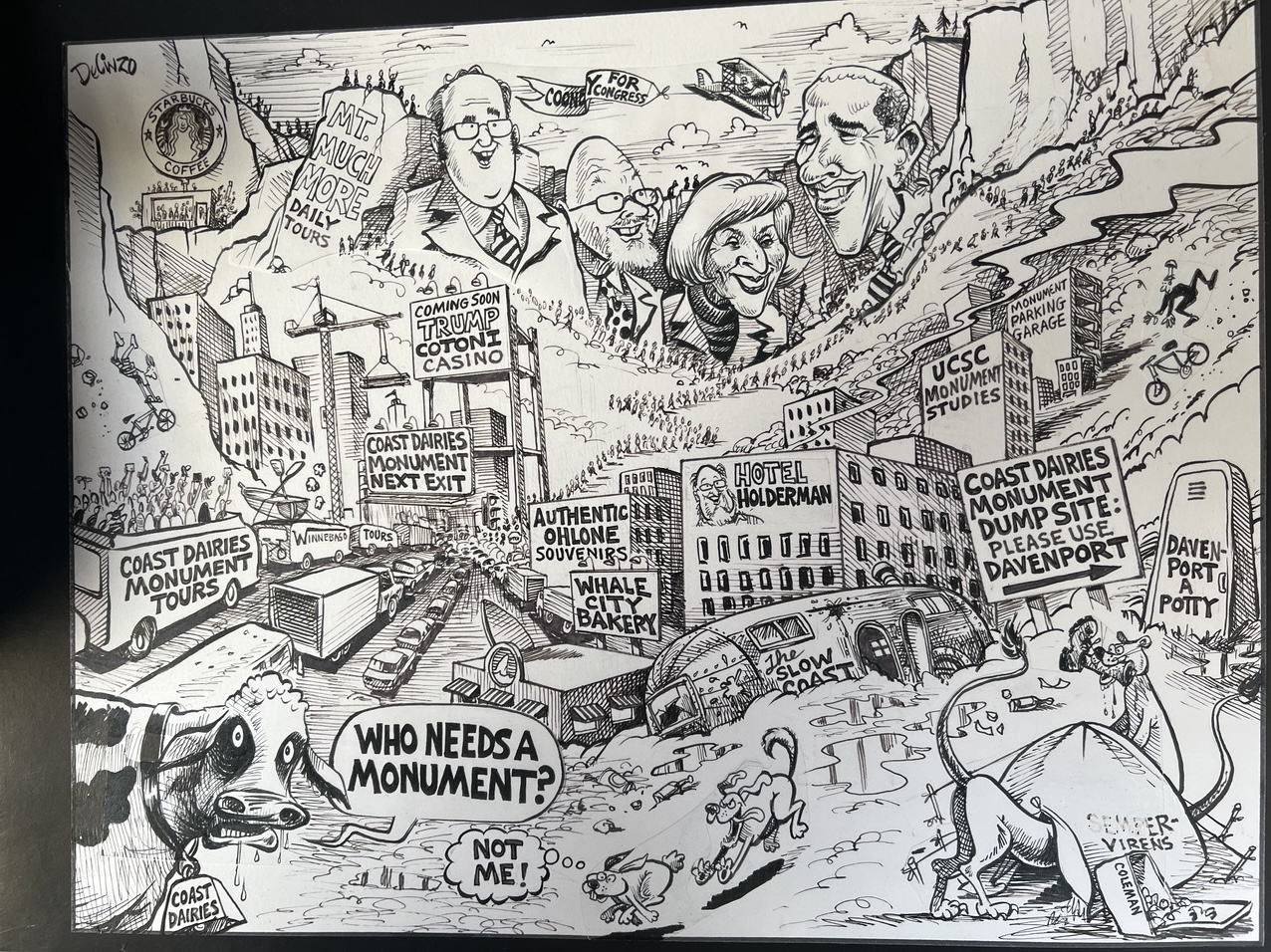
The opening ceremony for public access onto the Federal Bureau of Land Management’s Cotoni Coast Dairies property was on August 15, 2025, a grim day for those who have followed this travesty, which will only worsen with the planned public access.

Many thanks to De Cinzo for this image

Building on a Tragic History

Nothing good led up to this moment. There is no one left who speaks the language of, or can show direct descendance from, the native people of this property. There are rich archeological sites illustrating that this land was settled for thousands of years. So, as with every spot in California we must see this property and how it has been and will be used as a colonialist endeavor. There is no attempt to give the land back to any coalition of First Peoples who represent those ancestors or to respect them in any way that approaches restorative justice. Oh, but there’s the name…(!)

After the genocide, the land has seen one extractive use after the next with little regard for conserving nature. The ‘Coast Dairies’ portion of the name points to cows, and cows there still are. The grazing regime has never focused on restoring the very endangered coastal prairies on the property and, even now, there is no plan to do so. This recreational use is a new, highly impactful extractive use. The property is rare for the Santa Cruz Mountains in having had very few human visitors for the last 100 years, so wildlife has been accustomed to roaming without disturbance. Cougars and badgers are especially wary of humans when setting up dens. A million visitors a year will soon be visiting and wildlife will flee.

The consortium of people responsible for so many other, better outcomes for conservation tried hard, won some concessions, but have seen great loss with how this property came to be open to the public. We tried to get anyone but the Federal Government to manage the property, but the Open Space Illuminati had other things in mind…’The Great Park’…a handful of boomers wanted their legacy in a wide swath of the area becoming a National Park. They stopped at nothing to achieve that legacy. The activists, biologists, conservationists, and regular citizens, were even sued to strike fear into them, to make them capitulate.

Money Made it Happen

The Wyss Foundation bankrolled cash-strapped ‘conservation’ organizations to create a fake grassroots campaign that culminated in Obama signing a Monument Proclamation adding 5 properties across a wide swath of coastal California to the California Coastal National Monument. 

Then, the BLM routed hundreds of thousands of dollars, sole-sourcing a contract to a mountain biking advocacy organization to build the kind of trails their users wanted to see. That business quickly changed their name to a ‘trails’ organization. Instead of supporting good paying local jobs, the BLM paid this organization to rally volunteers to do the work of installing trails that were placed across a landscape without regard for the wildlife written into the President’s Proclamation for protection. When asked about how they could do such things when the property’s designation required favoring conservation over visitor use, BLM cynically snickered that the majority of the property, 51%, is set aside without public access. The rest, apparently, is a sacrifice zone.

What We Wanted and Will Pursue

Those of us who care about the native peoples, the nature of the property, and the experience of future visitors have a vision, which we will pursue despite setbacks. The land should not be Federal land – if you wonder why, you need to look at the current situation with federal lands nationwide. We always knew this, but now others are starting to understand our concerns. The current administration is selling federal land for real estate development and other extractive uses. If, after cutting the federal workforce, there are any staff remaining to manage the land at all, that will be a surprise. The Administration has said Federal lands will remain open to visitors even if there is no staffing or budgets. Oh no- could my dystopian vision for the property be closer to reality?!

 If there is a chance, California should buy Cotoni Coast Dairies. Then, let’s envision taking Canada’s Indigenous Guardian’s project to this place, giving tribal people primacy in stewardship, use, and oversight. Perhaps the State could give the land back, as it has just accomplished with the Yurok.

If the property is to remain a public park with visitor access, there needs to be a radical shift in how that is approached. The regulatory designation for first managing the property for conservation needs to apply even to the areas with public access. This will require altering use patterns, even closing the trails occasionally, for the benefit of the soil, streams, wildlife and plants that Obama clearly intended to protect. There will need to be lots of monitoring and enforcement to adequately protect natural resources. The BLM will need to do a ‘carrying capacity analysis’ to determine ‘limits of acceptable change’ – thresholds that, if surpassed, trigger altered management of visitor use to bring the use into alignment with conservation. 

Next Steps

It will soon be possible for visitors to monitor the situation first hand. Those of us who asked to do baseline monitoring of wildlife and plants were refused the opportunity many times. When we asked how small children and the elderly could possibly co-recreate on trails overrun by fast-moving mountain bikes, our concerns were dismissed. We will be able to help document how well BLM’s rules are working and if there is enough enforcement. We will be able to see the spread of diseases introduced by bike tires and hiking shoes ravage the amphibians, the trees, and the soil, and we will recall how BLM staff predicted those impacts in writing, with administrators choosing to ignore even the simplest measures that hundreds of other parks managers have employed to address those concerns.

-this post updated to past tense from the one posted via Bruce Bratton’s legacy site BrattonOnline.com

Not Passing Through

A fundamental issue related to the inter-connectedness between humans and between humans and Nature is how we move. How often do we change homes? When we are doing errands or our work, how quickly do we move around the landscape, in cars, bikes, buses, or on foot? When we visit nature, how do we move…and how fast?

Changing Homes

According to surveys, US citizens move from one house to another 18 times. On average, they move every 6-11 years, depending on region and economic status. In other parts of the world, such as China, there are millions of itinerant workers who are on the move all of the time. Refugees from war, climate disasters, cartel/mob threats, etc., are numerous. Is this natural?

Some would suggest humans are naturally nomadic. Long lived civilizations are very rare, and I’d be interested in knowing how long pre-industrial indigenous group are thought to have remained in the same territory.

The Social Meaning of Moving

Neighbors are a very long type of human relationship. Some people don’t know their neighbors. Some even don’t want to. The throng of cities provide anonymity that some crave. Rural areas lay bare the need to interact with neighbors. Some loner rural denizens stand out in their desire for isolation, leaving the rest of the neighborhood wondering and curious. That spectrum means there is a wide variety of meaning when we move away from the social fabric of our neighborhoods. When we move farther still, we leave behind those we chose to interact with, our communities, our friends. How have those moves affected you, your family, your friends?

Lost Communities

I posit that the frequency of people moving is negatively affecting the quality of communities. If people stayed put more, wouldn’t they come to better understand the things that affect their community? Even if they aren’t particularly interested, it seems like people gradually come to understand housing issues, strains on water sources, the health of the public transit systems, who has power and who doesn’t, how weather affects people, social norms, and history. Each of those types of understanding influences our relationships with others in our community and can affect the political parties and politicians we choose. When we move, our votes make less sense, and our communities suffer the consequences.

Moving Around Where We Are

Closer to home, how do we move about in our daily lives? I am amazed at rush hour traffic and suppose that most of those people can’t afford not to be moving so slowly, breathing thick exhaust. For a long time, as a commuter, I tallied the very expensive vehicles on the road at various times of day. Not surprisingly, the rich are better able to avoid rush hour. So, how and when we move around is highly affected by how much money we have. But, everyone moving in cars on the road share the experience of isolation from each other and from the world as a whole. The more time people spend in their cars, the more isolated they are.

Economic conditions notwithstanding, Covid lockdowns changed many people’s movement patterns. People looked at their homes differently. For instance, people started cultivating many more houseplants. As the urban bustle subsided, wildlife started edging further into the built environment. We noticed the world around us a lot more. It was quieter both on the streets and in the air. Air pollution declined. Some of our movement patterns remain curtailed despite city governments’ attempts to get businesses to reverse work-from-home policies.

Moving Around In Nature

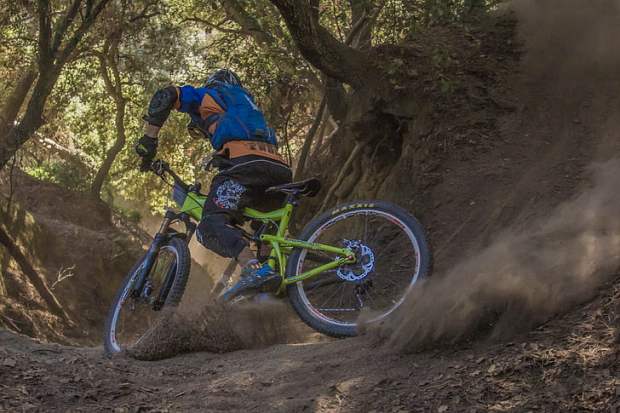
A ‘avid’ mountain bike enthusiast once told me that they rode carefully so as to avoid running over newts. For those who read my column regularly, you know I have an affinity with newts. When I walk in the forest, avoiding stepping on newts is something that keeps my attention. It is not easy. Newts blend into the forest floor easily, are varying sizes and move at varying speeds, and are sometimes so numerous that you have to walk ever so gingerly to avoid them. It is even more difficult for a bicyclist to avoid smashing newts, and that example serves for a world of other nature interactions. The faster you move around nature, the less likely it is that you will see the nature around you. Also, bicyclists, by covering more ground than those on foot, also disturb more wildlife than other, slower-moving parks visitors. If we are looking to increase the nature sense of humans, we must work to get mountain bikers off of their bikes, so they move more slowly and experience nature more deeply. The same goes for joggers. Parents who care about helping their children connect with nature have a challenge to show their kids how nature is exciting even if you aren’t on a bike or running through a park.

Infrastructure in Nature

‘Stay on the trails’ is an increasingly common park visitation rule. It wasn’t that way very long ago. Technically, State Parks has to formally designate an area as a natural reserve to legally restrict use to trails. At Cotoni Coast Dairies, the land managers have to go through an arduous rulemaking procedure to restrict future visitors to trails. Staying on trails changes the way you experience nature. Wildlife avoid trails. The vegetation surrounding trails is different. Your chance of encountering other people on the trails changes your experience. And, most trails are designed as straight lines, as if we are all in a hurry to get from one place to the next when we visit nature. Trail builders with parks agencies think that people want ‘loops’ and are averse to ‘out-and-back’ trails. Turn offs from the main trail better end in some giant attraction, like an incredible view. Those straight lines and loops create a certain type of experience for parks visitors. I suggest those designs enforce a more fleeting and more separate interaction with nature. What would it be like if more trails led one way to nothing obviously spectacular? What if parks managers designed in slow, immersive experiences into their ‘infrastructure?’

If people slowed down, looked around, and took more time to experience nature, wouldn’t that connect them more with the natural environment? Wouldn’t that connection make them care more about protecting the environment? Just as people moving less increases the possibility of caring more for their neighbors and human community, people moving more slowly in parks should increase their caring for the non-human world.

-this post originally published by Bruce Bratton in his highly engaging and enlightening weekly blog found at BrattonOnline.com, where you can turn for the most meaningful news for the Monterey Bay area.