dry farmed tomatoes

Shimmering

Morning fog gives quickly to sun and the days warm rapidly to the upper 70s, perfect tomato growing weather. Those tomato plants are heavy with first fruit, mostly pale green and many blushing orange: fruit season is here and there will be many lovely boxes going to market soon.

Big Moon, Lost Friends

The full moon was bright, lighting the farm in silver deep into the night, and the coyotes went silent. Two neighbors saw lions recently, and we all see foxes. One of those predator species has been murdering domesticated animals – a good friend housecat, the two recently adopted ducks, and all of the hens near the walnut. The two remaining barn cats are huddled inside, or under equipment, in fear. The moon wanes, the night grows darker…and still…and quiet…except the pulsing cricket chorus and occasional echoes of wave sets from way down below. We miss the high-tailed aloof-friendly kitty rubbing hellos, the exuberant morning duck quacks, and the loving hens, clucking and looking you straight in the eye.

Baby Gala Apples- some of our tastiest!

Orchards

The cherries are all gone now, any remaining abuzz with wasps carrying away the last bites of fruit. We are enjoying some citrus – navel, Valencia, a lime here and there, and honey mandarins. The citrus trees are growing madly, responding well to good fertilizing and water, and setting many fruit for harvest next winter. The avocado fruit are a bit smaller: the ones left on the trees are half a dime in diameter, and we lost some in a gap of watering…very important to keep the trees watered when fruit just sets, it seems. It looks like we will get around 10 avocados per 4-year-old tree (20+)…next February-May. After that, many, many more! Contrast that with mature apple trees- it will be another year of tons of apples. The predicted apple harvest is 9,000 pounds- the new treat being 600 pounds of Wickson crab apples, which are thickly laden for the first time since we planted them maybe 10 years ago. “What will you do with all of the apples?” you ask. “Juice and ferment into cider” we say, but there are so many other destinations and Apple Dreams for the harvest to come. Prunes, plums, hazel, pears…and much more coming into fruit. Tending the trees takes a community, and we are so thankful for ours, sweating together to get work done each Saturday (and many days in between).

Birdies

A friend visiting said he’d like to see a ‘lifer’ lazuli bunting, but missed it: they are here, though – first sighting that very day. The western bluebirds are thinking about another clutch in one of the same house boxes that raised a brood just before. A pair of screaming red tailed hawks makes for daytime drama. The obnoxious young raven pair still scream and pout, annoyingly to both humans and, I’m sure, their parents Maw and Caw. The big thing on the bird scene is the hundreds of quail babies: a big, big year. The covies are multigenerational with puffy baby babies, adolescents, young and old parents, all mixed up. The flushing of quail is disconcerting for the varied flight abilities and the angst of the parents. Wirr! Peep peep peep peep peep peep. Wirr! Chuek, chuek!! This is the sound we are getting used to hearing.

Molino Creek Farm’s famous dry farmed tomatoes

To Market

Molino Creek Farm is going to the downtown Santa Cruz farmer’s market on Wednesdays. Zucchini, flowers, and the first tomatoes were headed that way today and we’ll continue through nearly Thanksgiving. Soon, we’ll get to Palo Alto and later Aptos (both Saturday markets). We love the enthusiasm when we arrive and how people greet our tomatoes so happily.
Swarm in the Air

The air is alive with bugs and the swallows are happy. I don’t notice the tiny areal insects until dusk, by the sun’s slanting rays, but the barn swallows see them all day long. I’m sure that the swallows have learned, or always knew, which form of insect is the tastiest: maybe they dive for the biggest ones, perhaps they dart into a dense swarm of bugs with the right silvery flash, or maybe a lone moth flies in the right pattern to catch their eye from far away. Sometimes when I have the patience to watch the swallows for long enough, I see that several are crisscrossing the same patch of sky, or diving above the same patch of grass. It is hard to notice the common feeding ground because they never make tight turns, only large gradual arcs, to return to the same spot. They avoid crashing into one another by leaving a lot of margin, making it less evident that they are visiting the same feeding spot. How much of their flying antics are for feeding or just for fun makes it even more difficult to understand swallow-bug interactions.

Waves of Aphids, Troops of Predators

The slow flight of a tiny lone insect ends on the tip of a newly planted medlar. This mother aphid might soon have babies, the colony grubbing on lush new growth until it wilts. Close behind her another insect flashes red. A mother lady beetle somehow senses the right place to lay eggs where her offspring will have enough herds of aphids to feast on and grow fat. Close by, a yellow jacket wasp, aka meat bee, sips nectar at a flower; she might also be eating from aphid colonies soon – either lapping up aphid ‘honeydew’ or pinching apart their bodies or the bodies of the lady beetle larvae nearby. The acceleration of warm, long days and the lushness of plant growth is spinning up this circle of life.

The Hum of Tractor Engines

It is early morning and already a tractor is running, a farmer driving it from home base to the nearby field. The noise changes from jangling and a variable hum to a continuous deeper growl as the tiller commences row-by-row to prepare the soil for planting pepper plants, winter squash seeds and more tomato seedlings. Some tomato plants have been in the ground for weeks, and these need weeding and bed care. Bodhi recently cruised down those rows with the tiller, weeding the rows while also creating the soil mulch bed that is critical to maintaining soil moisture for dry farming. Where the tiller didn’t hit, right up against the tomato babies, a sea of the first paired leaves of weeds taunting the farmer, begging for hoe.

Jungle

Where not too long ago there were pretty patches of flowers, now it is disarray. The California poppies are buried in deep disorganized grass. Flower color has become muted, overcome by clouds of light green or even drying tawny. Where mower or cow has not touched, the meadows are 5’ tall. The overstory stems of the tallest of grasses, European oatgrass, hang thick with juicy seeds pendant and ripening. Where the soil is less productive, the grasses are already brown-dry and shorter with seeds ready to ruin your socks. Walking anywhere off trail is either a soaking experience (in the morning)(up to your knees) or a tangled, tripping, itchy experience (in the drier afternoon). Best to keep to trammeled areas, out of the jungle.

Thousands of Fruit

Apple petals have mostly fallen to be replaced by clusters of fuzzy, baby fruit. Instead of being a sea of white-pink blossoms, the orchard is fresh, light spring green with new leaves emerging from rapidly elongating shoots. Waist-high weeds have regrown where a month ago we had mowed to ground the cover crop. It is past time for another mowing. The baby plum fruit are already quarter-sized and shiny, too thick and needing immediate thinning; the apple fruit are close behind. Our regular trips to the orchard to fix and run irrigation have recently begun to include a pause to thin fruit. Soon, all attention will have to turn to thinning thousands and thousands of fruit to make room for the many fewer chosen ones.

Turkeys and the End of the Era of Fog

The last little while was so very foggy that one wondered if warmth would ever settle in. It has, but only a little. For instance today will be in the upper 60’s and the morning fog lifted by 9 a.m. The predominance of fog left its marks: taller grasses, lusher weeds, and too many patches of apple scab attacking the fruit and leaves. The fog also delayed the hatching of quail eggs, but the turkey babies couldn’t wait. Papa Turkey’s gobbling has paid off: Momma Turkey is herding a big family of babies up and down the trails and roads, out of the jungle of grass. Baby turkeys are fluffy and awkward, mother quite watchful. When she pauses and pecks, pickup off grass seed for lunch, her babies do the same.

Avocados and Oranges

Last spring was wet and rainy, and we see it with the current nonexistent avocado crop, but luckily there are oranges. If we ever get heat, the oranges will sweeten but for now they are ripe and juicy. We’ll have to wait for next year with the hope that this year’s avocado flowers get pollinated. Our 100(ish) avocado trees are growing rapidly right now. They are peculiar in that they make new leaves and shoots while shedding last year’s leaves…a kind of avocado fall. That transition leaves them vulnerable to sunburned stems; for this, we have been thankful for fog.

The Arrival of Fall

Last Friday, Night equaled Day; it was the Equinox, and our world stood in balance. From here, things tilt rapidly towards the dominance of Night, and we share the Sun increasingly with the South for a while.  There, Spring is emerging. The cooling temperature change switch is not thrown quickly; there is a lag of the Sun’s heating, and we often are assaulted by wilting, week-long heat waves in October. The return of the rainy season will likely be a way off. Meanwhile, the Harvest is in full swing at Molino Creek Farm with all of its various enterprises. Welcome to Fall.

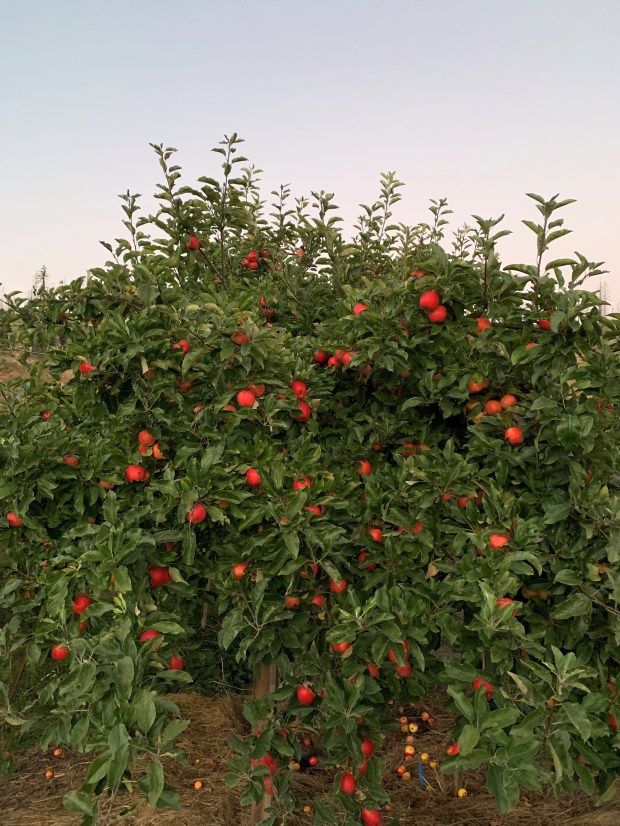
Organic Gala apple fruit are laden on one of many trees in our older trees

The Orchard

Apple trees hang heavily with giant loads of ripening fruit. The branches bend more each day as fruits get bigger, juicier, and more colorful. Gala apples are finally gaining their peachy blush, underlaying the sun-side bright red streaking, overlaying the shade-side yellows. Our much smaller crop of Mutsu apples are getting Really Big and kissed with a patch of purply red where they see the most sunshine. The Braeburn and Jonagold crops, a total failure due to apple scab, a combined result of the long, moist, cool spring and our own lack of applying sulfur to kill it. There are so many other varieties…one tree each…to taste, to give to friends to taste…to revel in the diversity of apple flavors and textures. Oh, and then there’s the patch of Wickson Crabs, which are laden with the tart poppy nuggets that will tint so many batches of hard cider, real soon.

The gold-red-purple French prune-plums are past but the yummier deep purple Italian prune plums are getting ripe now: tarts a’hoy!

Nearby, young avocado trees are stretching with late summer growth shoots, so well-tended and vigorous. And, an array of citrus also puts on pale new growth while slowly swelling their fruits toward a February harvest.

A Big Moon rises over Molino Creek Farm and its patches of dry-farmed Early Girl tomatoes

The Tomatoes

Rows and rows of tomato vines are laden with fruit of all colors. The harvest will continue for a while. There are plenty of pale green orbs from tiny younglings to larger plumpers. Pale orange fruits are transitioning to the bright reds, nestled within distinctly green foliage. Between the rows, tossed rejects of tomatoes melt into the soil and flocks of birds flit around chowing on their remains, hungry especially for the protein-rich seeds.

Quince!

Harvesting

The ripening tomatoes go into buckets only so full. The apples go into shoulder-mounted bags. Both fruit get sorted for sale. Tomatoes of varying quality go for varying prices. Only the perfect apples go to sale, the rest to home use, charity, or juice (cider!). Starting tomorrow, apple harvesters will gather a few times a week and we will be handling 6,000 pounds between now and Thanksgiving. Wow.

Seasonal Wildlife

On the drive down to the highway last Monday, I saw the Largest Buck…a real beauty with big antlers, a broad chest, and massive muscles. That large of a male is a rare sight, one I’ve experienced only three times since 1986. Back on the farm, we have a much smaller mother deer and only one of her twins from last season. Their still summer coats are shiny and light-roast coffee brown, and they appear well fed and relaxed. They have enough food to not be walking around on two legs reaching up for the Fall walnut leaves, but I smile remembering that ridiculous-looking behavior.

Like clockwork, the golden-crowned sparrows returned last Friday night. They always return on the night of the Equinox. The sound of their songs are now coloring the days; they have transformed the soundscape to mark the seasonal transition. This is somehow deeply comforting.

Scent Landscape

With the sweet sparrow song also arrives the scent of Fall. So many things contribute to the scentscape. Mostly, it is the piney-bitter smell of coyotebush, but add to it wafting sweetness of flowering domestic garden plants- angel’s trumpet, San Pedro cactus, four-o’clock and ornamental ginger. Also, the breezes bring other scent ingredients like agricultural sulfur, pungent tomato foliage, cidery apple culls, and so much more. The dry, cool air accentuates and mixes these scents and creates the Molino Creek fall perfume. Emerging from the night warmth of shelter, we breathe deeply the outdoor air to experience all that’s on the air.

When the clouds and fog clear – the minority of nights as of late – the star-filled sky is bright with the Milky Way. Tonight, a Big Moon hails and lights the farm in its blue glow, illuminating the soon-to-be walk to juggle irrigation valves once again.

Somewhere, somehow…it is all Right Now

Right, now

Posted simultaneously at the website for Molino Creek Farm.

July Awakens the True Summer: Warmth and Welcome Shade

Sunshine rakes across exposed skin, prickly hot. A cooling light breeze helps, but the shade offers a more pleasing comfort. We smile entering the cool understories of lush walnut trees or beneath the canopies of perky well-watered apples. It is nice to have both the summer warmth and the cool shade in proximity. Our creature brains welcome the return to normal weather patterns with this typical July weather at Molino Creek Farm. The past week’s temperatures were precisely what the dry farmed tomatoes, winter squash, peppers, avocados, apples, and sunflowers crave: highs in the mid 70’s and lows in the upper 50’s. The cool breezes emanate from the tops of the billowing fog racing down the coast 200’ below the farm, obscuring our view of the wind-swept waves.

Don’t all you folks way East of us slather at our weather, it comes with a cost…the potential for FIRE! (I shouldn’t have said that). Do non-human critters worry about fire?

Wildlife

How would we know if our critter friends fret about wildfire? The turkey mothers seem to worry less about their young than the quail, judging from their skittishness. Bigger birds might have less worry and these turkeys look proud and bold. The turkey ‘chicks’ which we encounter along the road out from the farm are mostly pretty big, half the size of the adults and not so many as the quail. The quail are raising their second flush of teeny-tiny young fluffballs, stumbling along the roadsides. Their big brothers and sisters are nearly the size of adults- they grew so very fast. A 30-strong covey isn’t unusual to see on the Farm- we might have 4 of those calling their territories here and there. The coveys of quail have mostly orchestrated their flushing formations, launching and landing in unison.

A high flock of 50+ smallish swallows (species TBD) gathers at the top of the Salix Stream’s highest burnt Douglas firs, alarm calling and scattering when our resident red-shouldered hawk flies by. The above-door barn swallows have either just fledged (neighbors) or are feeding their second clutch (my house). A large flock of Brewer’s blackbirds has settled back on the farm after their off-farm nesting; they are accompanied by at least one adolescent bicolored blackbird. The pair of band tailed pigeons who are robbing chicken feed bravely from the coop are still at it.

No new news on the gophers and voles. The gopher population still as the upper hand as the vole population rebounds, crowded into thick-thatched corners of the farm, here and there. I predict the gophers will start losing ground to voles later this year…

Farm Activities

Mark Jones is still the rock star behind the mowing- weed eating and mowing to get the grass down to a fire-safe, dirt-touching mulch. Adan made a pass through the tomatoes with the tractor, tilling in the summer weeds. The Two Dog crew has been assiduously hoe-hoe-hoeing the row crops which had an unusual flush of weedy amaranth this year, so lots of work! Free the peppers!

As I type, Molino Creek Farm has made its debut at the Downtown Santa Cruz Farmer’s Market. Judy took many beautiful sunflowers, zucchini and various other goodies to say our first hellos to new friends and old.

Organic Tasty Gala Apples, Growing Fast for a September Harvest

Crop Report

Tomato bushes are 18” across and a little taller with the first green, shiny fruit plumping up half way up their stems. Two Dog winter squash is bounding- tendrils stretching and long stems bounding from vibrant plants whose bases are adorned by big yellow blossoms. The orchard mulch project is gaining ground- we’re almost through with raking, delivering, and placing the first mulch field, aka “Squash Field”- an acre of ground just past the Old Apple Orchard. We’ve got much more to do with the 1-acre “Habitat Field” near Cherry Hill. And then, we have more patches to gather as our hunger for hay mulch has grown with the new plantings the past few years. Our 3 acres of orchards seem to want to be fed 3 acres of hay, easy math.

The Heavenly Scented San Pedro Cacti are in Bloom Right Now at Molino Creek Farm

Flowers

There are very few flowers alive on the landscape. The row crops are too small to make many flowers, yet and the wild plants are too far from rain to be making many flowers. The exception is toyon – a rose-family shrub that we’ve planted here and there for habitat and pollinators. Toyon is aglow with big bouquets of small white flowers, abuzz with bees and even attracting Allen’s hummingbirds. And so, things are drawn to our home landscape gardens. An old Molino tradition is cultivation of the sacred columnar San Pedro cactus, a native of the west slope of the Andes. Twice a year, San Pedro goes to bloom, opening its massive white fragrant trumpets at dusk. The flowers are full of drunk and dazed honeybees and you can smell the divine smell many yards away. And…what a show! Otherwise, we keep a few salvias and petunias and things flowering for color near our homes and those must serve as nectar and pollen respite while the pollinators await the Great Flowering – thousands of coyote bush: those are while out.

-from my weekly blog on Molino Creek Farm’s web page blog.