We each come to loving non-human wildlife for our own reasons, and we want to assure that all species are thriving for future generations. Among the many people with whom I interact, their answer to an intriguing question is uncannily and increasingly resolute.
“How many species do you need to maintain the quality of life you desire?”
“All of them” is the answer more and more people are giving me.
How does that work?
Only through the goodness of our hearts will we conserve wildlife. What doors open our hearts enough that we are willing to act to restore wildlife?
Cute, Fuzzy Creatures
As children, we are fascinated and kind towards non-human animals. Often, what we glean from children is that they find wildlife to be ‘cute.’ Whether they are stuffed plush toys or animated cartoons, we indulge our youngest children’s inherent love of wildlife. They have pets, or visit friends’ pets, and develop relationships with non-human species. Children learn to cuddle and stroke pet fur, and the pets purr and roll, and show pleasure, giving love back. Humans and non-humans give and receive love, reducing stress and building trust. We expand the community from our core human families to include non-humans.
As adults, we carry with us that love of cuteness, the desire for connection with non-humans, the tactile pleasure of the furry cuddling interaction. And we develop still other ways to connect with non-human animals.
Non-Human Friends: Our Pets
The friendships we create with non-human species are complex, and we each have our own approach. Many share a basic understanding that has developed with our non-human pet species. There are troves of common wisdom about dog and cat behavior towards, and expectations of, humans, which I will not repeat. I’m sure you have plenty of material to reference, as this is a deeply cultural realm and the subject of many conversations, especially when extended family gathers and ‘pet talk’ is a relatively safe space for discussion.
As those pet conversations get more personal, it becomes clear that many humans rely on non-humans (and vice versa) for friendship. Our pets go with us on adventures and reveal to us much that we may not have otherwise experienced. Our pets recognize our ups and downs and participate actively with all of our emotional territory.
Wild Friends
It’s not only pets: some people recognize friendship with wild creatures. The stand-out crowd are those who feed or provide water for wild birds. This bunch is so numerous as to have a sizeable economy surrounding these connections. People buy and maintain hummingbird feeders, bird baths, bird feeders, suet cages…some even invest in specialized foods such as worms or fruit jellies for their favorite bird species. There is an emerging movement in gardening for wild birds.
Still others connect with the wild furry animals that they frequently encounter in parks or in their yards…squirrels, deer, and foxes are the ones I hear about the most. People put out squirrel food, some even getting to know a squirrel well enough to feed it out of their hands. Some folks get to know a certain local doe and her fawns, watching her through the year as she raises them from spots to adolescents. The doe may very well know about the safety net provided by their proximity to a friendly human’s habitation. She and her fawns will feel comfortable near the humans they recognize. Being very sound-centric, they respond attentively and curiously when we talk to them. The very habitual fox, trotting the same paths at the same times each day, will know just how to avoid human encounters but we catch glances of them when we break our rhythms. They poop on our shoes outside the door as a way of saying hello. For a while, foxes were so regularly seen in Bonny Doon that when their populations dipped a whole community was saddened.
Wildlife Viewers
Many of us are falling in love with more and more species of wildlife. We call ourselves naturalists or wildlife viewers. We study the critters we encounter in order to learn new stories. Domesticated dogs provide a gateway into the natural world…through our regular ‘dog walks’ and through our observation of their sniffing around and explorations. Wild animals do those things, too, in many more ways. They draw us out of our cozy homes to visit them and see what they are up to. Observing their behavior, we learn new things about the natural world. As our curiosity grows, we find ourselves in places we wouldn’t otherwise venture, at times of day we might not otherwise get out. Wildlife viewers must get up very early sometimes. To see a river otter, they go to the riverside; to see whales, they go out in boats; to see pond turtles, they spend time gazing at logs in ponds; to see snowy plovers, they squint into binoculars on a wind-blown beach; to hear owls, they stay up late and scritch gravel to goad them to calling.
Hunters
A significant and important segment of the human population connects with wildlife as part of the hunt. Sometimes, hunting provides important food for subsistence; historically, this was even more so. Other times, hunters enjoy the sport as well as the food. Hunters and people who fish get to know the species they pursue and the habitats those species rely on. And, their love of wildlife for hunting has actualized incredible conservation successes. Ducks Unlimited and Trout Unlimited are two of the many organizations supported by hunters which have helped steward wildlife habitat and recover species.
All of Us
Statistics suggest that the vast majority of humans, even here in the apparently divided USA, strongly support wildlife conservation. When we realize the importance of wildlife to our standard of living, we are compelled to learn more about what wildlife need to survive. When we connect with wildlife, we realize we are part of something greater than ourselves, bigger than our simplified human-oriented world. When we see wildlife make a connection with us, we feel part of the natural world, and our basic selves become more grounded and real. When we work to conserve wildlife, we are at our best…serving the world that serves us. Three ways we can be effective at wildlife conservation:
Vote for candidates that detail their approaches to conservation. Every political candidate has the means to make a bigger difference than any one of us acting alone.
Join a wildlife conservation organization, donate more than membership fees. The Center for Biological Diversity is my choice. The Audubon Society is a good one, too. I’m vetting others…suggest one that you think I should mention!
Tell your friends heart-felt wildlife stories. Help create a culture that connects with wildlife!
-this post originally part of a Bruce Bratton weekly blog at BrattonOnline.com, read it and be enlightened!
-to be further enlightened on this subject, see the recording of my recent presentation about local wildlife by clicking here.
So much environmental degradation seems to be due to our rushing around. How can we best slow down? Each of us can do our part in creating the Great Slowdown that we need to sustain the planet.
Save More, Buy Less
The first and easiest way to help the Great Slowdown is to stop buying so much Stuff. If you haven’t watched the Story of Stuff in a while, or not at all, DO IT NOW. This 21-minute video is compelling, fun, and has changed more lives than many a 20-some minute experience otherwise. I think it’s worth watching regularly, perhaps in October just before the stuff-a-thon holiday season besets our culture.
If you listen to the news, you will understand how important buying stuff is for our unsustainable economy. “Inflation is up, but ‘luckily’ consumer spending is cooking right along, otherwise our economy would be hosed.” A president once said in a national crisis, something like, “Just keep buying stuff!” Time is money, and by spending your money on useless crap, you are wasting your time, carelessly throwing away your life, and helping to wreck the planet. A few years ago, someone did a calculation and the transaction cost of each dollar spent was a liter of oil. I’m betting it’s worse now. Save a buck, keep a liter of oil from burning up.
Stop Rushing at Work
There is so much pressure to do more at work, but is that really helping anything? Chances are good that the more we rush, the worse off the planet is. How about we slow down? Carefully watch those who rush around with their work: why are they doing that? I’m betting that they mostly want to impress people, get others to work harder, or they are avoiding problems at home or something they might better be doing for Real Good.
The labor movement has something called ‘working by the book,’ which we might emulate to improve the planet. What is absolutely necessary to do with your work? What does the job description say? What are the metrics for success? Often, organizations keep the productivity targets elusive, to keep everyone guessing or trying to push for more. On the other hand, if productivity targets are defined, ask yourself if they are set too high. If so, it might be time to work with your colleagues to reduce them to something more manageable.
Slowing down at work is part of the solution, part of the Great Slowdown.
Working for the Planet
The capitalist system mostly asks each worker to create efficiencies that are bad for the planet. As we learn to care more for the planet, we will find ways to sneak improvements into the workplace that will help Earth. Is there a way to reduce driving, material transport, waste? Does your workplace purchase recycled paper, organic foods, and other eco-friendly products? Maybe there’s a sustainability policy on your business’ horizon.
Beware the Fakes
If you see potential greenwashing, ask about it! I recently asked a seemingly eco-conscious caterer what they meant by “gourmet sandwiches, made from the finest local ingredients” and it turned out that they used very mainstream factory-farmed meats and conventionally grown produce distributed from warehouses far away. They soon thereafter changed their menu language. That was the third time I was able to affect that kind of change. Do we choose places that are true to their word about their products? How do we know if we don’t ask? Why would they be true to their word if folks never asked?
Buy Green
The list of businesses that are truly green is getting smaller, not larger in Santa Cruz. There are fewer restaurants serving local, organic foods than there were a few years ago. Local grocery stores are sliding further from, not closer to, sustainability. I suspect all of this is because people are not pursuing green purchases.
Keep Your Keel
How easy it is to go with the flow, but is that truly the best thing for the planet? There is a concept called ‘slippage’ where environmental policies are interpreted in ways that slip away from the intent of the policy, usually with negative environmental consequence.
If your work entails intersection with environmental policies, it is time to ask how you can help interpret those to environmental benefit, not environmental degradation. It is time also to ask what is the greatest good you can do with your work, focusing on the issues of greatest impact for environmental improvement. As I’ve said in prior posts, the metric should be species conservation: how can our work best affect that outcome? The answers are usually easy to arrive at.
Beware of False Dichotomies
Those who are most invested in slippage often use false dichotomies. Parks managers often note that they have a difficult dual mandate: to provide for public recreational access while conserving wildlife. For a large portion of Santa Cruz County, managers are leaning heavily on this false dichotomy to ‘sell’ the concept that it’s just fine for our wildlife to disappear because of their mismanagement. Trails erode tons of sediment into streams and wetlands, trash litters our beautiful beaches, and graffiti proliferates on sea cliffs because of the slippage that is embraced by the poor logic presented by parks managers’ adoption of their false dichotomies.
Parks Management Slippage
Many of these parks’ managers use other forms of slippage. The California Public Resources Code says this about State Parks: “Following classification or reclassification of a unit by the State Park and Recreation Commission, and prior to the development of any new facilities in any previously classified unit, the department shall prepare a general plan or revise any existing plan for the unit.” Look at the North Coast beaches, and Gray Whale Ranch…and, enter slippage: none of those have general plans, and all have ‘new facilities.’ I’m sure that someone, somewhere can provide some beautiful logic about how that can be possible. Has someone said ‘if anyone asks just tell them we never “classified or reclassified” those “units” and they were never “previously classified” (hardy-har-har-har, that’ll get ‘em).’ Anyone in their right mind would know that the responsible thing to do would be to create a general plan before opening a park, and that’s what was meant by that part of the Resources Code. Meanwhile, we must all ask WHY are these precious places opened to visitation without a plan to conserve wildlife on those spectacularly biodiverse places?? If you work for State Parks, you must ask yourself what place you have played in allowing such things to happen and how you might reverse this slippage. If you work for other land conservation organizations, you might have similar things to ponder: do you hold a false dichotomy promulgated by those with anti-conservation agendas? Where do you lie on the spectrum of serving Earth or serving Greed? If you are torn and in doubt, maybe it’s time to slow down and ‘work by the book.’ It might be better if you embrace the Great Slowdown in your job while you increasingly help others become aware of slippage.
Santa Cruz County’s newest conservation land managers are supposed to conserve the wildlife prioritized by the State of California, but are failing to acknowledge their obligations, which means some of our area’s iconic wildlife species will disappear faster due to lack of Federal cooperation at Cotoni Coast Dairies.
Background
The Bureau of Land Management oversees management of Cotoni Coast Dairies, but it is following much-outdated wildlife conservation guidance. Land management agencies like the BLM are guided by policies and procedures that guarantee that they do a good job of managing wildlife. For instance, BLM has its 6840 Manual “Sensitive Species Management,” which notes:
“The objectives of the BLM special status species policy are:
A. To conserve and/or recover ESA-listed species and the ecosystems on which they depend so that ESA protections are no longer needed for these species.
B. To initiate proactive conservation measures that reduce or eliminate threats to Bureau sensitive species to minimize the likelihood of and need for listing of these species under the ESA.”
In other words, BLM recognizes that the agency should not be contributing to wildlife species becoming rarer and so receiving more regulatory protection, which would impact private landowners by restricting the uses of their property.
Mouritsen’s Duty, Neglected
To avoid that, BLM California’s State Director Karen Mouritsen is required to, “at least once every 5 years,” review and update the BLM-maintained list of sensitive species in coordination with the California Department of Fish and Wildlife (CDFW). It is unusual for such policy guidance to lay out a specific timeline, which adds clarity to expectations. The last time California BLM’s sensitive wildlife list was updated was in 2010, before Director Mouritsen’s tenure: 13 years ago! A lot has changed in those intervening years, and scientists have recognized that many more wildlife species are in need of protection by BLM.
Repercussions at Cotoni Coast Dairies
What happens when BLM’s sensitive wildlife species list isn’t updated? Let’s look at the Cotoni Coast Dairies example. BLM has already completed a Resource Management Plan that is meant to guide wildlife conservation on the property. Under the guidance and environmental review provided by the RMP, the agency is building miles of trails and parking lots, implementing a cattle grazing program, and allocating funding to other prioritized activities. BLM will soon embark on a Science Plan for the property. The RMP didn’t and the Science Plan will not consider conservation of wildlife species that do not appear on the BLM’s sensitive species list. And so, the following 10 rare wildlife species will receive no attention, pushing them further towards extinction: ferruginous hawk, grasshopper sparrow, Northern harrier, olive-sided flycatcher, American badger, San Francisco dusky-footed woodrat, Western pond turtle, California red-legged frog, American peregrine falcon, and short-eared owl.
A Deeper Dive – Grasshopper Sparrow
Let’s consider one of those species with a little more detail, the grasshopper sparrow. If this species is nesting in an area, under California law they are protected and our state wildlife agency, CDFW, has been charged with their conservation. According to BLM guidance, Director Mouritsen is 13 years overdue in updating the agency’s sensitive wildlife list for California to include this species. As their name suggests, grasshopper sparrows are grassland-dependent organisms. There is an abundance of nesting grasshopper sparrows at Cotoni Coast Dairies.
Without active management such as with carefully planned livestock grazing or fire, all of the grasslands at Cotoni Coast Dairies will disappear, being invaded first by brush and then by trees. This is already happening with extensive French broom and coyote brush invasion.
Already, BLM has planned its livestock grazing and recreational trail uses without consideration of preferred habitat for nesting grasshopper sparrows. Livestock grazing could be taking place to the detriment of the species, already. The construction of recreational trails and parking lots may have already destroyed important nesting habitat. When recreational visitors start using those facilities, it may occur before BLM has a baseline study of the density and location of nesting grasshopper sparrows. So, the agency will be unable to understand how land uses are impacting the species and so will be unable in an informed way to adjust its recreational or livestock management to better conserve the species.
It may well be that BLM’s management of Cotoni Coast Dairies will further reduce nesting populations of grasshopper sparrow, pushing the species closer to the point where they will need to be listed as threatened or endangered. When that occurs, private landowners whose land supports nesting grasshopper sparrows will see increased regulation and oversight by the State and/or Federal government. Their property values will be reduced and their ability to develop homes, farms, or other uses will be diminished.
An Alternative
On the other hand, if the California BLM State Director Mouritsen were to meet her regulatory obligation and update the BLM State Sensitive Wildlife Species List in the near future, a bunch of good would result. First, Cotoni Coast Dairies’ Science Plan could provide guidance for conserving those species. Second, because BLM funding is tied to the number of sensitive species on each property, Cotoni Coast Dairies would be better situated for increased conservation funding. If the Science Plan succeeded in moving forward the conservation of sensitive species like the grasshopper sparrow, BLM’s leadership on these issues could help many other land managers do the right thing for species, contributing to the potentiality of ‘delisting’ species, reducing the potential for increased regulatory burden and loss of private property values.
Do Your Part
I’ve said it before in this column, but I’ll say it again. NOW is the time to write Director Mouritsen to urge her to do her job. She hasn’t replied to any of the numerous letters she’s already received, so evidently she needs more pressure to take this seriously. Here’s some language to send to her via her email kmourits@blm.gov Please let me know (or cc me) if you send something.
Dear Director Mouritsen,
I care about wildlife and plant conservation on BLM’s Cotoni Coast Dairies property in Santa Cruz County. I write to urge you to help by adding sensitive species found on that property to the State BLM’s sensitive species lists. Only if those species are on the State’s lists will local administrators consider impacts of their management on those species in their analyses and planning for the property. So, I ask that you please:
Publish an updated State BLM sensitive wildlife list in collaboration with the California Department of Fish and Wildlife, as mandated by the BLM’s 6840 Special Status Species Manual.
This list was last updated in 2010, but you are required to update it at least every 5 years.
Publish an updated State BLM sensitive plant list to include the State ranked 1B plant species documented at Cotoni Coast Dairies, as mandated by the 6840 Manual.
I would appreciate a reply to this email with details about how you intend to address these issues.
Signed, xx (you!)
-this post originally appeared as part of Bruce Bratton’s amazing weekly blog at BrattonOnline.com You an sign up and receive it automatic-like if you visit this site. You will be rewarded by getting smart commentary and news that is very relevant to life in general and life on the Monterey Bay specifically.
Pema Chodron suggests we put the statement “Abandon Hope” on our refrigerator doors as a reminder. She shares the teaching that hope and fear are two sides of the same coin and reflect feelings that we lack something essential. I sense that those of us who care about the Monterey Bay’s environment are unnecessarily burdened by a philosophy of resource limitation, of lacking what we need.
Presidential Hope
You may recall that “HOPE” was the meme used in Barack Obama’s presidential campaign. When Sarah Palin ridiculed that slogan with ‘How’s that hopey-changey thing working out for ya?’ it turned my stomach. More than a decade later, it is ironic that the political left wing uses similar ridicule for the ‘thoughts and prayers’ refrain used after mass shootings.
Obama once emphasized the ‘reality’ of his ‘Hope’ slogan by saying, “Over the past 2 and a half years, the hope poster starts fading. But I tell you what, you travel around the country and talk to the American people, that spirit’s still there.” According to the wisdom of Chodron, Obama was reinforcing the widespread notion of powerlessness. In dealing with environmental issues locally, I see clearly what Obama meant. The feeling of hope is a terrible affliction around the Monterey Bay.
Thoughts and Prayers
As each new environmental battle unfolds around us, as too few of my community does anything to help, I keep hearing the response: ‘Thoughts and Prayers!’ When UCSC moves forward with bulldozing Santa Cruz’ iconic East Meadow, folks who claim to care for the environment seem to be saying, ‘Thoughts and Prayers!’ As the Bureau of Land Management plows ahead with slipshod management of Santa Cruz County’s only part of the California Coastal Monument, people seem to be saying, ‘Thoughts and Prayers!’ As the Coastal Commission pushes maximum public access on every beach and coastal open space despite dwindling wildlife impacted by poorly managed recreation, the refrain ‘Thoughts and Prayers!’ seems to emanate from so many beatifically smiling, caring people who ‘Love Our Coast!’
Louder Paralysis
Action is louder than words, but what prevents action? The most common response I get from folks who are so full of hope but don’t do anything for our local environmental crises is that they don’t have time. To be sure, the bills need paying and we are all So Very Busy. “How are you doing?” someone asks. The reply so frequently is “Busy!” to the point of being funny (peculiar). When the conversation runs longer and one of the many environmental plights gets discussed, the conversation ends when the ‘hope’ word gets trotted out: “I hope it turns out well!”
Seeding Confusion
Greed lies at the root of all seven deadly sins, and that greed is working well with cultivating confusion across the world, resulting in environmental degradation. Let’s examine how each of the following statements has been used to sow confusion in our community. “UCSC needs to house more of its students!” “Cotoni Coast Dairies should be open to the public!” “Our beaches should be for everyone to enjoy!”
Thoughtful, pro-environmental Monterey Bay citizens want to better understand situations before taking action, even if that action is speaking out, talking to their friends or workmates, or voting for the right candidate. To them, they lack the time…they say that having enough understanding costs time, and they don’t have that time. Time is lacking! Maybe the only thing to do is to hope for the best!
There is Enough Time
We don’t have to know more to be engaged citizens and there is enough time to act now. It takes a fraction of a fraction of a second for your neurons to arrive at your personal most pressing question about environmental conservation in the Monterey Bay area. It takes a similarly miniscule amount of time to place that question on your mental checklist of cherished treasures. With those two in place, you will find the moment to ask that question until you arrive at a well-informed conclusion. Asking the questions, sharing your conclusions: you will not notice the time that it takes to do these. These are the easiest, essential actions that go beyond the empty, lacking things notion of ‘hope.’
Working Together, We Are Successful
The list of accomplishments is long: Lighthouse Field, Gray Whale Ranch, Cotoni Coast Dairies, Upper UCSC Campus, the Glenwood Preserve, Arana Gulch, Monterey Bay National Marine Sanctuary, State Parks Ecologist positions, City Parks lands managers, pesticide bans…None of those would have taken place by hope alone. We have resources. Our community is strong and capable. There is no need for hope, but there is a need for action. Local history shows that when we take action, we can do great things. When we don’t take action, priceless environmental resources are lost. Already, there are no more breeding local badgers, burrowing owls, or roadrunners. Santa Cruz kangaroo rat, Santa Cruz tarplant, Ohlone tiger beetle, and Point Reyes Horkelia, are slipping towards extinction (on our watch!).
Start by Asking
Recently, I urged readers to write an email to California Bureau of Land Management’s Director Karen Mouritsen and to cc me for my records. Guess how many notes I got? Let’s see…population of Monterey Bay what- 100,000 (+)? Readership via BrattonOnline, my website, Facebook, and shares…maybe 2,000?
I got four notes! Four. 4. (Loud sigh)
Its not too late, folks. Your very brief to create email would still be timely- see the link above.
But, as usual, I heard praise from many people about my writing. I am compassionate about the root of people’s “hope” – that it seems we lack time, understanding, or focus.
I want to cultivate curiosity and see where that leads. What does this political cartoon make you wonder about? Why not ask? I know enough not to hope; I know that, together, we are making a difference. Thanks Friends of the North Coast!
-this post originally published by Bruce Bratton at his weekly blog BrattonOnline.com – I updated it slightly to account for the FOUR letters I got from my recent call for environmental assistance. (sigh again)
The California division of the Bureau of Land Management suggests that it is concerned about rare species, but what evidence is there for those of us considering their management of Cotoni Coast Dairies? It is crucial that public land managers take care of rare wildlife and plants – doesn’t it seem like public lands are the right place for species conservation? Let’s consider what we’ve seen…
Background
The BLM has some great policies to guide its management of rare species. It has a guidance manual, Manual 6840 “Special Status Species Management,” that says that BLM will manage not only for species on the USA’s list of threatened and endangered species, but also for species that are candidates for listing as well as those which State wildlife agencies consider priorities for conservation. The manual directs each BLM State office to keep a list of State Sensitive Species (both wildlife and plants) and to update those lists every 5 years in collaboration with State wildlife agencies.
BLM California has published the following lists of sensitive plants and wildlife.
California BLM’s Sensitive Species: Problems
Although BLM’s policies are good, somehow their implementation at Cotoni Coast Dairies, designated as one of 5 onshore units of California’s Coastal National Monument, has been faulty. For instance, plant species listed by the State as rare (Rank 1B) are automatically considered sensitive according to BLM policy, but the BLM California sensitive plant list is missing three of the California rare plant Rank 1B species that have been documented at Cotoni Coast Dairies: Choris’ popcornflower, Santa Cruz manzanita, and Monterey pine. In addition, although BLM’s State Sensitive Plant List has Point Reyes Horkelia, it is not noted as occurring under the management of the Central Coast Field Office, which oversees Cotoni Coast Dairies. Moreover, the last time BLM’s sensitive wildlife list was updated was 2009; it is missing many species recognized by California Department of Fish and Wildlife as rare, including some that occur at Cotoni Coast Dairies. Here are the Cotoni Coast Dairies’ wildlife species that would have been included on BLM’s sensitive wildlife list if the BLM California State Director Karen Mouritsen were following her mandated actions under Manual 6840:
Common name
Latin name
Rarity Status
Grasshopper sparrow
Ammodramus savannarum
CA Species of Special Concern (nesting)
Northern harrier
Circus cyaneus
CA Species of Special Concern (nesting)
Olive-sided flycatcher
Contopus cooperi
CA Species of Special Concern (nesting)
American badger
Taxidea taxus
CA Species of Special Concern
San Francisco dusky-footed woodrat
Neotoma fuscipesannectens
CA Species of Special Concern
BLM Central Coast Field Office: Problems
The staff at BLM’s Central Coast Field Office have described themselves as being ‘conservationists.’ If this is so, then they are prevented from carrying out their self-professed ideology by someone higher up in BLM, perhaps at the State BLM level under Director Mouritsen’s oversight. In 2021, Michael Powers is listed as the author of the “Biological Monitoring Plan, Cotoni-Coast Dairies unit of the California Coastal National Monument, Updated December 2021.” It is odd that there is a monitoring plan in absence of the science plan mandated by the 6220 Manual, which provides policy for managing units of National Monuments under BLM’s stewardship. This oddness continues when one more closely peruses Mr. Powers’ monitoring plan.
Section V of the monitoring plan is titled “Special Status Species,” but the section fails to mention the majority of wildlife and plants on California BLM’s sensitive species lists. The only species listed in this section are the California red-legged frog, steelhead trout, and coho salmon – these noted as ‘Federally Listed’ at the top of that section. The section of the monitoring plan fails to list the monarch butterfly, which was published by the US Fish and Wildlife Service as a candidate for listing as endangered a year before the monitoring plan, in 2020. According to BLM policy in the 6840 manual, federally published candidate species are to be considered sensitive species with such monitoring plans.
BLM Natural Resource Impacts
Some would suggest that plans are just plans and lists are just lists, but how do these things really matter? Someone in one of the California BLM offices ordered candidate species monarch butterfly habitat to be destroyed at Cotoni Coast Dairies (one day, we’ll know who!). Destroying that habitat makes it more difficult to restore healthy populations of monarch butterflies on Planet Earth. The increasing rarity of monarch butterflies that BLM has created places more burden on other landowners, both public and private to help monarchs not become extinct.
More broadly, someone evidently told BLM’s Mr. Powers not to consider the entirety of California State BLM-listed sensitive species in the monitoring and, presumably, management of Cotoni Coast Dairies. Since BLM State or local officials have not asked for help with budget, there must be some other issue, but political issues don’t seem logical. BLM’s policy states the following reason for analyzing, monitoring, and planning for the conservation of sensitive species: “to promote their conservation and reduce the likelihood and need for future listing under the ESA.” The majority of Americans on either side of the political divide support wildlife conservation. It is in everyone’s interest for species not to qualify for listing under the Endangered Species Act.
Without concerted collaborative effort, it is likely that at least one of the sensitive plants or animals at Cotoni Coast Dairies will face listing under the Endangered Species Act (ESA) in the next 30 years. The Point Reyes Horkelia is probably the most likely species, but the Monarch butterfly is also quite likely. The BLM has no plans to monitor those species, so the agency won’t know if its management of Cotoni Coast Dairies is helping or hurting those species.
What You Can Do
Would you please help? Please write State Director Mouritsen and ask her to protect sensitive species at Cotoni Coast Dairies as well as throughout California. You might mention that she should:
Order the Central Coast Field Office to consider BLM California’s sensitive plants and wildlife at Cotoni Coast Dairies as required by BLM’s 6840 Special Status Species Manual.
Publish an updated State BLM sensitive wildlife list in collaboration with the California Department of Fish and Wildlife, as mandated by the BLM’s 6840 Special Status Species Manual.
Publish an updated State BLM sensitive plant list to include the State ranked 1B plant species documented at Cotoni Coast Dairies, as mandated by the 6840 Manual.
Respect those who care about natural resource protection as much as she respects those clamoring for access for mountain bikes at Cotoni Coast Dairies.
Publish a Science Plan for Cotoni Coast Dairies as required by BLM’s 6220 National Monuments, National Conservation Areas, and Similar Designations (Public) Manual
That could be a short email note….it would be fast to write! It could even be a cut-and-paste of the those bullets. What we need is numbers of notes to show the Director that there are lots of people who care. Here’s her email address: kmourits@blm.gov It would be great if you could cc me, so I have a record of the communications: coastalprairie@aol.com
-this article originally published in Bruce Bratton’s impactful weekly blog BrattonOnline.com
Whenever I wonder why more people aren’t protesting, I think of debt. We owe, we owe, so off to work we go. The income gap widens with constant reminders of homelessness and sick friends/relatives reminding us of the fragility of our lives and the expenses of medical care. Workplaces warn us that we represent The Corporation, even when we speak out as citizens. It is news and some laugh when a Jan 6th protester gets fired because of their illegal actions, but the same holds true for lesser, legal protests on the other side of the political spectrum. Most people find they can no longer afford to protest. The wolf is in the house…and no one is saying anything!
Submit, Move
Even if you aren’t protesting, if you are a federal employee, your work is subject to political whims.
I was working with some brilliant grants officers with the US Department of Agriculture (USDA) just before the last president was elected from the Republican side of the aisle. These employees had good experience navigating the complex Washington DC bureaucracy to help disperse and manage federal funding for the most competitive proposals. Republicans ordered that their USDA office move from DC to Kansas City, and all of those grants officers left, retiring early or finding other jobs. They couldn’t leave their communities, their homes, or their histories behind.
Similarly, but with Democrats at the helm, someone, for some reason, ordered our regional Bureau of Land Management office to move from Hollister to Marina. This put the main office many more miles distant from most of the land their staff managed and, if a BLM employee wanted to stay with the agency, now they had to move or commute a long distance to work.
You can speculate about why those administrations moved the agency offices. We are lucky to have a US Government Accountability Office report showing that the rationale for the USDA move was ludicrous, and so was clearly politically motivated. We don’t have any such study about the Central Coast BLM office, but I’m guessing that it was similarly politically motivated…but why?
Shut Up or Move!
Politically motivated office moving isn’t the only way a public employee might be ordered to pack their bags for a new location or leave. State and Federal public employees working for organizations like State and Federal Parks, the Bureau of Land Management, and State and Federal Wildlife agencies are very shy about saying anything substantive at all about their work. Saying the wrong thing to the wrong person can get you transferred to an unpleasant area doing unpleasant work.
You have to understand that in order to disentangle anything one of those employees says on record.
Puzzling Quotes
I want to present a couple of puzzling quotes from the media from some State and Federal employees working on issues crucial to conservation in California. Two things to keep in mind: 1) democracy depends on an informed citizenry, and a free press is key to that; 2) reporters sometimes get quotes wrong or use them out of context.
State Wildlife Agency Speaks
The first quote is verbatim from a recording from KCBS 740 a.m. from 6/2/2023; you can listen to it here. The story was on the remarkable documentation of one of the state’s most endangered wildlife species, a wolverine. The reporter, Holly Quan, asked how the State is monitoring the wolverine population, and this is the reply from California Department of Fish and Wildlife’s (CDFW’s) David Gammons:
“That’s the $10 million question right there. It’s a pretty difficult thing to do. Estimating the number of any wild animal is a difficult thing to do whether it’s a mule deer where there is a lot of them or something like a wolverine that’s a very rare species.”
The wolverine is protected under California’s Endangered Species Act. CDFW’s mission is to “manage California’s diverse fish, wildlife, and plant resources, and the habitats upon which they depend, for their ecological values and their use and enjoyment by the public.” CDFW has a long history of underfunded monitoring programs and too few well-trained wildlife biologists to adequately manage the State’s increasingly dwindling wildlife. Mr. Gammons not only did not answer the reporter’s question, but also failed to help the public to understand how woefully inadequate the funding is for his agency to do its job. Shame on Ms. Quan for not following up to get a better answer from him.
Federal BLM Talking
Here’s another puzzling paraphrase and quote. This is from a Lookout Santa Cruz article published on 5/30/2023 by Christopher Neely. Mr. Neely asked Zachary Ormsby, BLM’s Central Coast Field Manager, about how he plans to move forward with controversial management dilemmas, including poor access planning and, given expected high visitor numbers, a lack of a science-based approach for wildlife conservation at Cotoni Coast Dairies.
Neely paraphrases the beginning of Ormsby’s answer here:
“The federal government will consider public comment and sentiment on the plan and alternatives, but BLM has the power to unilaterally decide the path forward, Ormsby says. Ormsby says a parking lot is not guaranteed or required before BLM opens the land to the broader public.”
And this is a direct quote:
“My perspective is that we’ll come up with a plan and list of options that will allow this community to move forward with confidence and comfort without filing any more appeals,” Ormsby said. “The common element among all the groups is that we love this land. The only thing we’re trying to reconcile is that we all love it collectively.”
Huh? What Did BLM say??
The paraphrased part seems like a quote from BLM’s legal counsel, basically “We can do anything we want.” The second part is more puzzling. It says a lot that he starts with ‘my perspective,’ which gives him an out for potentially not representing BLM. That last bit about ‘love’ is impossible to disentangle- enjoy trying!
Cotoni Coast Dairies is protected as a part of a National Monument as well as being part of the National Conservation Lands network. Both designations come with a regulatory framework that provides strong protections for the primary purpose of these lands: conservation. The land in question lacks the requisite science plan, which should work in tandem with a management plan, allowing management to adapt approaches to protect wildlife from the impacts of public visitation. There are no (ZERO) staff assigned to the property. There is ample evidence that the current, overstretched staff cannot adequately manage the property, even without public use.
As with the prior CDFW example, BLM’s Mr. Ormsby lost an opportunity to stress the importance of more staffing and more funding to adequately protect the property. Instead, he intoned that it would be just fine to allow the public to access the property without those resources. His dodginess isn’t unique: it would seem that there are unwritten dodginess policies coming from at least as high as the BLM California’s state director, Trump-era appointee Karen Mouritsen. All planning documents for Cotoni Coast Dairies have been reviewed at her level and none reference key conservation policies providing National Monument or National Conservation Lands protections or other policy protections for sensitive wildlife and plants. That is considerable politics, amazing with its official subservience to even prior administrations. That’s how far this culture of fear reaches.
The Dilemma of Submission
History reflects poorly on those saying anything like “I was just doing my job.” State and Federal conservation personnel have access to great power, but they walk a tight rope with the political nature of their jobs. If either Mr. Gammons or Mr. Ormsby suggest that their agencies aren’t able to execute their mandates, there might be reprisal. On the other hand, I’m sure that both of these individuals have good intentions and want to be on the side of wildlife conservation. What can they do?
There are outside organizations that can help, but are they doing enough? I’m very impressed with the work of the nonprofit organization Forest Service Employees for Environmental Ethics. BLM has a similar organization, but one that seems a lot less functional, the Public Lands Foundation for American Heritage. CDFW’s Mr. Gammons unfortunately has nowhere similar to turn, but there are two nonprofits left that are pointed primarily to wildlife conservation in California.
Other Avenues
Defenders of Wildlife and The Wildlife Society are two organizations that might help speak out for the heartfelt concerns of public wildlife conservation employees like Mr. Gammons and Mr. Ormsby. I’m sure that many public employees who support conservation are members of these organizations. You might consider supporting them, too! If you have to choose, I suggest you support Defenders of Wildlife. At least the local chapter of the Wildlife Society has proven much more dysfunctional in my experience, refusing to advocate for what is a mandated, routine update of California BLM’s sensitive wildlife list, whereas Defenders of Wildlife has an excellent track record of tangible wildlife conservation outcomes in California.
-this column originally appeared in Bruce Bratton’s BrattonOnline.com weekly blog
My dissertation research, others’ research, and years of observation supports a need to seriously consider conservation grazing as a tool for managing the incredibly diverse grasslands of our region.
Ancient Habitat
We owe the existence of almost every bit of our local grasslands to human management of ecological disturbance regimes. For millions of years, California’s grasslands co-evolved with megafauna. 20,000 years ago, the prairies near Santa Cruz would have had herds of mastodon, mammoth, bison, ground sloth, elk, pronghorn, as well as camel and horse relatives. There were probably mastodon and mammoth trails the size of highways; like their African kin, these critters pushed over trees when drought or fire deprived them of ground-based forage.
The biomass of those herbivores was enough to evolve some amazing predators: saber tooth cats and their bigger kin the scimitar cats, a lion very close to the African lion, wolves, short-face bears, grizzly, jaguar, coyote and cougar.
About 15,000 years ago, most of that fauna disappeared, but the native peoples were stewarding the grasslands with frequent fire. Fires kept the grasslands open.
Without fire or grazing, our coastal grasslands turn to shrublands and the shrublands to forest.
Here Come the Shrubs!
First comes the coyote bush, seeds blown on the wind way downstream. First one shrub, then the next and soon there is more coyote bush than grass. As the shrubs thicken, coast live oaks take root, and they look like shrubs for years and years until they get wide enough that the deer can’t reach the center shoot, and that becomes a tree. Meanwhile, while oaks get shrubbier, here comes the poison oak and their injector friends the blackberry vines. Now, things are getting pretty impenetrable. After about 15 years, we start to see some more diversity: coffeeberry, California sage, sticky monkeyflower, honeysuckle, and others.
All the coastal prairies that aren’t on nearly pure, soil-less rock disappear to shrubs after 15-40 years. There are fencelines and aerial photos aplenty to show you this.
And Next…the Onset of Trees
As the shrub community closes in, the tree seedlings escape deer browse. Coast live oaks and Douglas fir rocket up from the shrub layer. Some toyon start getting tree like, too. Madrones join in.
Check out a mixed hardwood/Douglas fir forest next time you happen across one. Look at the understory and see if you can see shrub skeletons- they are likely there as a reminder from whence the trees emerged.
So, What’s the Problem? Trees are GOOD! “never enough trees….” (sigh)
California’s grasslands support the vast majority of rare plant and animal species. Globally, grasslands have been underappreciated for their diversity and function. California’s coastal prairies are one of the top ten most endangered habitats in the US. These grasslands have been converted to urban areas more than any other plant community. I bet we are still more likely to see grasslands developed locally than any other habitat type. For instance, the meadows at UC Santa Cruz are constantly under threat.
Many of your favorite wildlife species love our meadows. Deer, bobcat, fox, weasel, badger, eagle, hawk, kite, falcon, kestrel, owl, and tule elk are grassland friends. Predators require the vast production of mice, voles, gophers, and moles that grasslands create.
Even if wildlife aren’t your thing (and you’d be very much in the minority there), you might appreciate the functions that grasslands play. Grasslands can break up and cool down wildfires that would otherwise move catastrophically across the landscape. Prairies can be huge carbon and water sponges, soaking up climate change pollutants and soaking in precipitation to replenish groundwater and meter out rains to keep springs, creeks, and rivers flowing later in the season. Many folks love grasslands for recreation: picnics, lying in the sun, walking through them – all worthwhile and important activities. Grassland openness makes way for many of those favorite views. Masses of spring wildflowers create giddy laughter and attract tourists.
Oh, and grasslands raise cows…
Cows on the Prairie: Moooo!
After the genocide of native peoples, after they were driven from their ancestral homes, the prairies would have disappeared were it not for cows. The next era of grassland disturbance was the ranching era. Yes, there was a prohibition against fire. No, there were no limits to grazing. The early ranchers put way too many cows on the landscape: there were famous drought incidents early in California where dead cows littered the landscape. There is a huge slug of sediment in the Monterey Bay that is thought to be erosion from poor grazing and agricultural practices of that era.
Gradually, we have adapted cattle management to this variable climate. Our grasslands create beef. Some of that is grassfed/grass finished beef where cattle live their entire lives on open range. That beef production keeps the meadows open. And the fact that cows make money keeps the land grazed.
What About Elk?
Tule elk graze much like cows, and so would keep the meadows open if they could. Studies at Point Reyes where tule elk roam show that that species does about the same thing as cows: they keep open areas where grasses and wildflowers flourish.
The trouble is, we don’t have any elk on the Monterey Bay. Why not?
There are tule elk just east and south of us- not very far if they wanted to get here. But, apparently tule elk don’t like going through forest…not like their close relatives Roosevelt elk. At the same time, some of those tule elk already crossed 101 down along Coyote Creek in the Coyote Valley south of San Jose, but they turned back. Those elk are closer than the ones across 101 from Prunedale or the ones at Ft. Hunter Liggett. If the tule elk crossed the highway in Coyote Valley and kept going westward, they would have to get around a bunch of houses here and there, but they’d have lots of good grasslands across the east range of the Santa Cruz Mountains. If they tried going more west, there isn’t a good chance that they would find a grassy corridor to our coast side grasslands. So, it will be many, many years until we get elk, unless someone finds a way to truck them here, and then they’d have to want to stay. Meanwhile, let’s find a way to support the types of grassland management we need to keep our meadows open.
-this post originally a part of Bruce Bratton’s BrattonOnline.com web blog, where I often contribute columns of ecological information from the Monterey Bay region.
Someone new on the scene recently asked me to explain the history of what went wrong at Cotoni Coast Dairies. After many, many years, the property still isn’t being managed for wildlife or public safety, and it still isn’t open to the public. As a prelude to this, I urge readers to read my essay on how the Bureau of Land Management (BLM) came to manage the property in the first place…a curious story, indeed. This essay compliments that prior essay with more details, especially since BLM took over managing the property. Soon, I’ll be writing the third in this series with suggestions about what is needed to improve this unfortunate situation.
Years of On the Ground Nothing, or Worse
Since its purchase for conservation, Cotoni Coast Dairies has a history of very little stewardship and management. Trust for Public Land purchased the property in 1998 and held it until 2014. During that time, managers working for the Trust for Public Land did almost nothing to maintain the property. Occasionally, someone would show up to clear some anticipated future trail. For instance, TPL contractors extensively cleared riparian vegetation along Liddell Creek, chainsawing decades-old willow trees that shaded endangered fish habitat and provided cover for the endangered California red-legged frog. They argued that the clearance was along an ‘existing road,’ and they started putting this trail on early maps as a favored future public access point. (The trail later appeared on BLM’s maps, but federal wildlife protection agency personnel demanded otherwise, so the trail disappeared from plans.) Otherwise, TPL let fences, gates, and culverts rust away, roads and trails erode, weeds spread, and fuels build up creating hazardous conditions for future wildfires.
In 2014, BLM took over management of Cotoni Coast Dairies, and those same patterns largely continued. Early on, BLM staff constructed a new trail, carving through nests of state-listed sensitive wildlife without required State consultation. Like TPL, BLM staff have either overlooked erosion issues along roads or graded long abandoned ‘existing roads’ (aka ‘future trails’) with uncannily similar detrimental impacts to rare fish and amphibians. Meanwhile, terrible weeds and immense wildfire risks continued to spread across the property. The reason BLM staff have given for such poor stewardship: ‘we don’t have an approved plan.’ That changed, but management hasn’t…except for one new stretch of cattle fence and subset of future trails being created mainly by volunteers. The trails and fence came before any work on invasive species or wildfire mitigation, so we sadly sense BLM staff priorities have been directed away from conservation towards recreational access.
Decades of Funky Planning and Community Engagement
Staff from both TPL and BLM have sporadically spent a bit of time working on poor planning processes or participating in largely perfunctory public meetings about property management at Cotoni Coast Dairies. In the year 2000, TPL convened and facilitated a Community Advisory Group (CAG) to advise on guidelines meant to be used by future managers. A few of us on the CAG were asked to provide feedback about the biological portion of those guidelines, but we were unable to improve the largely cursory and incomplete biological assessments used to guide future property management. It is unclear if those guidelines have ever been used by BLM, or if TPL even cares.
BLM has done little to inventory the property, so it has very poor information with which to plan its management. And so, BLM’s plans have overlooked species and ecosystems that are easily identified and/or previously catalogued by reputable sources. This alienates the conservation community including the wealth of well-trained scientists that this region enjoys.
Instead of the long series of TPL’s CAG meetings, BLM staff have appeared for a very few community-engagement-style meetings, including one early on that was convened and facilitated by the Land Trust of Santa Cruz County. That Land Trust meeting surprisingly and very oddly focused on weighing pros and cons of parking lot locations, but it was never clear why public input was sought or what became of it afterwards. In the midst of this, an outside funder parachuted in hundreds of thousands of dollars so that several local organizations could mount a seemingly ‘grassroots’ Monument Campaign.
Monument Ahoy
In 2015, The Sempervirens Fund led the “Monument Campaign,” a fast-paced, highly scripted, well-funded effort to organize rallies and letter writing to show public support for National Monument designation of Cotoni Coast Dairies. In what is increasingly common “fake news,” the bulk of the Monument Campaign messaging was about opening the property for public use, while in fact Monument designation is more about improving conservation of the property…which would typically increase limitations on public access. This nonsense was compounded by campaign organizers’ refusal to address how designation would increase deed restriction protections already in place from TPL. Furthermore, organizers dismissed concerns about managing the anticipated influx of visitors drawn to something called a National Monument. How important the Monument Campaign was in Obama’s designation is unclear, but the divisions in the community were deep and lasting. Organizers were successful in coalescing well-meaning but very poorly informed people whose nonsensical byline was “Monument designation means my family will be able to visit!” On the other hand, there was a surprisingly politically diverse coalition equipped with well-informed questions and concerns that were never addressed. After that local experience, it is difficult for me to believe that any political faction is immune from using scripted ‘truthiness,’ hype, or even lies when they feel those tools necessary in attracting popular support for secret agendas. Unsurprisingly, leaders of the ephemeral Monument Campaign movement have since disappeared from involvement, leaving the aftermath for the real, long-term grassroots organizations to deal with, and we have yet to experience any conservation benefit of Monument designation.
Pop Up Trail Plans, Abandoned
As the Monument Campaign launched in 2015, BLM issued a proposal for the property’s first public access trail, aka the “Laguna Trail,” in an expedited environmental review process that showed our community how poorly equipped BLM staff were to adequately plan for the property. BLM staff relied on old, insufficient biological inventories for their analysis, failed to survey for endangered species, and did not include any analysis of how the trail would address social equity concerns in providing for visitor use. BLM staff did not respond to the many concerns raised by the public but instead completed their pro-forma circulation and approval of planning documents and rapidly deployed machinery and workers to clear the trail. Trail construction proceeded without conforming to even the nominal environmental guidelines outlined in BLM’s planning documents. The hastily constructed trail cut through state-protected wildlife habitat, degraded historical artifacts, and came very close to a native village site which BLM failed to plan for protecting. In addition, if the project had proceeded, BLM would have opened a trail beginning at Laguna Creek Road and Highway 1 without any new parking, litter, or bathroom facilities, without sufficient staffing for enforcement or interpretation, and without a recreational plan for the property as a whole to analyze how to best protect wildlife while providing public access. This pop up trail was BLM’s way of introducing themselves to the land and to our community.
Introductions to BLM Planning Procedures
As the first federal land manager in the County, it was BLM staff who introduced our community to the federal government’s environmental planning process. This introduction was surprising in many ways. We had been accustomed to public lands managers paying careful attention to protecting “environmentally sensitive habitat areas” (ESHA) according to Coastal Commission rules. Not so with this property – BLM staff didn’t even provide the public maps of those regulated habitat areas in any of their planning documents! With the promise of National Monument protections, we were hopeful that BLM staff would follow the required and highly regimented process outlined in BLM’s policy “Manual 6220,” which provides staff with guidelines on how to manage national monuments. Again, not so! In fact, BLM staff have not used the 6220 manual and have neglected any public acknowledgement of the manual, as if they do not intend to use it, at all. Moreover, BLM staff have never specifically acknowledged the many species and ecosystems protected through the monument designation process. Monument management protocol seems irrelevant to BLM staff, who are apparently bent on expediting the public access so vocally anticipated by the Monument Campaign (coincidence?).
The job ain’t finished until the paperwork is done! Cartoon compliments of DeCinzo, Caption by Grey Hayes
Expediting Public Access
BLM staff have chosen expediency over thoroughness in each of their property planning exercises. For their most recent property-wide plan, instead of data-based predictions of visitor use, BLM staff chose a largely arbitrary low-ball figure of 250,000 anticipated visitors/year for the property. Instead of the logical in-depth alternatives analysis of a full Environmental Impact Statement (EIS), BLM staff have chosen expedited Environmental Analysis (EA) processes, complete with incredible conclusions of ‘Finding of No Significant Impact (FONSI),’ despite significant contrary expert testimony that has gone unaddressed and unacknowledged. As we learned for the first time about its ‘federal consistency process,’ the Coastal Commission recently mandated that BLM use a phased approach to opening the property to public use. The Coastal Commission required that only if/when the BLM proved it could adequately manage public use could it open the full range of parking lots and trails; that proof requires monitoring and such monitoring would normally require a baseline inventory of sensitive natural resources, but we have yet to see that happen…we don’t even know the language to which the BLM and the Coastal Commission have agreed.
Nipping at the Community
My personal interactions with BLM staff have historically been less than pleasant, perhaps because those staff members are unused to much public engagement. My experience of poor interactions with BLM staff isn’t isolated. Someone suggested that this might be partly because those staff feel ‘rocked back on their heels’ because of criticism of their work, which is odd because our comments have been professional, polite, and part of what BLM should expect as public lands planning processes. A BLM staffer told me long ago that their colleagues were in for a surprise as they encountered the very actively involved communities of Santa Cruz County’s North Coast. Previously, most BLM staff working at Cotoni Coast Dairies had worked very much out of the public eye, in remote parts of California with little/no public oversight.
While we can’t ascertain why BLM staff have avoided offers for assistance, their subterfuge is as enlightening as it has been damaging. My compassion about staff feeling rocked back on their heels is limited because BLM staff have sought to discredit my work and harm my reputation, even approaching employers with false information to negatively affect my job while also giving ultimatums to conservation networks to preclude my participation. During one encounter at a public meeting, a BLM staff person told me that they would never collaborate with me or the groups with whom I worked because I was “against any public access at Cotoni Coast Dairies.” That was an incorrect statement about my position that I had likewise been hearing from a particularly activist, radical group of mountain bikers. As this BLM staff person echoed that quote, it was possible to better understand communication channels and allegiances.
My earliest interactions with BLM staff at Cotoni Coast Dairies were when I proposed assistance for biological monitoring. I and a few other biologists offered BLM free assistance with biological surveys to improve their understanding of the property. After that proposal, over a very long time, a BLM staff person strung us along through an incorrect informal process without ever encouraging us or acknowledging the potential value of such work. There was a chain of calls and emails that each ended with something like ‘well, maybe….’ By the time we subsequently discovered the correct application process and applied in that way, leadership had changed and the application was then officially refused.
Cumulative Impacts: Traffic, Trauma, Toilets and Trash (the 4 T’s)
It is important to view BLM’s problems in the context of issues related to visitor access on conservation lands throughout Santa Cruz County. As with all of the other public lands managers, BLM has been planning for visitor use and conservation in a vacuum, as if the surrounding lands don’t exist: this is a deeply flawed perspective. Much of the land from Santa Cruz City to the County line is heavily used by recreational visitors. Most weekends, parking lots overflow with cars and parked cars dangerously line the highway. There are too few trash cans and toilets to serve those visitors. Police and emergency responders are stretched to respond to the many accidents such visitation is bound to create.
County Parks, State Parks, the City of Santa Cruz, the Rail Trail, and BLM each have their own properties to manage and the same 4 T’s issues to address, but they aren’t doing it collaboratively. It is clear that none of those agencies has the resources to address those issues and so those issues are borne by our community. Visitors have come to expect trashy beaches. Emergency responders have come to expect exhaustion and insufficient support. Visitors with elderly family members or small children are avoiding parks due to dangerous or disgusting conditions. As each agency plans in isolation to provide for the maximum number of visitors, parks managers are dooming wildlife and visitor experience – the carrying capacity for the entire North Coast will be surpassed. It is no wonder that our community does not trust BLM to be able to manage their land and the visitors that they plan on attracting. BLM entered an arena of mistrust and fueled the fire with their own mistakes.
Who is Responsible?
Those of you who know me well know I don’t like the passive tense: I like clearly stating the subjects of verbs…who (specifically) is responsible for doing what (specifically). And yet, agencies like BLM are opaque…staff even refuse to specify who is specifically responsible for anything you might witness happening. But, placing the entire blame of the tragedy of Cotoni Coast Dairies on current BLM staff is unfair. Local, state and federal elected officials also bear some responsibility; good intel is that some of them have even winked behind closed doors in Washington DC, saying that local concerns needn’t be addressed. But again, placing a large amount of blame on elected officials also doesn’t seem fair: after all, they should be swayed by popular opinion (or at least election).
We saw how enough funding swayed popular opinion with the Monument Campaign, right? Apparently, no funders have been inspired to sway popular opinion in favor of wildlife protection on conservation lands in this particularly biodiverse region. Even if they did, there is a dearth of organizations who would lead that campaign. And so, in regard to the tragedies unfolding at Cotoni Coast Dairies and across Santa Cruz County’s North Coast, we must bear the brunt of blame within our community, which has long lacked leadership, energy, and focus on environmental conservation. For more on that, read my essay “Democracy and the Environment.” And, stay tuned for the third in this series of essays where I will outline steps forward out of this unfortunate predicament.
-this article adapted and updated from what appeared in late March at Bruce Bratton’s blog BrattonOnline.com
When you visit conservation lands, how do you think critically about stewardship? There are various things to consider and ways you might help.
The Balance
Often conservation lands managers mention their obligation to balance conservation with public access. In our area, this is especially true for State Parks and the Bureau of Land Management (BLM). Here are some Mission Statements to help you understand:
State Parks Mission: “To provide for the health, inspiration and education of the people of California by helping to preserve the state’s extraordinary biological diversity, protecting its most valued natural and cultural resources, and creating opportunities for high-quality outdoor recreation.”
BLM’s mission is “to sustain the health, diversity, and productivity of America’s public lands for the use and enjoyment of present and future generations.”
The normal thing to do when analyzing how to provide a balance between recreational access and conservation is to perform a carrying capacity analysis, which defines ‘limits of acceptable change.’ Monitoring determines if limits are surpassed, and adaptive management reacts with changes to public access patterns to address any problems. If the carrying capacity analysis process were integrated into a collaborative natural resource management program that welcomed public participation, controversies about changing and limiting public access could be managed with more understanding and cooperation.
Visitor Use Expectations
If they followed state of the art management practices, conservation lands managers would consistently determine what prospective visitors expected and adjust to meet those expectations. Expectations are monitored through interviews and surveys not only of people actually visiting the conservation area, but also prospective visitors in the general population. Managers normally encounter a great deal of diversity of expectations from conservation lands visitors. Some want active recreational experiences – trails/roads to jog along or mountain bike; some mountain bikers even want “rad” experiences involving tricky terrain to navigate at high speed on single track trails. Other visitors hope for quiet, contemplative strolls, opportunities to observe wildlife, or safe places to walk with elderly or very young family members. Still other portions of the population want to recreate on motorized vehicles, fly kites or drones, or rock out with parties involving amplified music and dancing. And, other segments of the population want places to meditate, collect medicinal herbs or edible mushrooms, help with stewardship, or take photographs. Obviously, it is impossible to provide everything to all people on any given parcel of conservation land, but how can managers decide what to do?
Meeting Whose Expectations?
Conservation lands proponents are sensitive about meeting many different expectations because they perceive benefits of increasing the public’s support of conservation lands acquisition, which is expensive. Sometimes this is complicated because lobbyists for various recreationally-oriented businesses are good at amplifying their client’s voices to advocate for specific types of visitor use. Traditionally, hunter groups and off highway vehicle organizations achieved successes this way. More recently, mountain biking organizations have been similarly influencing conservation lands management. Proponents of conservation lands acquisition dodge the tricky nature of favoring some types of visitors over others by public cheerleading for ‘maximum public access’ while privately providing pressure for a small subset of visitors, usually those they think are most politically influential. This is why State Parks managers opened Wilder Ranch hiking trails to mountain biking without any analysis or planning, welcomed the public onto the Coast Dairies’ beaches without environmental review, and allowed a private organization to operate a parking lot, gift shop, and privately controlled entrance to Castle Rock State Park. This is also why the Bureau of Land Management will soon allow e-bikes to use trails at Cotoni Coast Dairies. BLM is also planning on crowding all visitors onto trails that will be so heavily used as to spurn contemplative users while disturbing wildlife enough to alienate bird watchers. Families will have their hopes dashed of viewing sensitive wildlife such as bobcats, badgers, and foxes, species that frequent the property before the public has been admitted.
Coastal Commission Cahoots
I would be remiss if I didn’t remind readers that the much-lauded California Coastal Commission has been a close party to such poor ‘maximize public access’ decisions. Politicians have long appointed Coastal Commissioners who agree to the (bogus) ‘maximize public access’ mantra and who consequently believe that protecting nature gets in the way of their political success. Likewise, staff who support this schtick are empowered and promoted…and an organizational culture has been created that knows little else. And so, our beaches, bluffs, and coastal parks are being overrun by visitors, vegetation trampled, hillsides eroding, and wildlife quickly disappearing.
Quality Experience
In our rush to maximize public access, we are losing the quality of visitor experience. Social scientists have long understood that conservation lands visitor expectations can erode based on what is “normal” to experience. As levels of trash increase, people expect trash…and become more careless about leaving trash in natural areas. With poor planning, parks become more crowded, and people lose expectation of contemplative experiences, nature becomes less healing. As over-used, badly managed trails erode into ditches with holes, elderly people stop visiting their favorite places; the average age of visitors grows younger and younger. As poorly educated conservationists work together for the ‘maximum use’ paradigm, families stop expecting to teach their children about wildlife from first-hand observation and the conservation movement loses wildlife advocates.
Oh, But Funding!
Enter into conversation with conservation lands managers with these critiques and the conversation quickly turns to lack of funding as the excuse. ‘We just don’t have the funding to….’ While I am compassionate to lands managers that they face a very dire funding situation, I posit that such poor funding is a result of bad decisions by individuals within their organization and lack of enlightened leadership in the conservation community.
When you hear complaints about funding, I encourage you to ask some follow up questions, like: ‘Have you completed “Carrying Capacity Analyses?”’ ‘Have you delineated “Limits of Acceptable Change?”’ ‘What has your monitoring revealed about the trends of sensitive plant and animal populations on your land?’ ‘How have you managed for changing visitor use and visitor expectations over time?’ If conservation lands managers prioritized addressing those questions in collaboration with the conservation community and the public at large, funding would be less of an issue. When visitor use is curtailed within the collaborative and adaptive management context, there is increased political support and funding for stewardship, planning, and improved alternatives that better address visitor expectations.
What You Can Do
See something, say something. I encourage everyone to speak up and vote for these issues. Any politician at any level must interact with these issues in some way: they should have clearly stated policies that they support to improve conservation lands management. And, they should know the term ‘carrying capacity analysis’ and support the practice as it relates to conservation lands management.
And, if your expectations are not met when you visit conservation lands, you should let the managers know. Are the trails in good shape? Did you see wildlife? Was it too crowded? Did you feel comfortable with the other kinds of users on the same trails? Was there trash? Were bathrooms adequate? Did you and your family feel safe?
Finally, ask conservation lands managers the questions posed above. Also, ask how you might help to manage and monitor within their defined carrying capacity, or how you might then advocate for increased funding for their adaptive management. These dialogues could help immensely.
-this article originally published by Bruce Bratton at his weekly BrattonOnline.com, an invaluable piece of journalism helping thousands of people keep in touch with what really matters around the Monterey Bay area of California. Subscribe today- better yet, donate to keep it going.
Ever since the United States Department of Interior’s Bureau of Land Management (BLM) took control of 5800 acres of northern Santa Cruz County, conservationists have been asking themselves “what have we done?” The fateful transfer day was in 2014 when a private land trust, the Trust for Public Land, donated the property to BLM. It would be years before the negative repercussions of that handover were obvious. 7 years later BLM unveiled a draft management plan for Cotoni Coast Dairies, a document rife with errors including tables cut-and-paste from other plans from faraway places, lists of misidentified species, and proposals with little analysis and findings absent scientific rigor. How did such a bungling land management agency gain control of such a precious part of California’s coast? The story unfolds…
BLM’s Standard Bearers Support Poor Standards
As one comes to expect in our community, unctuous support for BLM’s draft plan for the property was lugubriously lauded by affiliates of profiteering recreational industries and their political hacks while conservationists carefully documented voluminous errors and omissions and suggested reasonable improvements to protect natural resources while providing access to open space. Subsequently, BLM perfunctorily changed the plan to address only the most egregious errors and, as expected, chose the ‘moderate use’ alternative, publishing an Environmental Analysis (EA), the easy, low-input, and cheap means for the agency to officially finalize approval. Shortly thereafter, conservationists filed an appeal to the Department of Interior and BLM asked for two extensions of the appeal window. During those extensions, and before the appeal was settled, BLM staff bulldozed areas of the property to prepare for one of its planned, but not yet permitted, parking lot. We don’t yet know which BLM official ordered that disgusting and undemocratic act, but we will find out. Conservationists won their appeal, but meanwhile the BLM had destroyed sensitive coastal prairie and cut trees that had long supported the federally threatened monarch butterfly. Meanwhile, it became clear that the only other parking lot location that BLM’s faulty plans had analyzed could not progress as planned because the road to the parking lot traversed private property without the consent of the owners. That was almost as surprising as the Coastal Commission’s allowance for that access road, which would have also paved a stream channel. It seems wherever one looks these days, the Coastal Commission pushes for maximizing public access even if it means careless destruction of natural resources. That matches well with BLM’s management philosophy.
No One Home and No Friends Left
Back in 2014, someone working at BLM told me that their office was ill-prepared for Santa Cruz. For years, their staff had managed land where there was no conservation constituency, where nature degrading recreational activities and other “resource” uses were unquestioned. Since BLM moved into Santa Cruz County and took control of Cotoni Coast Dairies, they have been unable to retain consistent managers: two field managers overseeing the property have departed and the newest one is rumored to be ‘remotely managing’ the property while living far away from the region. And yet, our community has long offered BLM friendship.
At first, BLM welcomed enthusiastic friendships, signing partnership agreements with the University of California at Santa Cruz and the Amah Mutsun Tribe. Now, BLM only admits to being partners with the group previously known as Mountain Bikers of Santa Cruz (see sidebar, from BLM’s Cotoni Coast Dairies property homepage). Why has BLM rejected its tribal and science partners in favor of the mountain biking industry? We need to go back to the beginning of the story to understand.
Swiss Dairyman and Subdivision Moguls
The Cotoni Coast Dairies got its two last names from a Swiss dairy and land investment company, which started in 1901 and ended in 1998 when the investors sold to the Trust for Public Land instead of a subdivision mogul. For 97 years, the land referred to locally as ‘Coast Dairies’ was managed by farmers and ranchers who made it clear that the public was unwelcome. Much of the rest of the County had been explored by botanists and wildlife experts whose wisdom and documentation led to so many parks purchases. But this was not the case with this huge part of the County: it had remained largely uncharted. In 1997, real estate magnate Brian Sweeney announced that he had an option to build more than a hundred luxury homes on the property. The owners were able to quote extravagant roperty value, so conservationists had to raise a lot of funding to conserve the property and thwart the threat from development. Without biological surveys, conservationists had to convince funders about the value of the ‘spectacular views’ and recreational potential instead of conservation values. That seems to me to be how the seed was sown for how people came to value the property in the years to come.
Trust for Public Land: 14 Years at Coast Dairies
After purchasing the property, for 14 years the TPL managed the property while trying to find a way out. TPL managed to give State Parks the ocean side of the property, including the beaches. State Parks opened those beaches to public access without any planning or environmental review. It took many more years to find any organization willing to own the inland portion of the property. TPL solicited proposals from various potential landowners. UC Santa Cruz made a proposal, which didn’t work out. Meanwhile, it was costing TPL a lot of money and headaches to retain the property and the funders wanted it opened for public access. As a last resort, TPL turned to the federal land management agency that had long served as property managers of the last resort: BLM…there didn’t seem to be another option. Besides, some of the illuminati of open space purchasers thought perhaps it could soon be a part of The Great Park, owned and managed by the National Park Service.
The Great Park
For a while after TPL purchased the property, the Open Space Illuminati advertised something called “The Great Park,” an expansive interconnected park system, with a National Park nucleus derived from Coast Dairies and a newly designated National Monument on the adjoining San Vicente Redwoods. For a while, it seemed like this idea had become fet a compli, but enough powerful opponents started asking questions…politics changed…and perhaps funders’ willingness waned. After some time, this particular iteration of a National Monument waned and the Great Park idea became a dim memory held only by a few.
A National Monument
As the Great Park and the San Vicente National Monument ideas waned, a new idea dawned: Cotoni Coast Dairies could become part of a National Monument! Charged up with a great deal of funding from the Wyss Foundation, the Open Space Illuminati parachuted in something that appeared to be popular movement: glossy brochures and websites popped up and The Monument Campaign was born. When conservationists exclaimed concern at the number of visitors that would be attracted to the property with such a designation, the Illuminati said ‘Shut up! This is the only way to make BLM accountable to protecting the property!’ They succeeded: in the last days of the Obama Administration, the president decreed that the property would become part of the California Coastal National Monument.
Post Monument Blues
Shortly after the President’s decree, the BLM dissolved the only staff positions whose work entailed guaranteeing protection under National Monument regulations. Since then, the BLM has refused to abide by its own regulations for managing National Monuments. Meanwhile, the Great Park and Monument Campaign Illuminati have likewise disappeared from the scene, their concerns for protecting the land swept away as they entered the next funding cycle’s focus in some other arena. Enter stage left the influential Outdoor Industry Association where business and profits pour from Nature commodified. Advertisements for ‘rad times’ on Santa Cruz County trails bring thousands of visitors, supporting a ‘green’ economy. Sales of super-expensive bikes skyrocket. Many conservationists are getting too old for the fight. It is easy to see what we have done, but what’s next is anyone’s guess. Best to stay apprised and keep asking questions; perhaps this is a good time for a renewed conservation movement in Santa Cruz County.
-this post originally posted at Bruce Bratton’s wonderful BrattonOnline.com blog

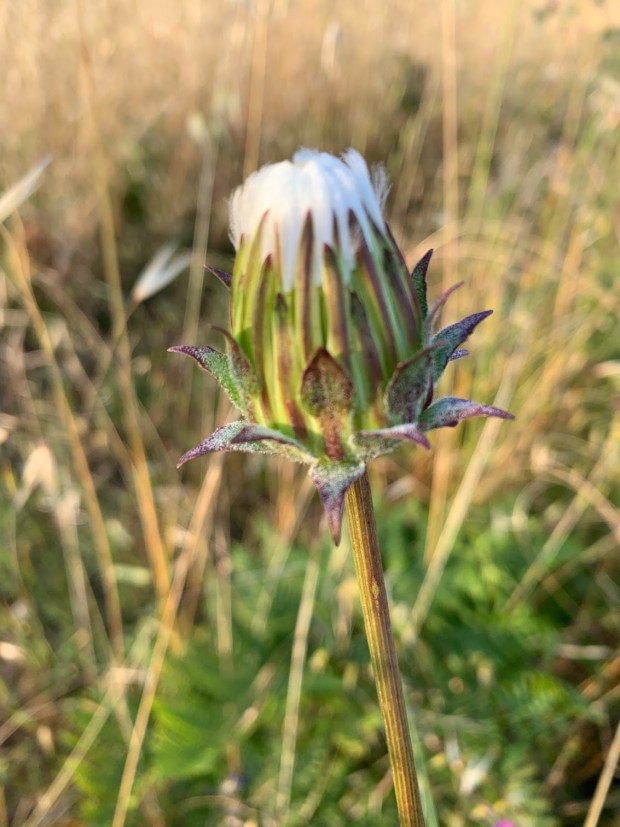
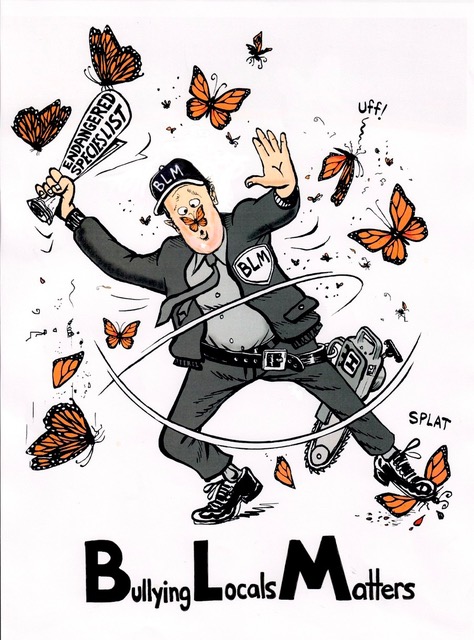


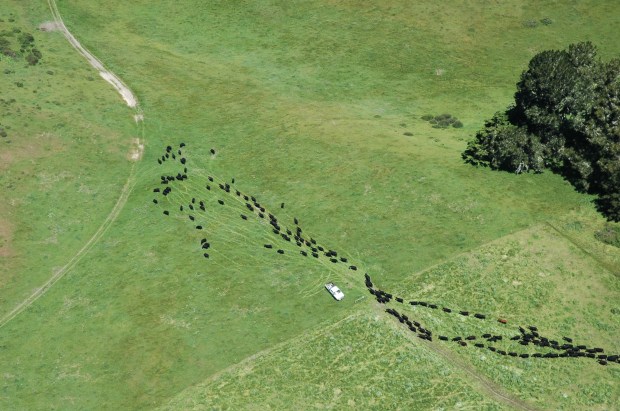


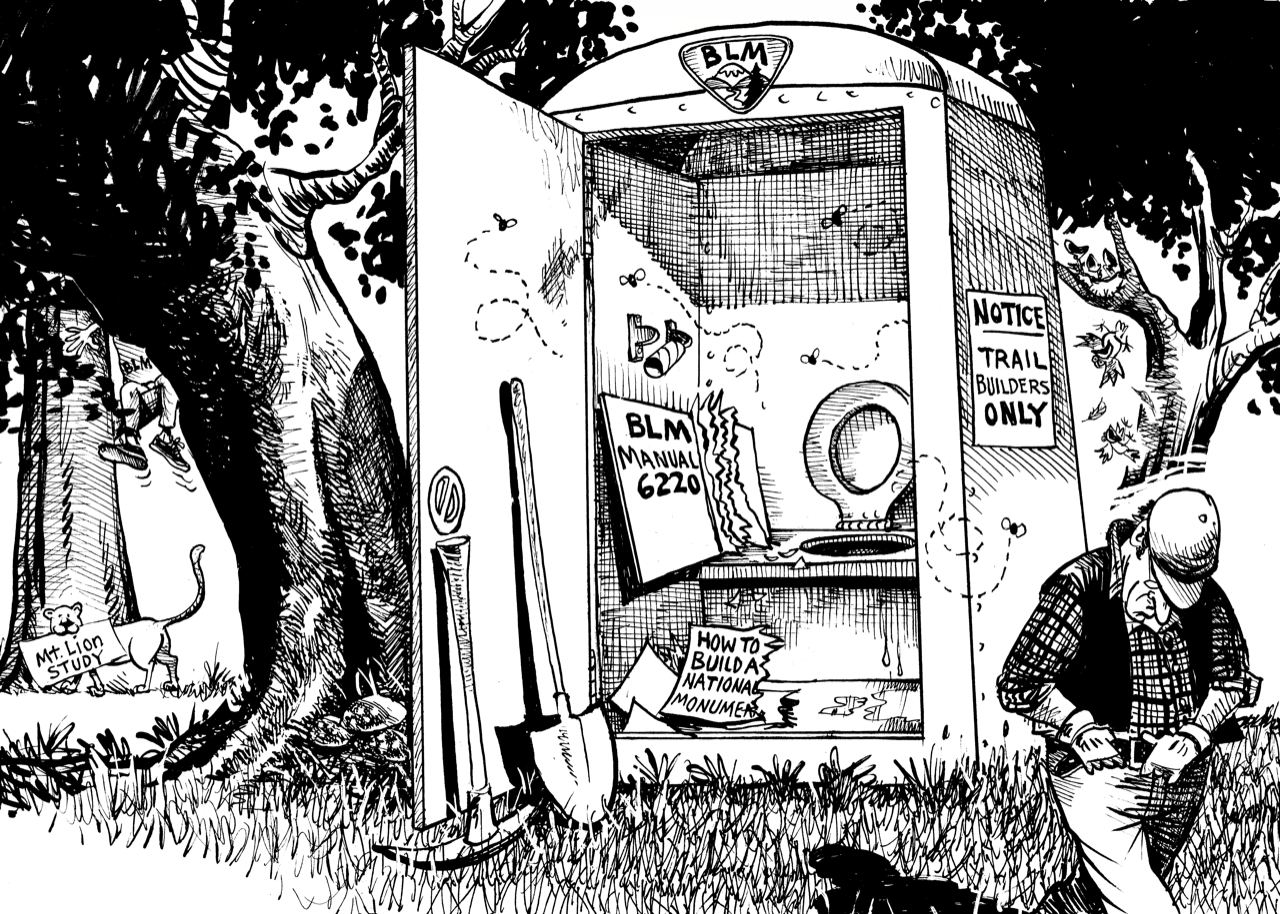

 Grey Hayes