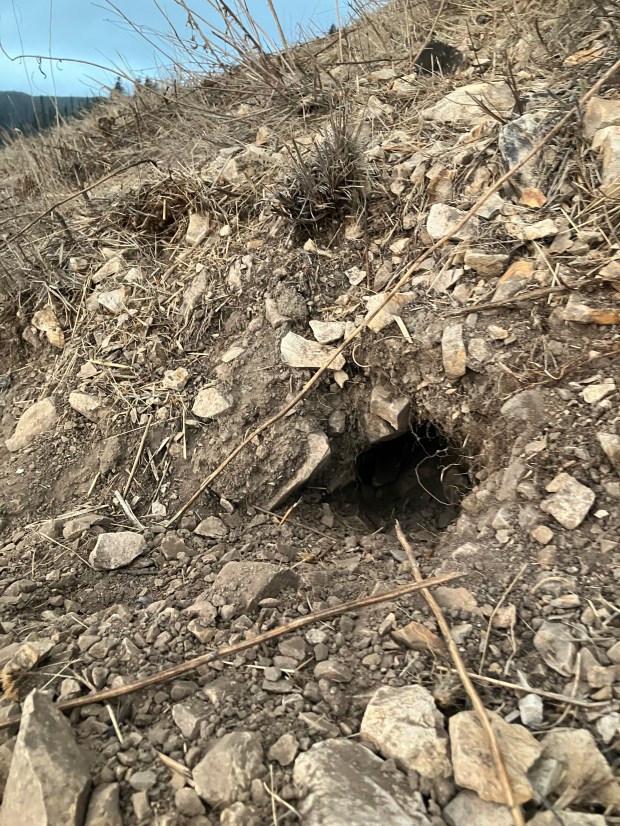
California ground squirrels are the burrowing type that are spreading across our landscape causing both harm and Great Good, sometimes in the same places.
Description and Life History
This native rodent can be as long as 2 feet including its tail. They are chunky squirrels with less bushy tails than their tree-dwelling cousins. Their color is brown-gray and spotty and they have small ear flaps.
California ground squirrels have only one litter per year and can give birth to up to 8 young. The little ones are cute and out-and-about in just 6 weeks after being born.
Up until recently, most humans believed that ground squirrels were vegetarians. They thought that these chonky rodents grazed on grass in the early spring and ate seeds later in the season. I recall a professor at UCSC gleefully dispelling this notion in the 1990s, showing slides of California ground squirrels eating roadkill carcasses of their brethren in the middle of one of the campus entrance roads. Gross. Then, in 2024, researchers discovered California ground squirrels hunting and devouring meadow voles.
Down Under
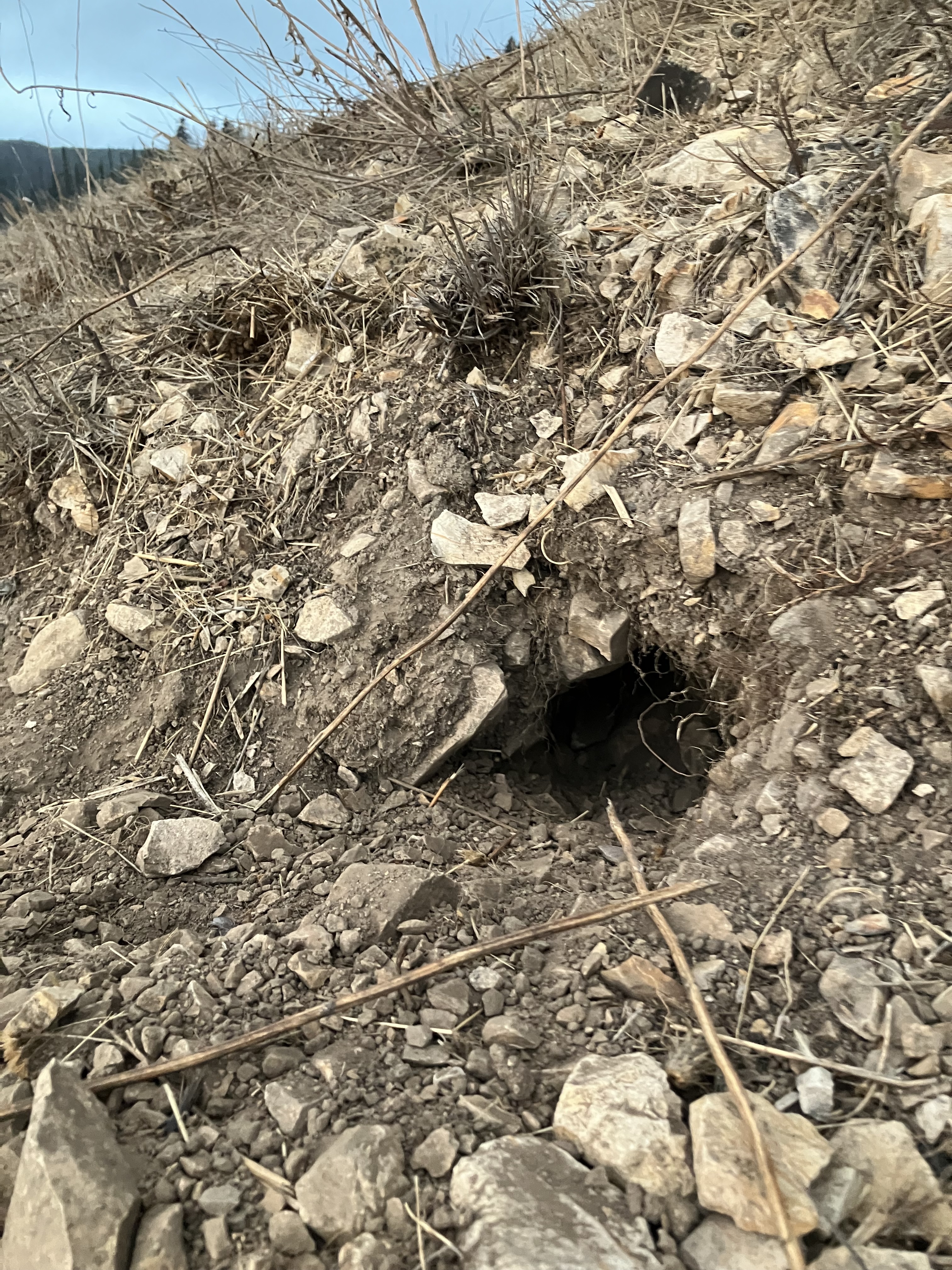
California ground squirrels live in the ground making burrows sometimes six feet deep where they make separate rooms for raising their young, storing food, and sleeping. Those underground houses are connected to the surface by up to 35 feet of burrows and multiple entrances.
Some have hypothesized that these burrow complexes play an important hydrological role, replenishing groundwater and moderating flooding. The burrows certainly are crucial in supporting other biota.
Co-Creatures
Lots of other organisms rely on ground squirrel digging. For instance, burrowing owls don’t burrow – they rely on ground squirrels to create their underground shelter where they raise their chicks, sleep, and escape predators. Rare kangaroo rats use ground squirrel burrows. Snakes and salamanders use them, too. One of the snakes that are found in the burrows is the Pacific rattlesnake.
Predators of this Squirrel
Lots of things like to eat California ground squirrels. They are golden eagles’ favorite food. Pop goes the weasel, head sticking out from a ground squirrel burrow, blood and gore hanging from its chin: just ate one of those rodents, yum!
Rattlesnakes and California ground squirrels are co-evolving. Populations of ground squirrel that are in dense rattlesnake territory are more resistant to snake venom than those that aren’t as likely to be bitten.
To me, the most fascinating ground squirrel predator is the coyote-badger duo. Badger is good at digging into ground squirrel homes to feast on a whole family. BUT, if badger tried this alone she might not get fed: it takes some coyotes at each of the exits for everyone to eat. Here is an amazing video that shows how well these two animals get along. And, here is another video showing how some of this works.
Gardening
The grazing and dirt throwing of ground squirrels makes for habitat for some species that wouldn’t otherwise live in tall grass in productive soils. California poppies sometimes ring ground squirrel burrow complexes.
Damage
California ground squirrels can cause a bunch of problems. They undermine buildings and roads, eat orchard and row crops, and make holes that break horses and livestock’s legs. So, people spend a bunch of time and effort killing these creatures. A few squirrels often become a bunch of squirrels. In preparation for this column, I spoke with a particularly intrepid Costa Rican friend of mine who entirely trapped out a pestiferous population of the creatures…and ate them, preparing them in his pressure cooker. “They’re good! Lots of thin bones like sardines,” he said.
Spreading
After the 2020 CZU Lightning Complex Fire, California ground squirrels spread into new areas of Bonny Doon and the North Coast. Why did this happen? Some suggest that the species was native to those areas but had been exterminated back in the 1950’s with widespread use of rodenticide poisons. The species held out at UC Santa Cruz main campus and near Younger Lagoon through the 1990’s and along the bluffs up to Davenport, perhaps more recently. Young, dispersing ground squirrels were seen in 2021 along Swanton Road and then had successful colonies in Bonny Doon and at Molino Creek Farm in 2023. Their numbers are increasing in those areas. Did the fire create conditions that made it easier for the animal to disperse? Or, did people live trap and release squirrels from Davenport or Santa Cruz? We’ll never know.
How Much is Just Right?
With the important ecological role pairing with frightful damage, how many is the right number…and where should they be? This is an important question. It makes us challenge our notions of ‘neat-and-tidy’ versus ‘ecologically rich.’ Are we past the point of trying to eradicate this species in any one place, or will we try to do that again? Such interesting questions…
-this post originally published in BrattonOnline – check it out….lots to learn there.
 Grey Hayes
I loved this piece, Grey! Fascinating and fun to read. Thanks!
Gillian
>
LikeLike
Thank you Gillian! It was fun to write and I’m glad you loved it. I appreciate the note. – Grey
LikeLike
Most prey species that many other animals depend on for their survival get targeted by humans because they are inconvenient and costly (cattle and horse injuries). If there were less humans taking over the animals homes, maybe we could live in harmony. I just don’t see that happening. I feel so sad for all the critters that are hunted and harassed by humans. Many people will shoot them for their own sick enjoyment. They are part of the ecosystem. They deserve to live too.
LikeLike
Entirely agree with you! Thanks for the comment.
LikeLike