photography

Annual Penultimate Post for Molino Creek Farm

-I post nearly weekly from Valentine’s Day until Thanksgiving a blog about Molino Creek Farm. So, this is the second to last post for 2026.

Rain. Every vignette, each part of the farm…the entire region…is being wetted. This rain drives the moisture deeper into summer-dried soil awakening new life for the winter season.

Forest Drops

The rain is captured and concentrated in the high boughs of redwoods and firs. Drizzle coalesces into big drops plummeting, sometimes making sharp smacks against limbs, shattering. Mostly, though, the raindrops are muffled quietly diffusing into deep, fluffy needle duff. Giant bananaslugs scoonch across trunks leaving silvery slime trails. 

Scrub Soak

Resinous coyote bushes slump, covered with white fresh seed fluff made heavy with water. The bushes densely glisten even under cloud-capped sky. Exploring newly emerging liverworts or mushrooms, you dare not squeeze between those hulking shapes: brushing up against one instantly soaks. Edges of shrubby patches will have to do for the liverwort expeditions. Alarm squeaks resound: families of golden crowned sparrows flush deeper into cover.  They are the cryptogam farmers.

Flushing Grasses

Gopher mounds bristle like alarmed hedgehogs. Although dense, the single first leaves of 2” tall grass seedling spikes haven’t covered the moist, deep brown soil. Ferny blue-green rosettes of California poppy catch droplets that magnify and distort their otherwise tidy appearance. The arched dense cover of perennial grass blades dance and bob in heavy downpours.

Tilled Mud

Furrows of loose soil, freshly plowed or harrowed flatten gradually as they saturate. Mud puddles form in tire tracks. Liquified dirt flows in rivulets, down rodent holes, backing up against obstacles, painting one color what had been complex hues of soil surface-chopped plant residue. In between showers, these tilled areas waft thick and sweet soil scent.

Puddled Roads and Trails

Cows lower their massive noses to road puddles – convenient drinking areas far from the trough. Birds delight in the ubiquitous baths, wings splashing, heads scooping, beaks open sucking up sweet fresh rainfall. Every trail and road is dotted with puddles.

End of the Season

The last Palo Alto Farmer’s Market of the season for Molino Creek Farm this Saturday. Bodhi powered the tractor across the fields, discing and planting cover crop into the night Tuesday. Orchard cover cropping progressed with whatever hours I could spare, however many hours my body could muster – alas, only half done before this week’s rainstorm! Imagining the swelling of bell bean seeds, licked by snails, prodded by earthworms in the freshly turned soil.

Strong dark wax boxes of winter squash are stacked high and curing just inside the south-facing doorway of the Two Dog Farm greenhouse. 

Farmers wend their way slowly one more time down the rows of tomatoes, happily surprised to be harvesting tomatoes this close to Thanksgiving.

Heavy shoulder bags of apples filled on the steep orchard hillside and hoisted onto the sorting table. Fuji and Braeburn are the last varieties this year to go to market. Sweet and juicy but each having their own very unique flavor, vastly different. We will too soon miss the crunch of that wonderful fruit. A reminder to relish the appreciation of what you have before its gone. I take extra-long to finish a fresh-picked apple nowadays, making sure to chew and taste while gazing at the skin and flesh…the juice…the release of complex aroma upon each crisp bite.
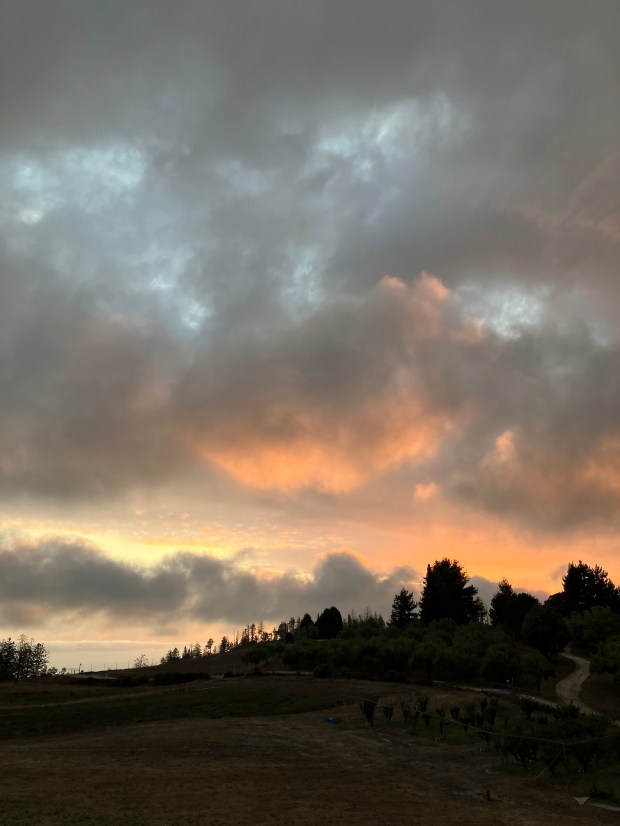
Sunset with poofy clouds over a tree-lined ridge

Behold! The Tomato!!

Behold, the peak of ripe, sweet, delicious dry-farmed tomatoes. The best in the world at the peak of the season, which will wind down soon. Lots of people are canning, drying…putting up food as the harvest rolls in, a bounty beyond any other season. Jays and acorn woodpeckers, too, rushing about, storing food like so many others.

A Ripe Molino Creek Farm Tomato: YUM!

Harvest

Tomato farmers can barely keep up, and people are buying. There are three particular crunches in the season: planting, weeding, and harvest. Each has its particularly critical moment interspersed not so much with ‘what do we do’ but more ‘how many people are necessary’ to do the work. The crunch times require more people than the weeks between, making it difficult for labor management and economics for small farms. 

Soon, the Community Orchard will face that final crunch. It seems to be a year like the last one when all varieties get ripe simultaneously. Gala apples are suddenly all ripe at once and the Braeburn and Jonagolds aren’t far behind. Luckily, the Fujis are going to wait a bit…and they are the biggest crop this year. It is a scratch year for the Mutsu variety for some reason. There are ten other varieties with one tree each that will get ripe in about 2 weeks. So, we’ll start preparing for a cider pressing gathering to process 1,000 pounds of apples in 2-3 weeks.

Two Dog Farm’s pepper field is lush and green with abundant fattening fruit. Their winter squash patch is still luxuriant and green with hundreds of butternut squash peeking through the leaves. Their Chardonnay grapes are getting honey-green and close to ripe…all ~2,000 pounds.

Wild Life

Baby owl begging, distant coyotes singing, a mountain lion caterwauling, masses of quail, a morning garter snake, bright-eyed deer herds, and many, many ground squirrels. 

Every now and then one of the baby birds strikes up a unique racket; this time, it is a baby great horned owl…begging. The begging goes all night long and it is loud and obnoxious. I suppose if you are the Queen of the Sky, you can make that kind of racket and not fear getting eaten. With no other baby around to mimic, a single young owl can pick whatever obnoxious voice to really bother its parents. This one ended up being half way to a barn owl screech, but louder. Mom and Dad owl hardly bother to hoot as the baby steals the show. You’d think it would get hoarse.

Sylvie reports a mountain lion caterwaul – that’s new since before the 2020 fire! Celebrations!!! Welcome back lion momma. 

There are streams and rivers of quail pouring out of the brush to peck-peck-peck at masses of seeds strewn everywhere on the ground. They are fat with glossy plumage. It has been a good quail year.

Open the front door first thing and there’s a 2.5 foot long garter snake on the stoop. What luck. First snake in a long while. The other moist morning or late evening snake to see is the (common here) rubber boa…haven’t seen that one for a month.

There are a record number of deer hanging out on the farm. Deer highways pound grass flat and expose soil along hoof-rutted trails. Piles of fertile deer poop litter the ground every few feet on the north-facing grassy slopes where they graze on a mix of grass and resprouting shrubs. At night, flashlight beams illuminate more than a dozen pairs of eyes on that slope. Walking down the road to turn off evening irrigation sessions, my heart races to be too near to huge antlered bucks;  hoping not to antagonize one: they seem feisty.

A  flock of 60 blackbirds has gathered on the farm, a mix of Brewer’s and bicolored, singing their complex anarchistic melodies from atop bare-branched fire killed trees and then flying like wind-scattered fall leaves down into the fallow fields to feast on seeds. Their song lights up every hour of every day, a chorus that will entertain us through the winter. Their rhythm section has squeaky peeps that nearly match the repetitive, constant, mechanical ‘Chip! of ground squirrels scattered far across the Farm- between the two species it approaches cacophony.

A skein of 50 honking, white-fronted geese in a huge V flew West to East high above the Farm at 4:30 this evening.

Bills Open: Nuts!

Jay cries are muffled, acorn caps scattered. It is peak acorn season and the jays hardly have time to taunt. Their heads are down, shoulders hunched, beaks pried open carrying fat ripe green shiny acorns to-and-fro. Don’t watch them when they try to bury the nuts – they’ll get mad, pick back up the nut and fly to somewhere where you aren’t watching. They suspiciously glance about, quickly poking each nut into a hole, making a quick swipe to cover it up and it’s onto another one. Back-and-forth over and over: busy days! We are pleased that they are distracted from eating apples, leaving the fruit destruction mostly to yellow jacket wasps now.

Dahlias are a long-time specialty of Judy Low

Land Tending

Our great gratitude to one generous guy- Matthew Todd has finished his mastication work for us this year: 4 acres of brush ground to small pieces! We needed to do something about the weeds and he offered to help for a great big discount that made it possible. He resonates with our mission to keep our hillsides wild and native and tending back to coastal prairie and so he wanted to help. His wonderful skill and powerful machine took care of jubata grass, radiata pine, and French broom, which had proliferated after the 2020 fire. Now we have a better chance of tackling those scourges with other tools – excavators, pulaskis, burn piles, and broadcast burns will join a several year mastication project to reduce the broom until we can get livestock to help manage the restoration areas. Thanks, Matthew!

We’ll collect a bunch of grass and wildflower seed this next spring to hurry the restoration along.

Hoping CalFire will be able to help this Fall with another prescribed burn.

Longer evenings make for less work time.

Enjoy the lengthening nights!

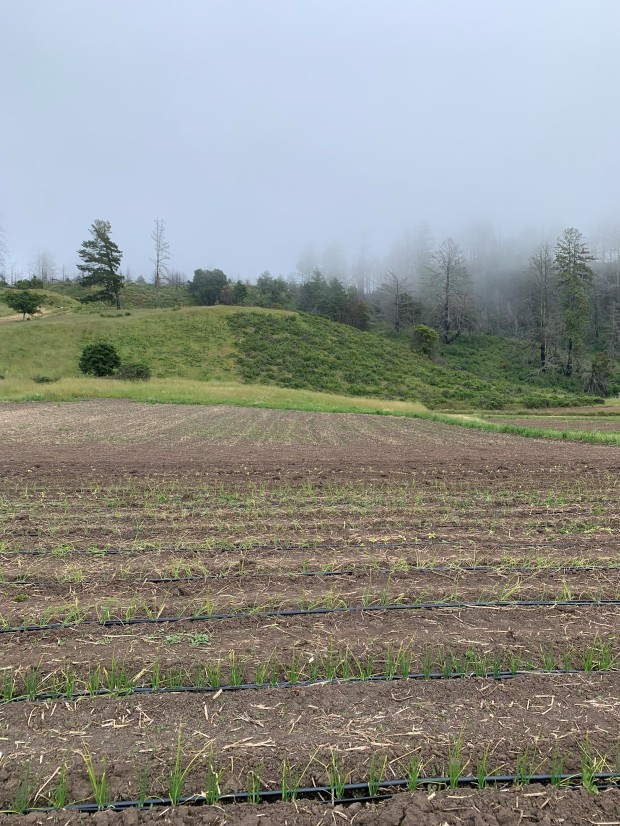
Fog, and Fog Lifting

Tall black burned tree trunks hazily emerge into view through the thick fog. Days upon days of fog prevalence make many scenes more mysterious. That eerie scene of black tree poles joins other fog-induced memories this past week: puffs of blowing dense fog hiding and then revealing drippy, dark groves of live oaks; awakening to a wall of silver cloud obscuring everything beyond the window ledge, and one evening’s approach of fog…suddenly pouring over the farm’s western ridge and down the hillsides towards the farm like a wave of terrifying suddenly-released floodwater. Each morning every spider web is illuminated by silver moisture, every leaf and blade adorned by shiny droplets.

Us Moist Critters

The dawn bird chorus is delayed and the songs fewer because all animals are made chilled and sleepy, enveloped in low clouds. The brush rabbits shake the wetness from their pelts between bouts of meandering nibbles. Extended families of quail wander slowly along roads to avoid vegetation soaking their feathers. In the absence of bird song, there is a more peaceful constant patter of dripping. Sweaters, jackets, and long pants are in order for spending time outside. The richly humid air makes breathing feel refreshing and helps accentuate late spring farm scents.

Peak Perfume

The transition between spring and summer is the season of peak perfume. Eight foot tall bolting poison hemlock emits its telltale dusty, bitter odor, which carries far in the fog-moist air. When the clouds lift and the day warms, sweeter, resinous scents are released from the sage, coyote brush, and fir. Fresh-cut-hay smell is omnipresent across the fields and down the roads as mowers constantly challenge the burgeoning grass. Warmer days bring surprising clouds of sweetness, begging for a pause to ponder the origins of scent: madrone, French broom, lilac or lupine could be the source, but maybe there’s something new to discover. I squint to the distance, upwind for patches of flowers, then shift my gaze closer to see if there are bunches of hidden flowers. There it is! –  clusters of tiny poison oak blossoms sparkling with nectar and wafting notes of clove and citrus.

Fog recently drapes the ridges surrounding Molino Creek Farm

Drying

The drippy fog does little to keep the inevitable drydown at bay. Deep soil cracks split and widen. Dust cakes vehicles and brush along the roads. This is the first week that the farm must irrigate everything or the plants will wilt and begin to die. The solar well pump runs continuously and the diesel generator will start shortly to push greater volumes of water to the grapes and storage tanks. The summer pattern of orchard watering commences: zig-zagging across acres of trees, digging 8” deep into the soil to test moisture, adjusting irrigation strategies, turning valves, recording data, monitoring storage tanks, and communicating between many farmers to assure smooth operations. For now, cool days keep this work less hectic, but one eyes the forecast and makes plans for hotter spells.

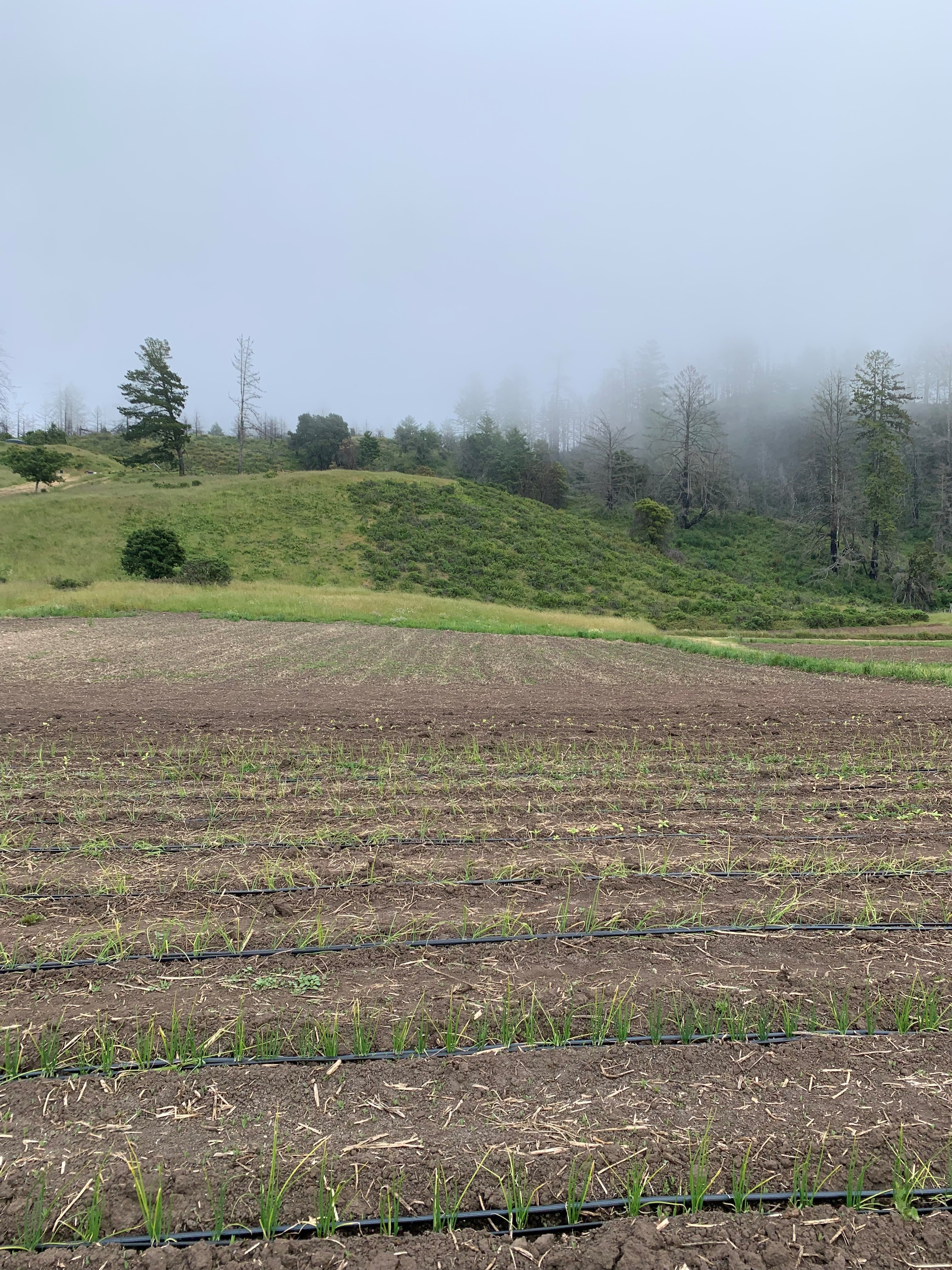
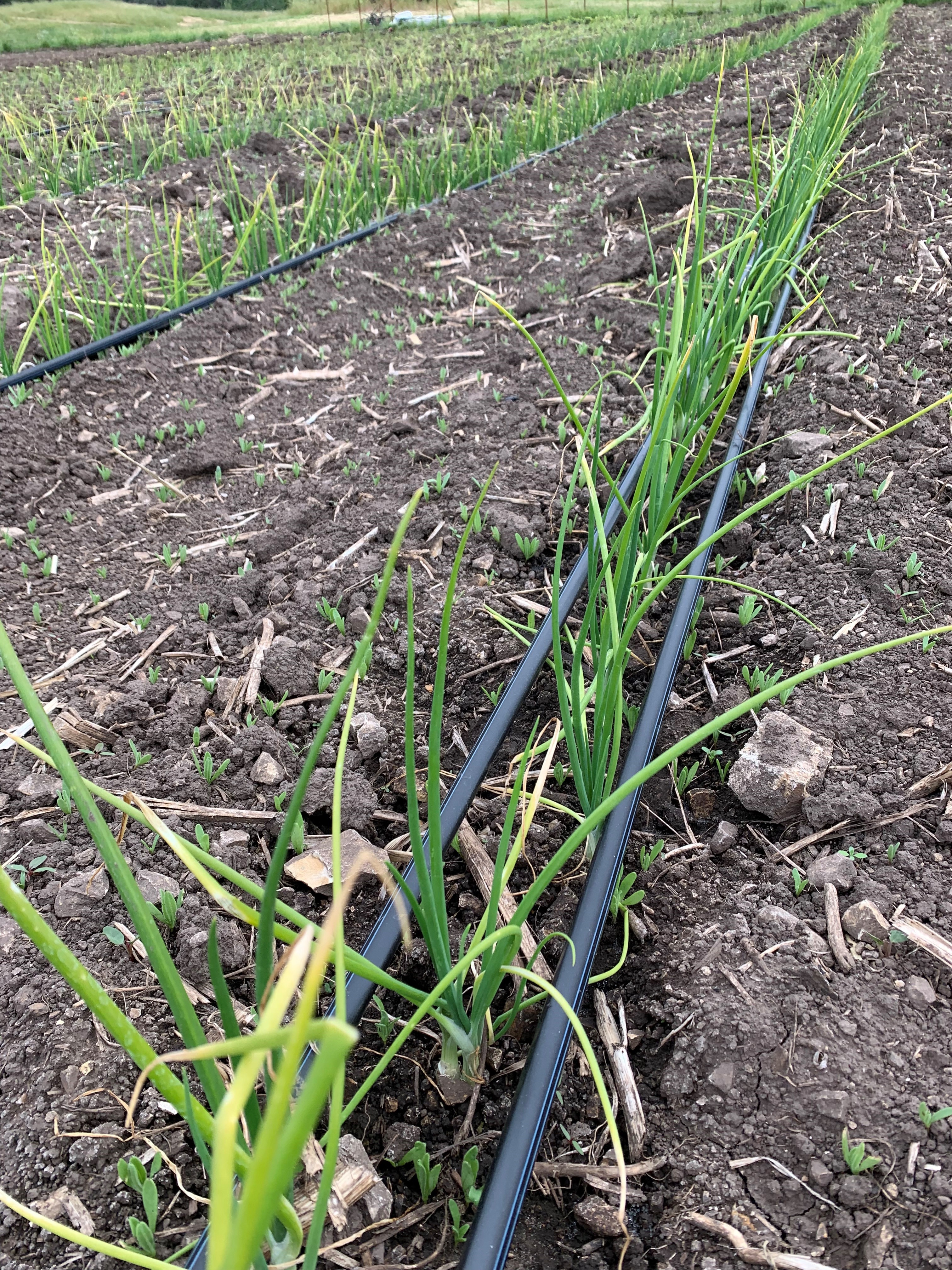
Molino Creek Farm’s amazing onions, freshly planted and regularly irrigated

Snakes, a Month Late

April is normally snake month, but the cool, wet start of this season delayed the emergence of our slithery friends. Sylvie and her brother Isaac reported a surprising night time rubber boa, crossing the road despite the drippy fog. Smooth, fresh snake tracks cross the dusty roads, always wisely perpendicular. An irate hissing baby gopher snake lunged at my leather gloves from a patch of freshly pulled weeds. We are constantly surprised by scaled creatures jetting away from disrupting orchard management: a swift yellow-bellied racer snake, head held high, escaping…giant alligator lizards making for safer ground away from hoeing. Wherever we look there are oodles of lizards and snakes, an homage to organic tilth, the diversity of plants, and the wealth of prey that result from good land management the collective respect for nature found at Molino Creek Farm.

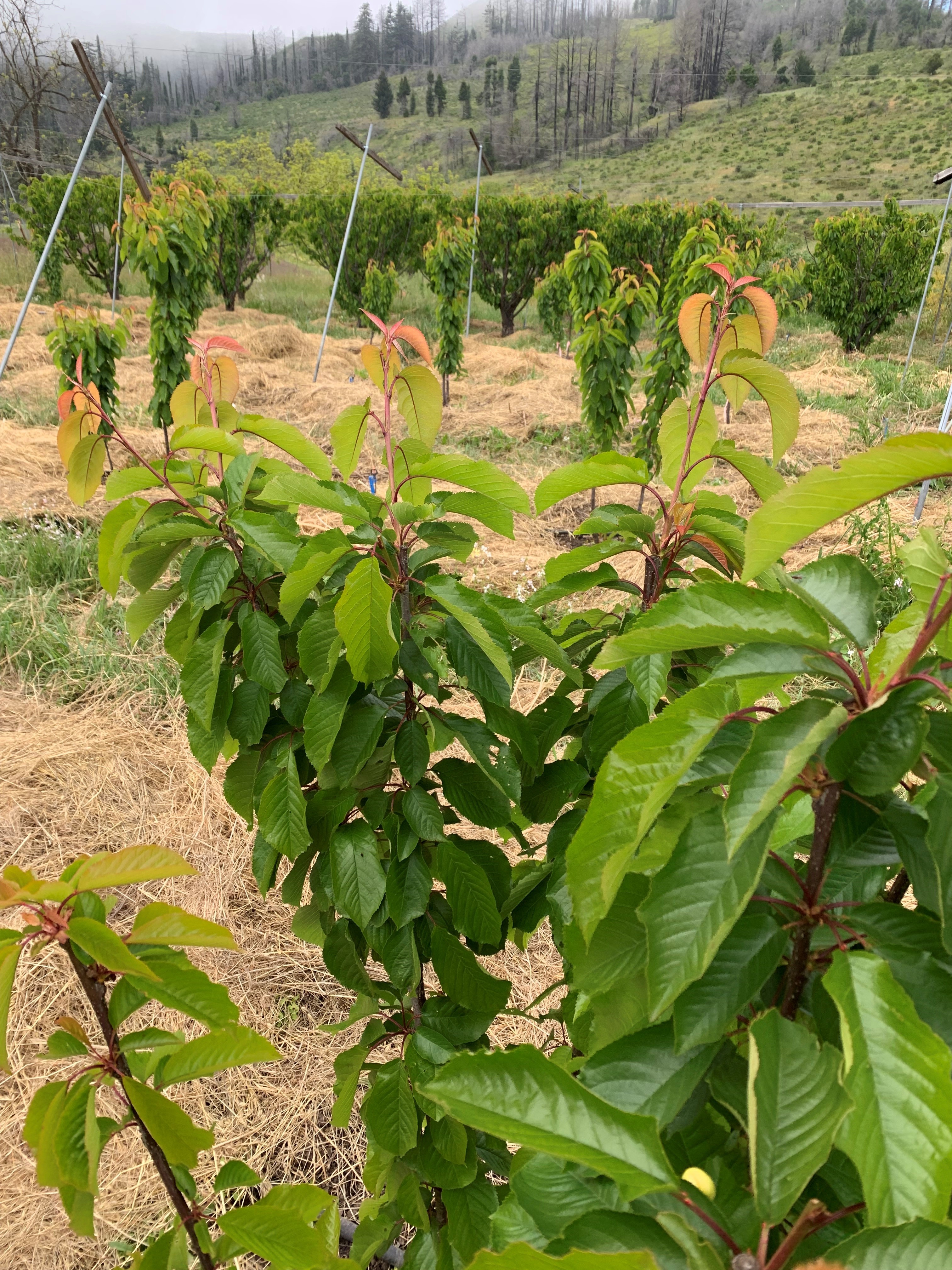
Cherries, lushly growing with irrigation and nestled in fog drip

Night shifts to dawn

At first darkness yields only very slightly and the first bird to sing is quiet, murmuring a few quizzical, uncertain, almost apologetic notes. A few minutes later, that same bird sings the same few notes, sounding a little more certain. A second bird joins a little while later, more certain still. Dark turns slowly to gray and more birds start singing. Soon, dawn rushes on, the sky lightens, and many birds start singing, no gaps between songs, many species, many notes. The cheerful Spring dawn chorus fills the chill morning air as color begins to spread across the landscape in advance of the rising sun. By the time the first rays brightly illuminate the ridges, the bird orchestra is loud across the farm and as far as you can trace sound. Each taller shrub and at the top of many trees there are tilting, perky birds, beaks outstretched, singing away.

Spring Antics

As it warms, bluebirds and black phoebes flit about, catching bugs. Barn swallows warm on perches awaiting a brighter sun before taking to the air. Towhees strut through short grass, darting at one another, chasing for fun or territoriality. As the dew dries, one of the yard bunnies hops inquisitively towards another. The wide-eyed approached one suddenly flattens itself hugging the ground, snaking forward slowly and then faster on a pathway through the low grass, ears back, while the other hops again and again over its pancaked friend: what oddness! Spring morning antics.

Big Oaks in the background, Green Fields in the foreground. Life is a Rich Green

Green

Bolting grasses dry from the tops and from the bottom. The tallest grasses turn tawny above still-green fields. The grassy understory is browning, too. A gust carries dust clouds away from the road and across the fields. Despite the drying, overall a lush green prevails. Big bushy oaks shimmer life above pulsing green fields. The morning warmth massages a sweet perfume from the grass, which changes with the drying day to the scent of dusty pollen. Middays have become quite warm, though sometimes breezy. Cheerful bird solos continue right through the day.

Birds in Air

The afternoon breeze carries soaring red-tailed hawks, loudly screaming, one following the other in broad circles, high across the sky. The ravens, too, enjoy soaring on the wind but more in long arcs from one side of the farm to the other, loudly beating their wings and furtively glancing about for something to scrounge. Something startles a flock of band tailed pigeons, and they take flight but not so high in the sky, making for one patch of trees, then suddenly veering to another. One pigeon isn’t paying attention, gets too far ahead of the others, which have turned for another destination; it panics and wheels about, making lots of strong and rapid wing beats to catch up to its family.  The standard number of pigeons is 14, but the flock was 30 for a brief bit…some apparently were just passing through. The regular flock patrols the walnut trees hoping for ripening catkins which will shortly make them fat and happy. I’m not sure what keeps them fed in the meanwhile- there doesn’t seem to be much to eat for those big birds.

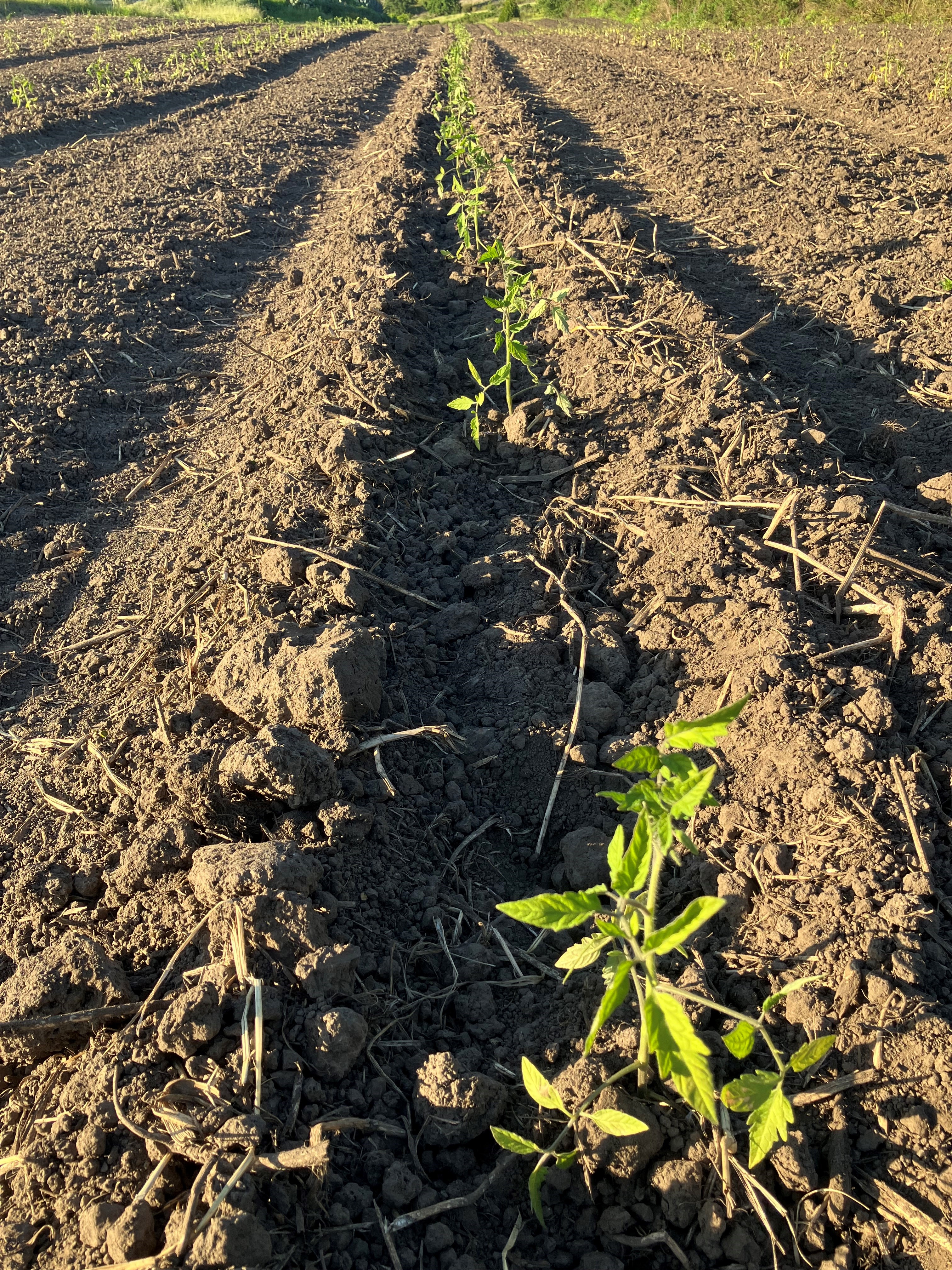
Molino Creek Farm’s Dryfarmed Tomatoes – Just planted this week

Planting

Bodhi and Judy have been planting the summer crops. Long rows of tomato seedlings are settling in nicely, in less than a week already overcoming transplant shock with perky new leaves facing skyward. Succulent leaves of freshly planted onions contrast greatly with the deep brown soil, poking up from row after freshly planted row. Green crop seedlings are hard to see in the broad swaths of brown, tilled soil, striped in rows of tractor tire tracks.

Lapins Cherry Trees – Thanks, Drake Bialecki for the grafting!

Peak Bloom

The orchards are in peak bloom. Though the cherries are just a bit past peak, on average the various varieties of other fruit trees make for the most floriferous moment in orchard bloom. With so many flowers, the trees have created a thick blanket of pink across the hillsides. The avocado spring is more subtle, but still their masses of tiny yellow-green flowers overshadow both the broad, old green leaves and the emerging spikes of purple-bronze leaflets. I was pleased to find honeybees on the avocado flower clusters today- the first time the hive has turned its attention to this essential service. Peak bloom, however it appears, is beautiful, the blossom parade a constant show of dancing pollinators one type arriving after the next. As the day progresses, the afternoon warmth waves clouds of ecstatic perfume into the aisles. Gradually, the day cools and the scent changes back to grass and mold and dew.

Two Dog Farm Chardonnay – SPRING!

Evening

The light fails and great horned owls glide silently out of the tall trees on the canyon edge, across the farm fields. They perch on fence posts and trees closer to the rodent-filled grasses and weeds. When the sun disappears behind the ridge, the evening turns quickly colder. As the setting sun finishes raking the higher hillsides with its golden glow, we retreat home for sweaters and wool hats. Chores demand further outdoor time until the light completely fails, now at almost half past eight. Burr! It turns cold with the darkness and gets chillier all night. Recently, it got down to 44F by dawn. Some fruit trees long for hundreds of chill hours, leafing out only after arriving at their total: their clocks are still gathering those hours, and the (shortening) cold nights keep them snoozing and gathering strength for their (eventual) leafy season.

Sky lupine and purple needlegrass on one of the Farm’s ridges
Bicolor lupine and more on a knoll on the Farm

Wild Flowers

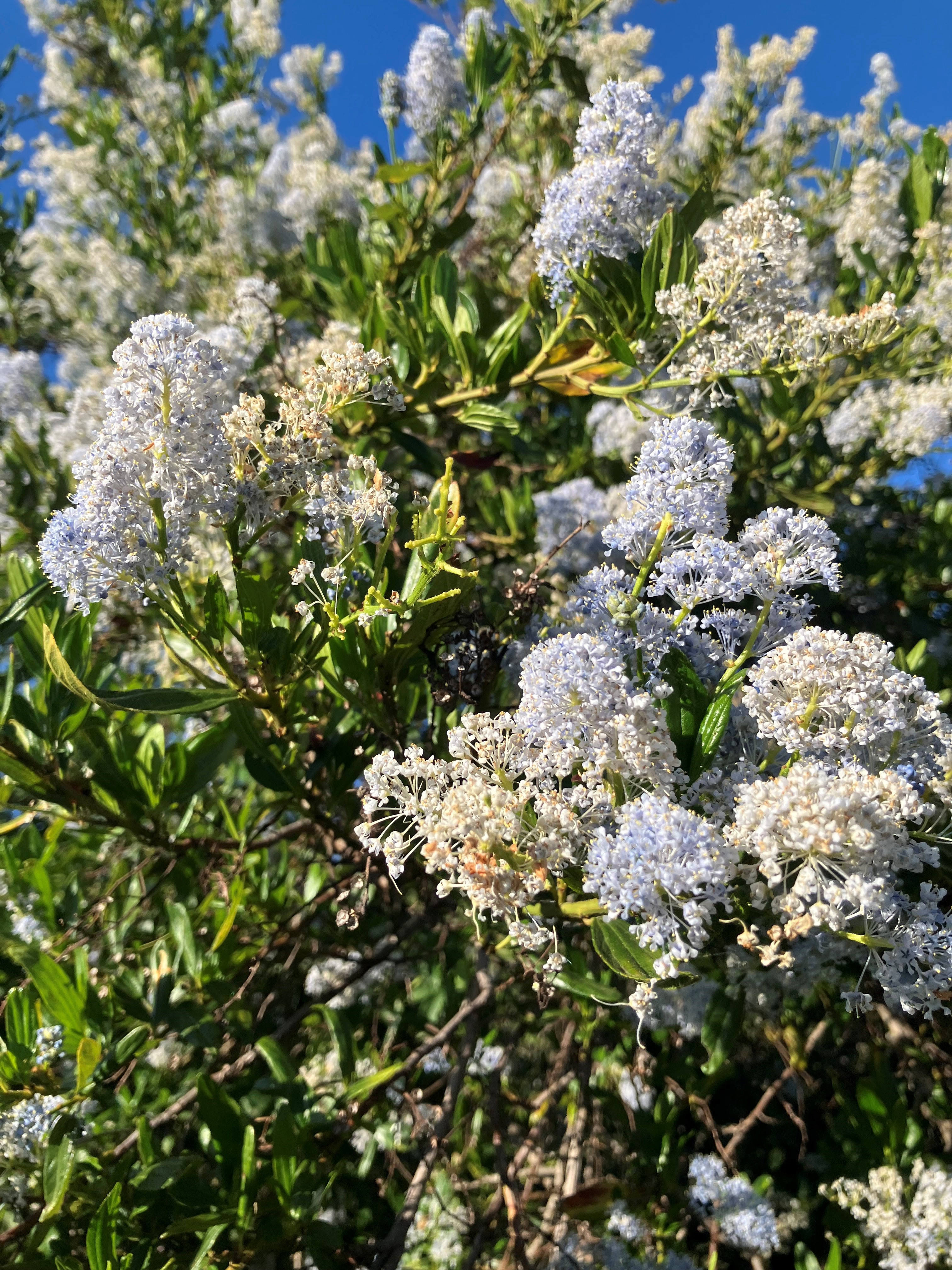
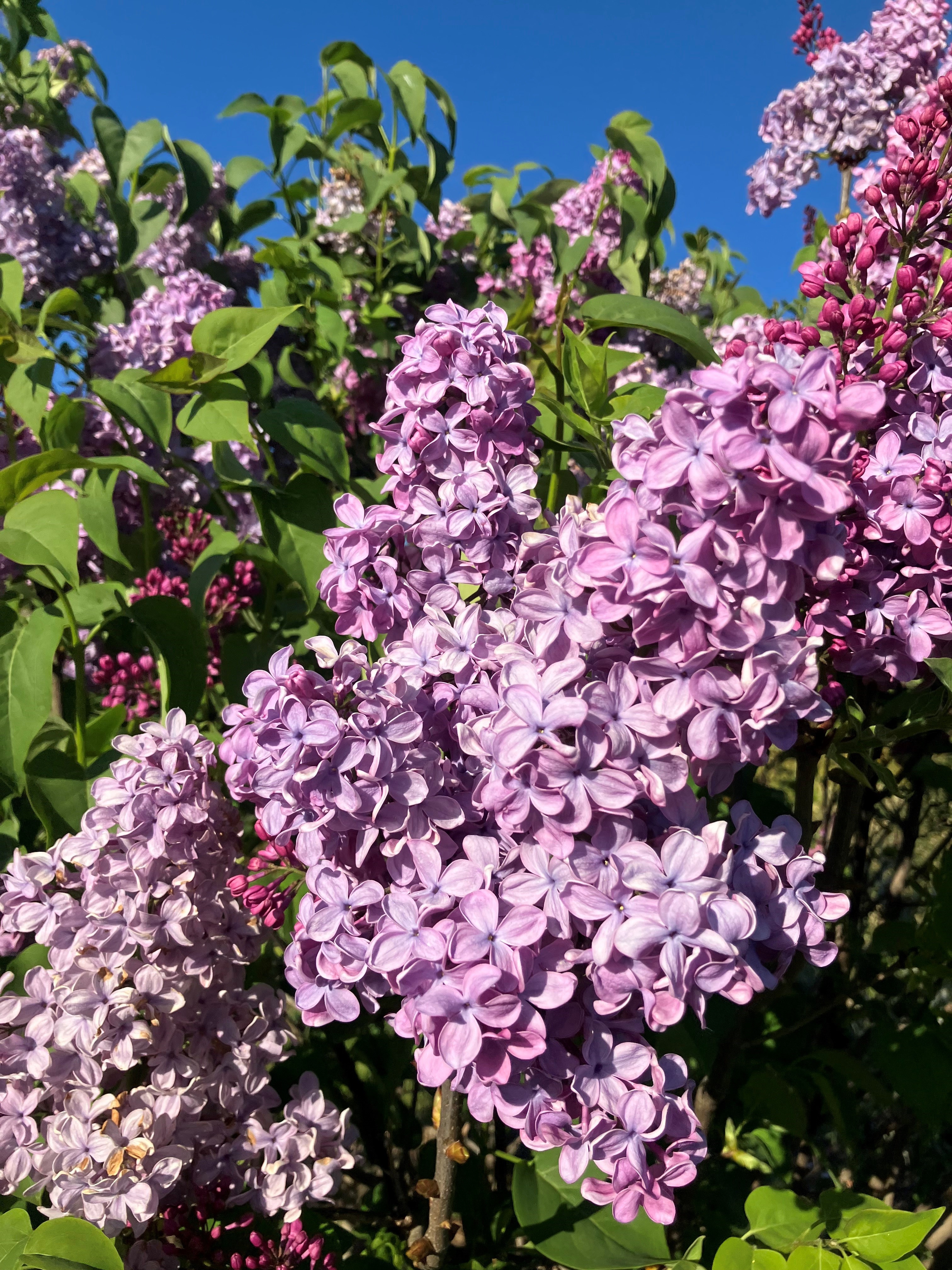
The wildlands are blooming spring. Two types of lupine, the big and the small, as well as poppy, tarplant, blue eyed grass, vetch, and purple sanicle have burst into flower and paint big patches with crazy color mixes and fascinating patterns. In the forest, white starburst panicles of fat false Solomon’s seal and the simpler four petals of purple-white milk maids brighten road cuts above Molino Creek Farm. More than anything, miles of the fire-following shrub California lilac throw rafts and sprays of pale blue blossoms, drowning out their shiny green leaves. The scent of this blueblossom is heady and sweet, but only faintly like the more-sweet perfume of the old-world traditional lilac which also has much more showy flowers.

California lilac
Old World Lilac